On Saturday, the West African regional bloc announced its decision to remove stringent sanctions imposed on Niger, signaling a shift in its approach to dissuade three junta-led states from exiting the political and economic union.
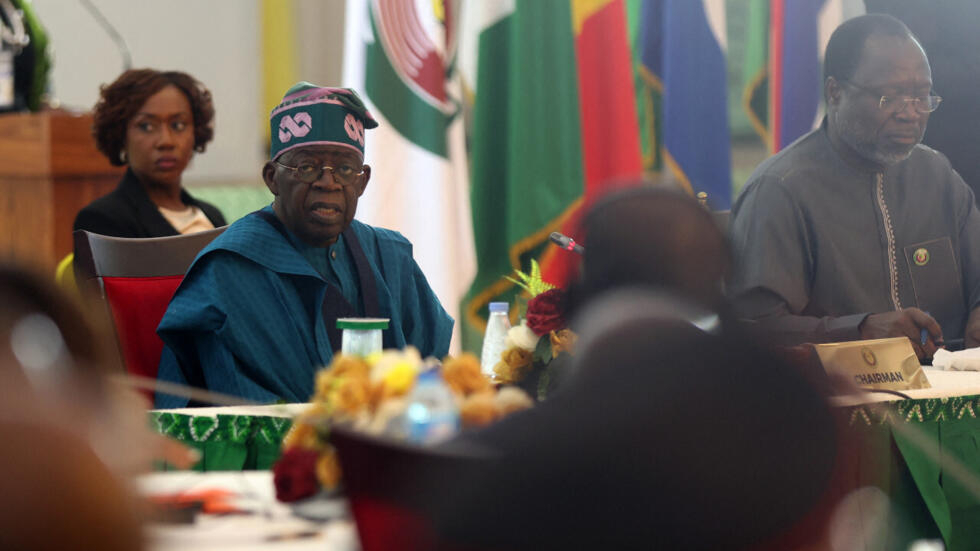
The Economic Community of West African States (ECOWAS) convened to address the escalating political crisis in the region, exacerbated by the decision of military-ruled Niger, Burkina Faso, and Mali to withdraw from the 15-member bloc.
Following closed-door discussions, ECOWAS declared the immediate lifting of sanctions on Niger, which included border closures, freezing central bank and state assets, and suspension of commercial transactions. While the bloc cited humanitarian reasons for this move, it is widely perceived as a conciliatory gesture as ECOWAS endeavors to persuade the three junta states to remain within the nearly 50-year-old alliance.
The potential exit of these states poses a significant threat to regional integration, with trade and services flows valued at almost $150 billion annually.
In a communique, ECOWAS urged the junta-led states to reconsider their decision, emphasizing the benefits that member states and their citizens derive from the community. Certain sanctions on junta-led Guinea were also lifted, although the country has not expressed a desire to leave ECOWAS but has not committed to a timeline for returning to democratic rule.
ECOWAS Commission President Omar Touray mentioned that some targeted and political sanctions still remained in place for Niger, without specifying the details.
ECOWAS Chairman Bola Tinubu underscored the need for a strategic rethink in the bloc’s approach to restoring constitutional order in member states. He urged Niger, Burkina Faso, Mali, and Guinea not to view the organization as an adversary.
The imposition of strict measures and border closures on Niger last year followed the detention of President Mohamed Bazoum by soldiers on July 26, marking another instance of military takeovers that have exposed ECOWAS’s challenges in preventing democratic regression.
The sanctions have imposed severe economic hardships on Niger, compelling the country to cut government spending and default on debt payments exceeding $500 million.
ECOWAS reiterated its call for the release of Bazoum and requested the junta to provide an acceptable transition timetable. The political landscape in the region has witnessed a series of coups, with military governments in Mali, Burkina Faso, and Guinea distancing themselves from former colonial ruler France and other Western allies.
The three junta-led countries have deemed ECOWAS’s sanctions strategy illegal, citing it as the basis for their immediate withdrawal from the bloc, bypassing standard withdrawal procedures.
They have begun collaboration under the Alliance of Sahel States (AES) and are exploring the formation of a confederation, though the alignment of political, economic, and security interests remains uncertain as they grapple with a decade-long battle against Islamist insurgents.