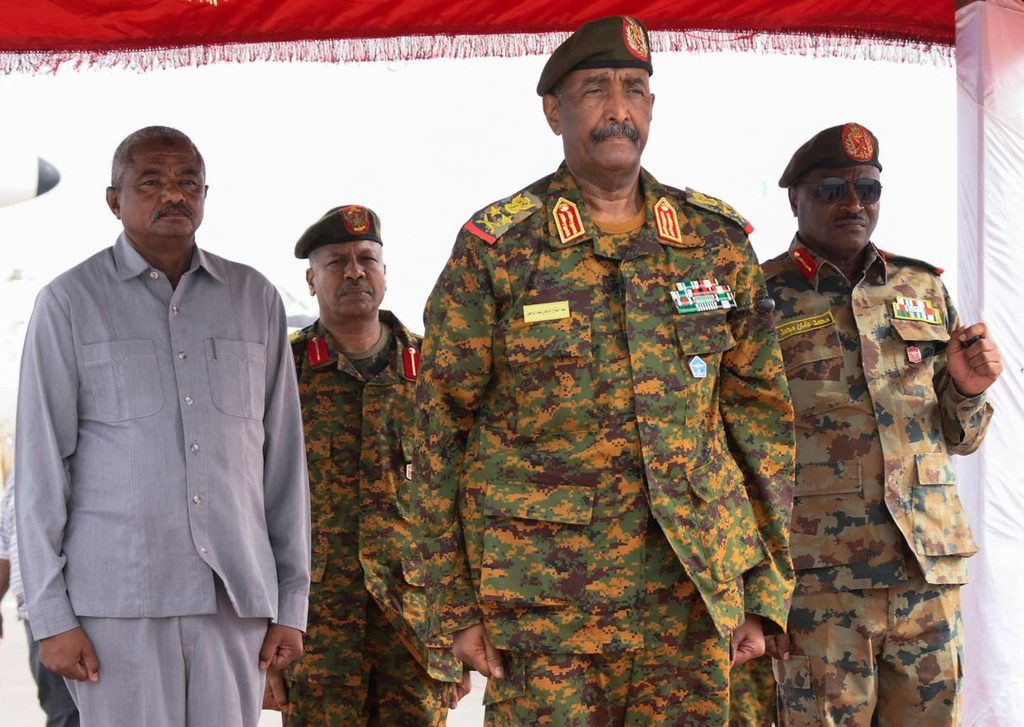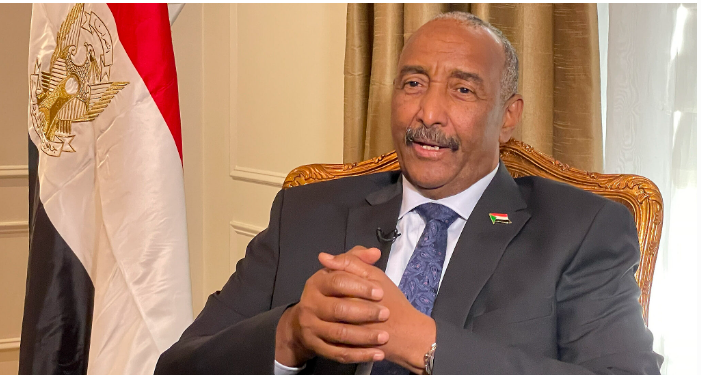
Despite major territorial losses following the RSF’s complete takeover of Darfur in late October and its rapid advance through neighbouring Kordofan, including the strategic town of Babanusa, the Sudanese Armed Forces (SAF) leadership continues to push for a prolonged war. This insistence has fuelled mass civilian suffering, with tens of thousands killed, nearly 15 million displaced and billions of dollars in economic damage. Nevertheless, SAF continues rejecting international peace proposals and clings to an increasingly unrealistic military solution, raising questions about what the leadership is truly aiming to preserve.
Analysts say SAF’s refusal to consider negotiations is rooted in the political ambitions of top commanders and their long-standing alliance with elements of the Muslim Brotherhood. Any credible peace process would likely require reforms that would limit SAF’s political and economic power. For the leadership, rejecting diplomacy and demanding a military victory has become a strategy to protect its entrenched interests rather than the country’s stability.
As regional and international initiatives have tried to halt the fighting, SAF and its affiliated networks have promoted a narrative of “protecting sovereignty” to justify the continuation of the war and to obscure widespread violations. This same alliance has rejected 11 international mediation efforts, even as Sudan enters one of its worst financial crises. According to Defence News, SAF has attempted to secure advanced Russian air defence systems by offering mining concessions, including access to gold and potential facilities along the Red Sea.
The reported talks include systems such as the S 300 PMU 2 Favorit with a radar range exceeding 300 kilometres, the S 350 Vityaz effective up to 120 kilometres, the Buk M2E with a range of about 45 to 50 kilometres and the short range Pantsir S1 designed to counter drones. The potential deal highlights the extent to which SAF leadership appears determined to buy time rather than address the structural collapse within its own ranks.
Former SAF officers warn that relying on foreign weapons will not reverse the severe internal damage the force has suffered. Major General Kamal Ismail, head of the Sudanese National Alliance, said that SAF’s dependence on a patchwork of militias with conflicting agendas has undermined command and control. He cautioned that prolonging the conflict risks pushing SAF toward complete institutional breakdown.
Ismail stressed that a military victory is impossible under current conditions, pointing to repeated unauthorised withdrawals and what he described as unprecedented drops in morale among officers and soldiers. Losses in personnel, equipment and infrastructure have further weakened SAF’s capacity, making the continuation of the war a guarantee of further deterioration.
He argued that SAF leadership’s only realistic option is to enter political negotiations before the force collapses entirely. Continuing to insist on a military solution, he said, serves only to entrench suffering across the country while preserving the power of a narrow leadership circle. Despite mounting warnings, SAF continues to block international initiatives, following a strategy built on prolonging the war regardless of the overwhelming human and economic cost.