Military sources say South Sudan’s forces have begun a wide deployment around the Heglig oil region, coordinated with the Rapid Support Forces, RSF, to ensure uninterrupted oil pumping and secure vital infrastructure. Units of the South Sudan People’s Defence Forces, SSPDF, completed their deployment shortly after the RSF announced control of the oilfield on Monday morning, as part of joint arrangements aimed at protecting oil facilities and maintaining production.
The deployment stems from the oil and security cooperation agreement signed between Khartoum and Juba in October 2025. The deal covers the protection of oilfields, pipelines, and central pumping stations for South Sudan’s crude, along with an electricity-link project and expanded energy cooperation. This marks the first practical implementation of the agreement, which had remained stalled due to the ongoing conflict inside Sudan.
According to an audio recording attributed to field manager Mohamed Surkiti, shared with departmental heads in Heglig, joint arrangements between Sudan’s Ministry of Energy and Oil and the South Sudanese company GPOC required the withdrawal of the 2B OPCO crew, with GPOC teams taking over operations. Surkiti noted that a limited number of technicians from the departing companies should remain to guarantee continuity during the security transition.
Circulating images showed units of the South Sudanese army arriving on the outskirts of Heglig accompanied by two GPOC technicians, with company insignia visible on their uniforms. Oil sector sources said the deployment will be completed by tomorrow morning after rebel militia forces were notified to leave the area to secure the oilfield’s perimeter and prevent disruptions to production.
Earlier, the South Sudan People’s Defence Forces announced that they had received a group of Sudanese officers and soldiers in Ruweng Administrative Area after their withdrawal from Heglig. The RSF had already declared control of the oil town in West Kordofan following the army’s retreat from its defensive positions. Lieutenant General Johnson Olony, assistant chief of staff of the SSPDF, said the reception of Sudanese troops was directed by President Salva Kiir, stressing that the move reflected the view of both nations as “one people in two states”.
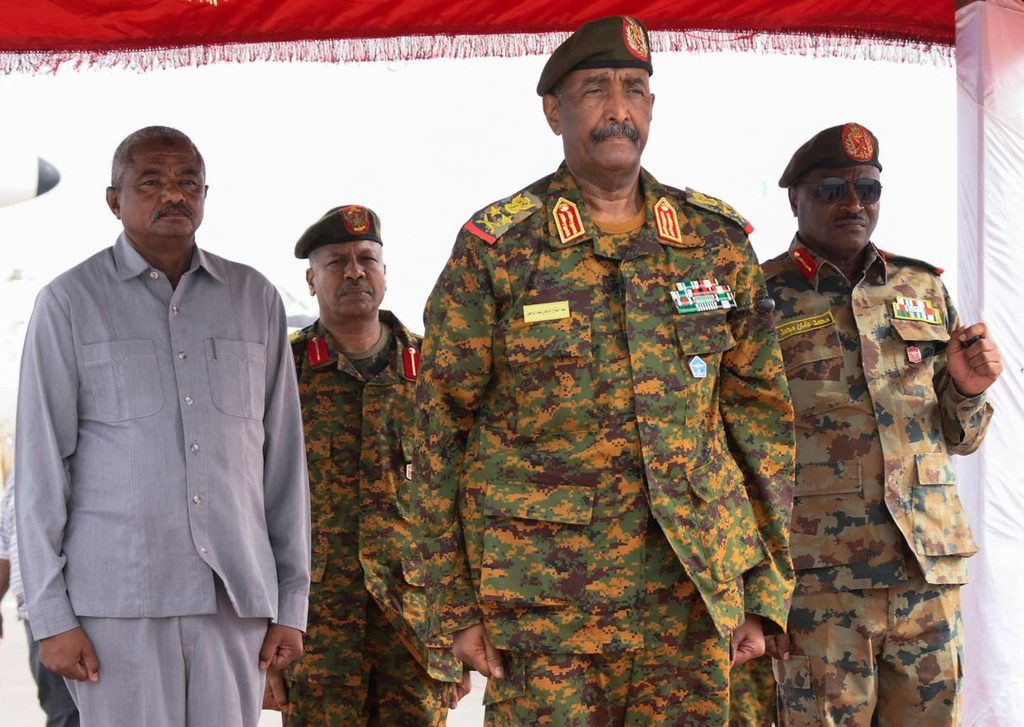
Olony added that the handover followed communication and coordination between President Salva Kiir and Sudan’s Sovereign Council head Abdel Fattah al Burhan, and that his forces were awaiting further instructions regarding the transfer of the Sudanese troops. This is the second time South Sudan has received Sudanese army personnel, following a similar incident in July 2024 after the RSF took control of Al Meiram in West Kordofan, around 60 kilometres from the border.
In a related statement, the SSPDF confirmed that South Sudan’s oil infrastructure remained fully secure, hours after the RSF announced control of Heglig. The statement said all oil facilities continue to operate at full capacity, emphasising that forces remain on high alert to protect these strategic sites and ensure uninterrupted production and exports through South Sudanese territory.