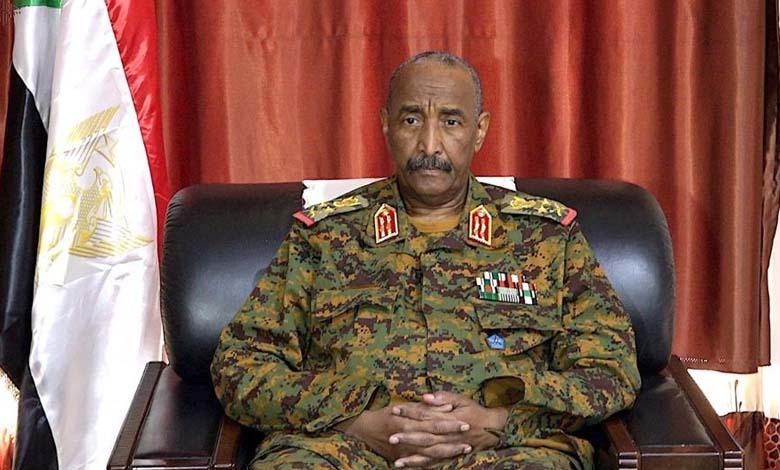
From secrecy to open confrontation, the raging conflict between Sudan’s SAF chief and the country’s Islamist movement has burst into public view, exposing the inner workings of a booby trapped alliance that has now exploded in the faces of both sides.
Despite repeated denials by SAF chief Abdel Fattah al Burhan of any link between the military institution and the Muslim Brotherhood, statements by Ahmed Abbas, former governor of Sennar under ousted president Omar al Bashir, have torn apart that narrative. Abbas’s remarks reinforce claims that the Islamist movement is actively shaping Sudan’s military and political landscape.
For years, al Burhan has rejected any role for the Islamic Movement, the political front of Sudan’s Muslim Brotherhood, whether inside the SAF or in directing the war against the Rapid Support Forces.
However, the public intervention by Abbas, a senior Islamist figure, amounts to a direct rebuttal of those denials. His comments effectively strip away al Burhan’s attempts to mislead the international community about who is driving the war.
In a video circulated among his supporters, Abbas stated that the Islamic Movement is currently running the war, claiming that 75 percent of the fighters aligned with al Burhan belong to the movement.
He asked rhetorically, “Is there still anyone who denies that the war in Sudan is a war of the Islamic Movement?”
“We are not operating in secret,” Abbas continued. “Seventy five percent of those fighting now are soldiers of the Islamic Movement, and they are present across Sudan.”
Who is Ahmed Abbas?
Abbas served as governor of Sennar during the rule of former president Omar al Bashir. Following the 2019 revolution that toppled Bashir’s regime, he was arrested by the committee tasked with dismantling the former regime and recovering state assets.
His arrest was linked to allegations of widespread corruption during his tenure as governor in Sennar, south of Wad Madani, the capital of Gezira state. According to records from his time in office, Abbas is considered one of the senior leaders of Sudan’s Muslim Brotherhood and served as head of the National Congress Party in the state.
He is widely known as a staunch defender of the group’s ideological and political project. Residents of Sennar say that during his governorship, and while leading the National Congress Party, the political arm of the Islamists, he diverted significant state resources to serve the movement’s interests and projects.
His close relationship with former president al Bashir reportedly shielded him from accountability for years. Although he was later referred to trial on multiple corruption cases during the transitional period, al Burhan’s October 2021 coup halted the path toward transitional justice that many Sudanese hoped would bring former Islamist leaders to account.
What lies behind the Islamists’ moves?
Observers believe Abbas’s appearance in military uniform is part of a broader pattern. Senior Islamist figures tend to surface whenever prospects of a political settlement to Sudan’s crisis begin to emerge.
They argue that publicly contradicting al Burhan’s denials serves a clear purpose, blocking any potential compromise by military factions willing to pursue a political solution and end the war.
Analysts also interpret these moves as an attempt by the Islamist movement, which they say ignited the war with the first shots fired on April 15, 2023, to crush the Sudanese revolution that removed them from power in 2019.
At the core of this strategy, observers say, is the deliberate maintenance of insecurity and chaos, or forcing all anti war actors to accept the Islamists’ return to power and abandon efforts to dismantle their grip on Sudan’s military, security, and economic institutions.
Sharif Mohamed Osman, political secretary of the Sudanese Congress Party, argues that the war ignited by the Islamic Movement is fundamentally a rejection of any solution that would end their presence in civilian and military state institutions.
According to Osman, the war has become a battle for the global Muslim Brotherhood network, which seeks to reclaim what it views as its last stronghold in the region after setbacks elsewhere.
He says Abbas’s statements confirm the movement’s role in prolonging the war and blocking any stability or peace that could remove the group from Sudan’s political scene.
An exposed war
Sudanese political analyst Sibawayh Youssef says Abbas’s remarks clearly expose the war as an Islamist driven conflict, contrary to repeated denials by SAF leaders.
Youssef notes that since the first shots were fired in April 2023, most Sudanese have understood that the Islamists launched the war to derail the path toward a civilian democratic transition.
“The Islamists control the army institution,” he said, “and they are now directing the war through their military arms inside the army, including the al Bara bin Malik brigades, Popular Defence forces, special operations units, and others.”
Youssef added that Abbas’s comments come at a time when the Islamists fear that international and regional pressure, combined with their growing global isolation, could push ambitious military leaders to accept a ceasefire and a political roadmap proposed by the international Quartet.
He referred to a Quartet initiative involving the UAE, Saudi Arabia, Egypt, and the US, which outlines a path toward a peaceful settlement in Sudan.
According to Youssef, the Islamists are deliberately manipulating al Burhan to prevent him from responding to international calls for de escalation, warning that the group has its own calculations tied to al Burhan’s personal ambitions for power.
“For this reason,” he concluded, “they reappear whenever they feel the SAF chief is attempting to deny their role and efforts in the war while sheltering behind the army institution.”