Sudan’s battlefield map underwent sweeping changes in the second half of 2025, marking one of the most dramatic shifts in control since the war began. As the conflict enters its third year in 2026, experts warn that the humanitarian and territorial realities have become catastrophic.
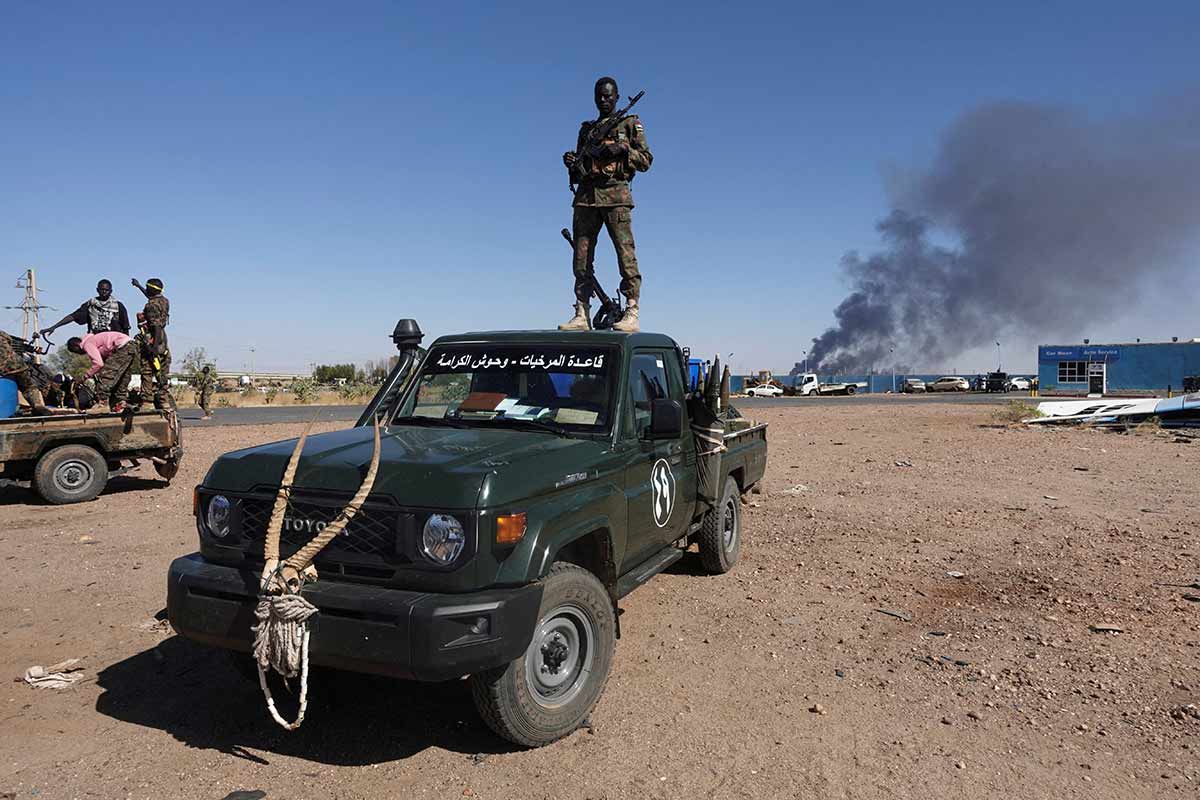
A decisive turning point came in May 2025, when General al-Burhan’s army (SAF) declared it had “fully cleared” Khartoum State of RSF forces, nearly two months after retaking the capital’s city centre. The RSF had controlled most of Khartoum for more than two years, while the army held out in fortified positions such as the General Command and the Armored Corps.
Following the SAF’s tightening siege and intensified drone strikes, RSF units withdrew southward through Omdurman and southern Khartoum, concentrating their remaining forces in Darfur and Kordofan.
Drone warfare escalates
Port Sudan, used by SAF as a temporary administrative capital, came under repeated drone attacks throughout 2025, including a major strike in May that caused significant damage and underscored the city’s growing vulnerability.
Khartoum has also continued to face intermittent drone attacks targeting infrastructure, the airport, military installations, and electricity stations.
RSF drone operations have expanded nationwide, hitting SAF-aligned positions in Al-Jazira, Blue Nile, Northern State, and River Nile State.
Kordofan under siege
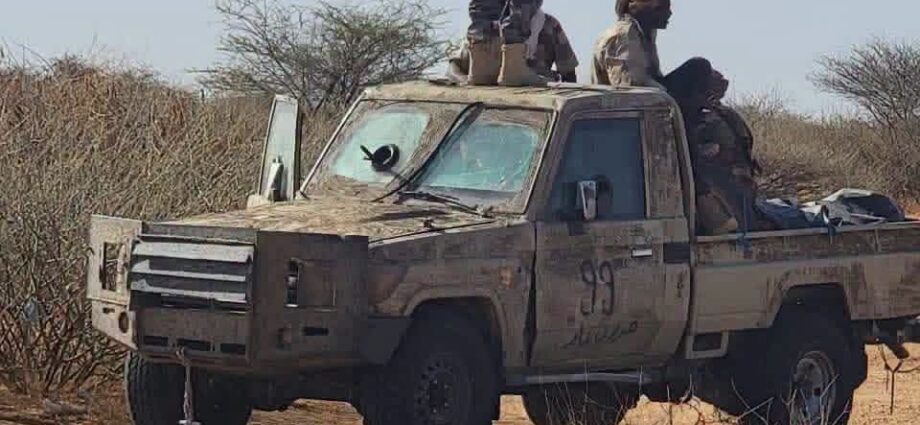
After capturing El Fasher in late October and consolidating control over all five states of Darfur, the RSF and allied factions of the SPLM-North pushed deeper into Kordofan.
This month, the RSF overran Babanūsa after a nearly two-year siege and is simultaneously besieging El Obeid in North Kordofan and Kadugli in the south. The fall of the Heglig oilfield to the RSF this month further shifted the strategic balance.
Heavy fighting continues around El Obeid, the regional capital, where SAF is attempting to hold the city as a defensive barrier preventing RSF expansion toward the north and east.
Border regions have also changed hands, with the RSF capturing the disputed border triangle area in June.
Regional involvement deepens
The year 2025 saw Sudan’s war transition from fluid frontline clashes to entrenched regional consolidation, effectively dividing the country into two distinct geographic blocs.
SAF accuses the United Arab Emirates of fuelling the conflict by backing the RSF, and also points to Chad and South Sudan. The RSF, meanwhile, accuses Egypt of supporting SAF.
International reports have cited involvement from multiple countries—including Iran, Russia, Egypt, the UAE, China, Qatar, Chad, South Sudan, and Eritrea—through arms transfers and logistical support to the warring parties.
A fragile military stalemate
Retired brigadier Sabri Ahmed Hassan told Sudan Tribune the battlefield now reflects a fragile and unstable military freeze. Both sides, he said, have exhausted their ability to achieve total victory, opening the door to new scenarios.
Sabri believes the emerging reality by the end of 2025 resembles a de facto borderline dividing central and western Sudan, with potential flashpoints across the White Nile, Sennar, and South Kordofan as both sides compete to seize oil fields, power stations, and major economic assets—ushering in what he calls a “war for resources.”
De facto partition looms
Strategic analyst Dr. Mohammed Idris argues that after nearly three years of fighting, both parties may be forced to accept a long-term “reality of division” in the absence of a political settlement.
Idris warns that without a peace agreement to end hostilities, allow humanitarian access, and stabilize the frontlines, Sudan faces the risk of total collapse.
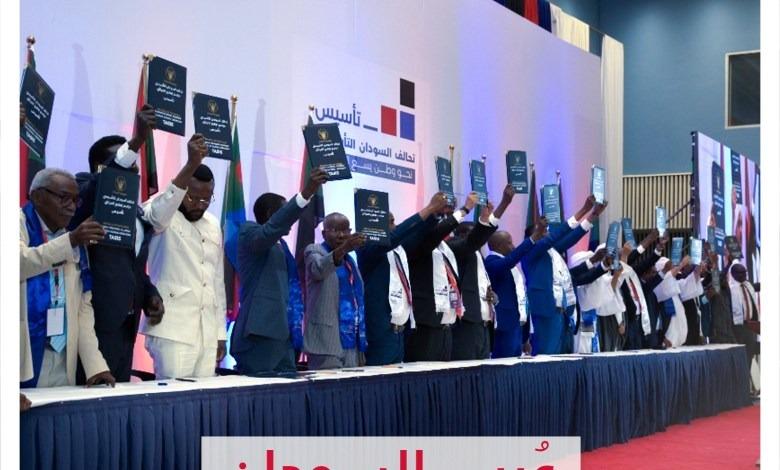
Politically, he expects growing acceptance of an expanded federal model granting regions broad autonomy and local security forces to be integrated later. Idris describes the current moment as one of mutual exhaustion and forced bargaining—illustrated by the recent agreement between Burhan, Hemedti, and Salva Kiir to safeguard the Heglig oilfields.
Looking to 2026: drone dominance and strategic paralysis
Sabri predicts that 2026 will see even greater reliance on drones as both sides seek aerial advantage and attempt to prevent enemy troop movements, effectively paralyzing ground operations.
He adds that SAF’s future strength will depend heavily on maintaining supply lines through eastern and maritime routes.
Idris, however, does not expect 2026 to bring an end to the war. Instead, he foresees a shift from urban battles over cities to a struggle for political and geographic control.