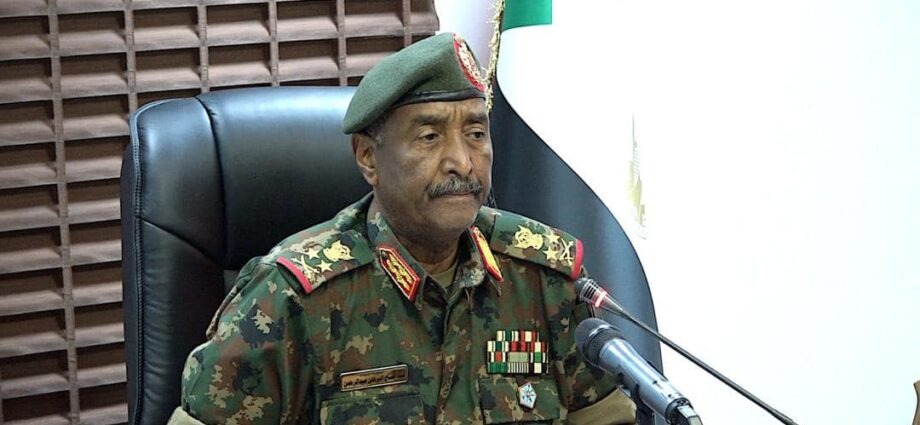
Sudan’s SAF chief and head of the SAF, Abdel Fattah al Burhan, is facing what has been described as an unprecedented political crisis, as pressure mounts from Islamist groups while public anger continues to build.
In a political analysis highlighting the depth of Sudan’s ongoing crisis, political analyst and writer Dr Amal Abdullah al Hadhabi said Burhan is trapped in a historic dilemma due to his deep dependence on a close alliance with the Muslim Brotherhood, a relationship she warned now threatens his political survival and places Sudan on the brink of collapse.
al Hadhabi said Burhan’s attempts to deny the presence and influence of Islamists within his ranks, through what she described as media misdirection, have failed. She noted that senior figures from the Islamist movement themselves were quick to respond, including former Sennar governor Ahmed Abbas, who stated that the Islamic movement is effectively running the war and that around 75 percent of SAF fighters are affiliated with the Brotherhood.
Al Hadhabi held the Burhan Islamist alliance fully responsible for undermining Sudan’s democratic transition, obstructing the revolutionary process that followed the overthrow of Omar al Bashir, and igniting armed conflict. She said the alliance was also behind the collapse of the transitional civilian military partnership, the outbreak of the April 2023 war, and the sabotage of peace initiatives, including the rejection of the most recent ceasefire proposal from the international Quartet, due to direct pressure from Islamist leaders embedded within military decision making circles.
She added that Burhan fears severing ties with extremist groups such as the al Bara ibn Malik Brigade, as they form a core source of fighters for SAF. At the same time, Islamist leaders understand that any genuine peace or civilian transition would inevitably lead to their removal from power. This, she argued, explains Burhan’s earlier decision to dissolve the committee tasked with dismantling the former regime and to reinstate Bashir era figures within the military.
According to al Hadhabi, Burhan’s options are narrowing further following a joint statement by Egypt, Saudi Arabia, the UAE and the US, which explicitly said Sudan’s future cannot be dictated by extremist groups linked to the Muslim Brotherhood. She noted that recent US sanctions against Jibril Ibrahim and the al Bara ibn Malik Brigade send a clear signal that the international community will not accept Islamist dominance in Sudan’s future.
Al Hadhabi concluded that the international Quartet track now represents the only remaining path forward, questioning whether Burhan has the courage to save both himself and the country, or whether he will continue down an uncertain path alongside his Islamist allies.