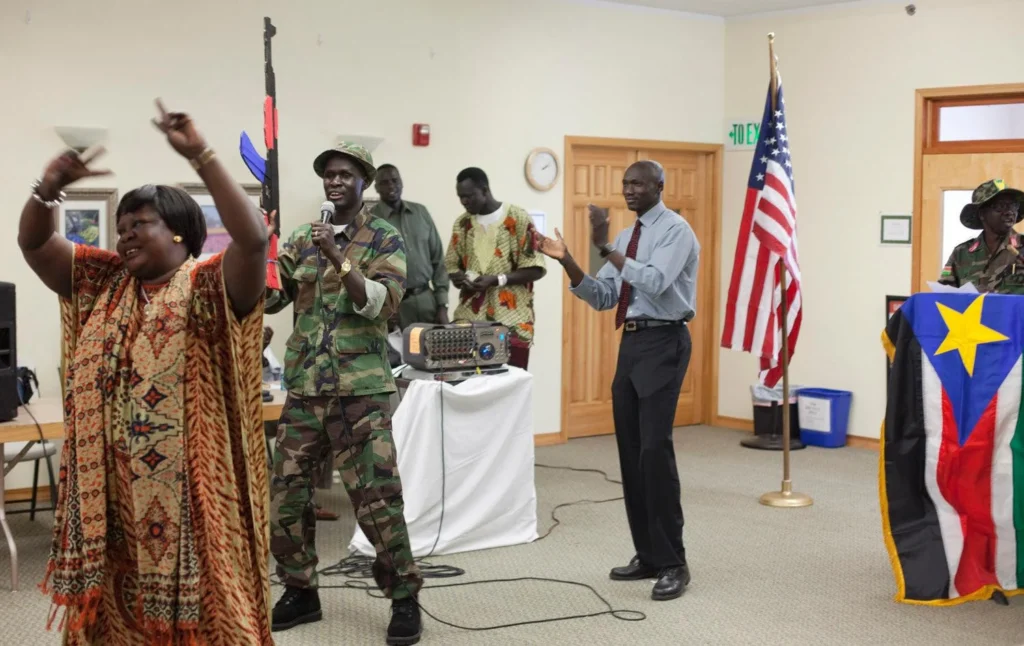
Immigrant rights advocates have filed a lawsuit challenging the Trump administration’s decision to end deportation protections for South Sudanese migrants.
The case, filed in a Boston federal court, contests the termination of Temporary Protected Status for more than 200 nationals.
Four South Sudanese migrants and the advocacy group African Communities Together are named as plaintiffs in the lawsuit.
They argue the Department of Homeland Security unlawfully placed them at risk of deportation after protections expire on January 5.
Temporary Protected Status allows migrants from crisis-hit countries to live and work legally in the United States.
The lawsuit says the administration violated the law governing TPS by disregarding ongoing humanitarian dangers in South Sudan.
It also alleges the decision was driven by racial discrimination, violating the Fifth Amendment of the U.S. Constitution.
African Communities Together executive director Amaha Kassa said the policy reflects an effort to strip protections from communities of colour.
She warned the move ignores real threats facing migrants if forced to return home.
The Department of Homeland Security did not immediately respond to requests for comment.
South Sudan has endured years of violent conflict since independence in 2011, including a brutal civil war.
That conflict, lasting from 2013 to 2018, claimed an estimated 400,000 lives and displaced millions.
The United States first designated South Sudan for Temporary Protected Status in 2011.
Roughly 232 South Sudanese nationals currently benefit from TPS, with 73 more applications pending, the lawsuit says.
Homeland Security Secretary Kristi Noem announced the termination in a notice published on November 5.
She said South Sudan no longer met the conditions required for TPS designation.
The decision follows similar moves affecting migrants from Syria, Venezuela, Haiti, Cuba and Nicaragua.
Those terminations have triggered multiple legal challenges now moving through U.S. courts.