In a scene worthy of a Hollywood thriller, U.S. special operators reportedly captured Venezuelan President Nicolás Maduro in a lightning raid on January 3, 2026. The unit responsible was none other than the Army’s Delta Force – the elite “special mission unit” so secretive that the Pentagon rarely even acknowledges its existence.
This dramatic news has many asking: Who exactly is Delta Force? How did this shadowy unit come to be, and what remarkable missions has it carried out?
Below, we explore the origins, training, operations, and even the pop culture mystique of Delta Force – America’s most clandestine commando team.
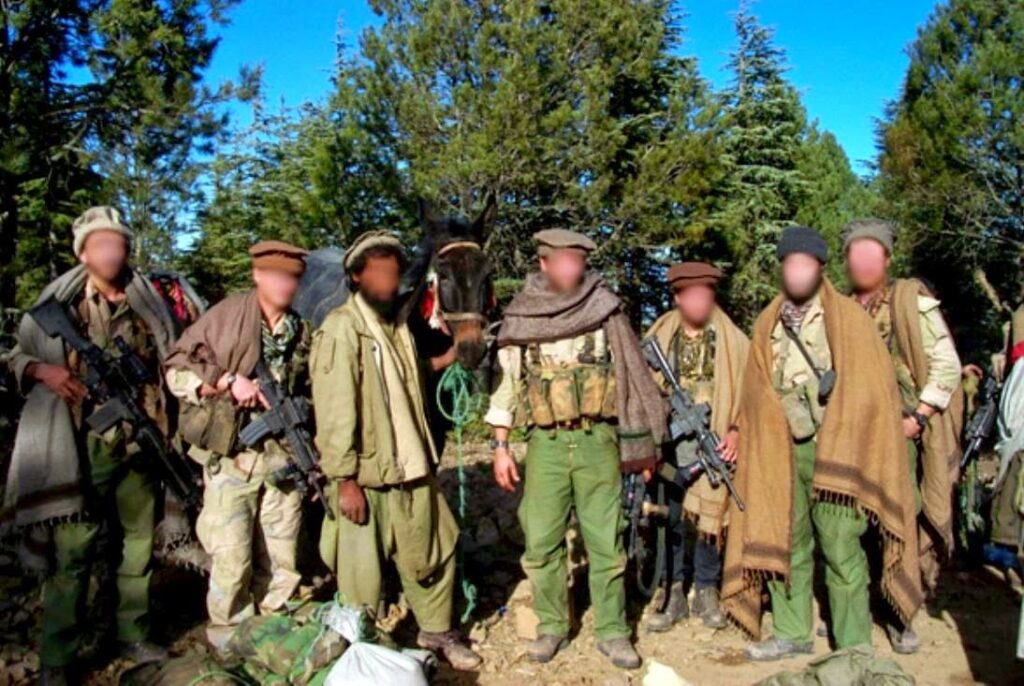
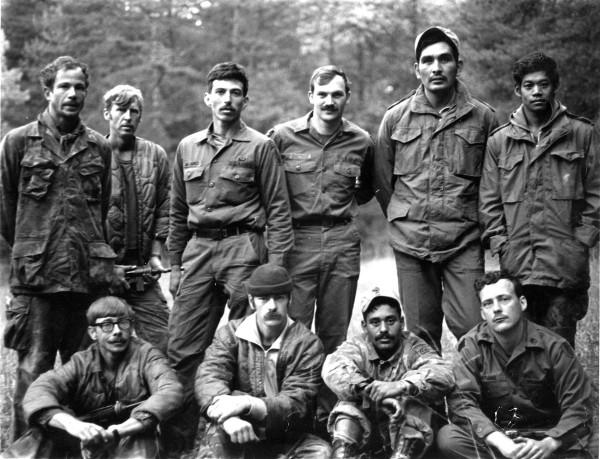
One of the most-circulated images is the “Delta force GIs disguised as Afghan civilians, November 2001” file (sourced from CBS News broadcast clips per its description). Delta Force operators disguised as Afghan civilians during the 2001 hunt for Osama bin Laden (faces blurred), reflecting the unit’s ability to blend in thanks to relaxed grooming standards that let them avoid looking like U.S. soldiers.
Origins and mission of Delta Force
Delta Force (officially 1st Special Forces Operational Detachment–Delta, or 1st SFOD-D) was secretly created in 1977 amid a rising tide of international terrorism. U.S. Army Colonel Charles “Charlie” Beckwith, a Vietnam veteran, was the driving force behind its formation. Beckwith had spent time embedded with Britain’s Special Air Service (SAS) and was impressed by their tactics and rigorous selection process.
He envisioned a similar American unit “built upon small teams” of mature, highly trained individuals capable of making split-second decisions on life-or-death missions. In short, Delta Force was established as a dedicated counterterrorism and hostage-rescue unit that could deploy worldwide on a moment’s notice to handle “highly sensitive situations including acts of international terrorism”. From the beginning, Delta drew talent from the Army’s elite (Rangers, Green Berets, etc.) and even other services, selecting only the best of the best for this new mission.
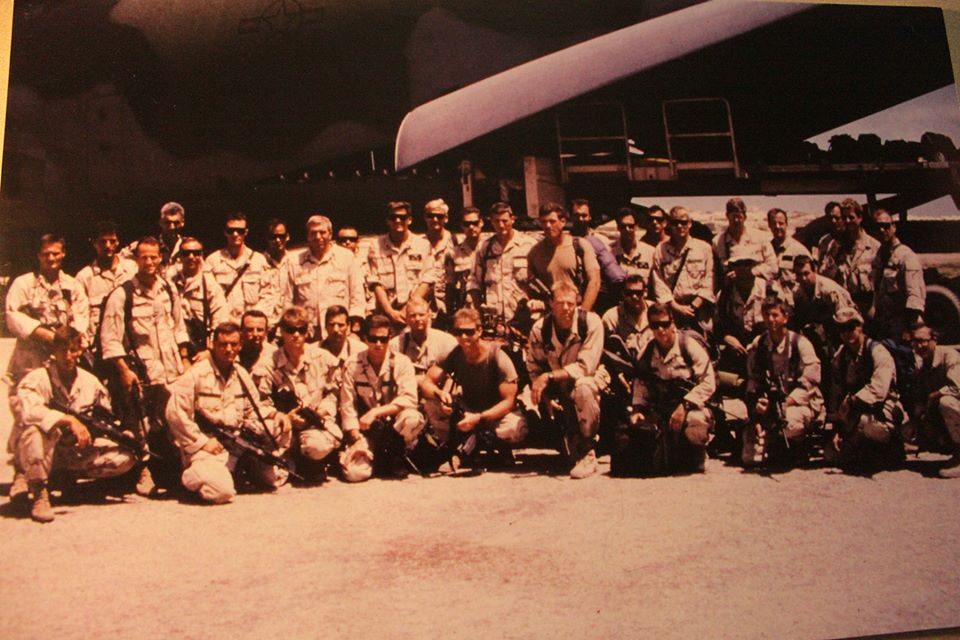
By http://thelaymansperch.com/blog/wp-content/uploads/2014/04/Delta0416_17.jpg. Delta C Squadron Somalia Sept 1993.jpg
Despite its growing role, Delta Force remains an official secret. The U.S. government traditionally does not publicly acknowledge Delta Force by name, often referring to it obliquely or not at all. Even within military bureaucracy, the unit has taken on various cover names – Combat Applications Group (CAG), Army Compartmented Element (ACE), and others – to hide its identity.
This culture of secrecy stems from the need to operate in the shadows; Delta operators conduct missions where deniability and stealth are paramount. Over the decades, Delta Force has thus been carefully groomed to be “Without Equal” (its Latin motto Sine Pari) – a clandestine strike force that Washington can deploy when facing the toughest crises, all while maintaining a low profile.
Recruitment and training
Getting selected for Delta Force is nearly as daunting as the missions themselves. Unlike conventional units, there is no direct recruitment from the street – candidates are usually experienced soldiers from units like the Army Rangers or Special Forces, and occasionally from the Marines or other services. Twice a year, Delta holds a highly rigorous Assessment and Selection course, following an intensive prescreening of applicants.
This selection, lasting about 3–4 weeks, pushes candidates to their physical and mental limits through grueling long-range land navigation exercises, timed marches in rough terrain carrying heavy packs, and a battery of stress tests. The goal is to find individuals who “enjoy being alone, who can think and operate by themselves” – as Beckwith described the SAS troopers he modeled Delta after. Only a small fraction of those who begin Delta’s selection pass and move on to the next phase.
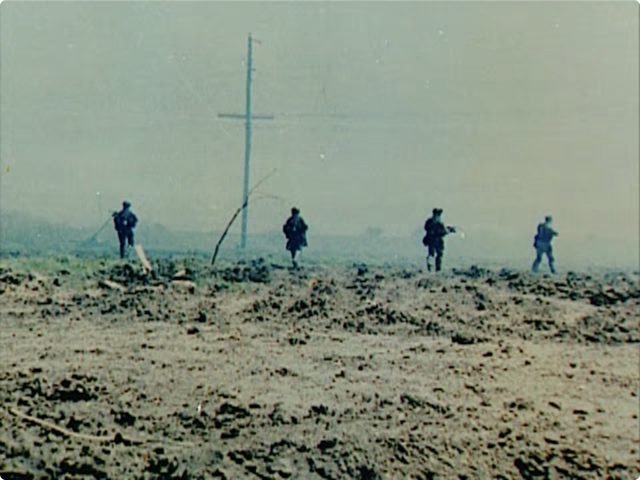
Delta Force operators searching for survivors at Waco,Texas.jpg
Those few who survive selection enter the Operator Training Course (OTC), roughly six months of advanced training. According to one Delta veteran’s memoir, trainees are taught a breathtaking array of skills: 100% accuracy marksmanship, demolition and explosives handling, personal protection detail tactics, covert tradecraft (espionage techniques), and hostage rescue simulations using live ammunition. In fact, Delta’s training exercises are notoriously realistic – for example, in some hostage rescue drills, live rounds are fired near role-players acting as hostages to teach trainees that missing a shot is not an option.
Delta operators also specialize in advanced infiltration methods, from HALO parachuting (high-altitude, low-opening jumps) to combat SCUBA diving. By the end of OTC, each operator is highly skilled in close-quarter battle, sniper marksmanship, demolitions, medical aid, and other talents that will be needed for the unit’s no-fail missions. The training is intense and unrelenting – but it forges Delta operators into some of the most capable and versatile special forces soldiers in the world.
Cloaked in secrecy
Secrecy is a way of life for Delta Force. The Department of Defense tightly controls information about the unit and usually refuses to comment on Delta’s activities unless a mission is publicly obvious (or a member is killed in action). Even the number of operators in Delta Force is classified; the Pentagon offers few details about the group’s organization or size. Over the years, the Army has even changed Delta’s official designation multiple times to maintain deniability.
For instance, the unit has appeared under innocuous names in military documents – one example: “Army Compartmented Element” was listed in a Fort Bragg directory instead of the word Delta. These measures help keep Delta Force “hidden from public view,” as one analysis notes.
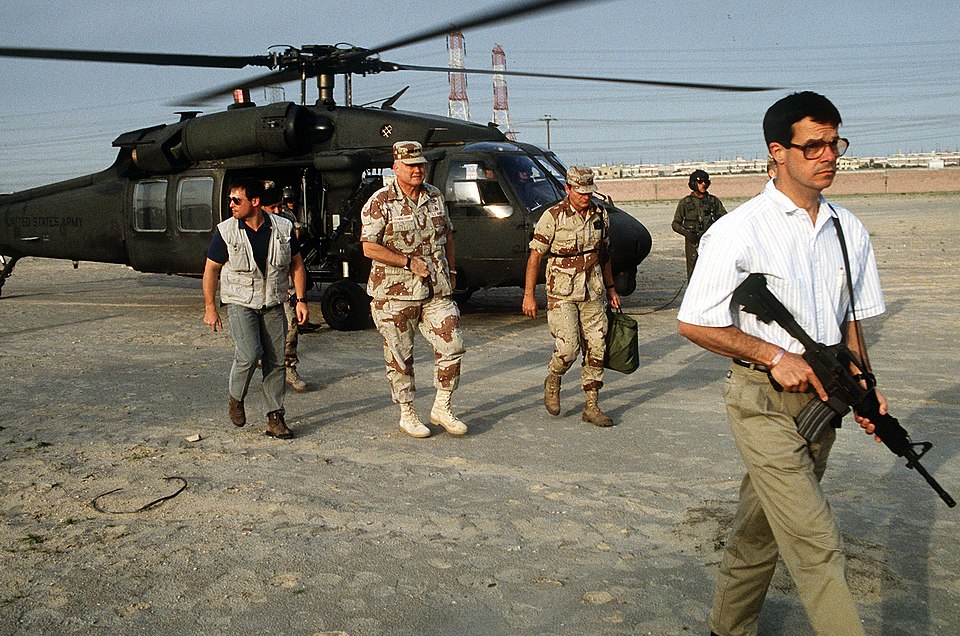
Delta Force bodyguards (right, Bill Cronin; left, unknown) providing close protection to General Norman Schwarzkopf during the Persian Gulf War, 1991.
In fact, Delta operators are granted unusual leeway in their appearance specifically to preserve secrecy in the field. Unlike regular troops, they often wear civilian clothing or local attire and grow long hair or beards to blend in with the environment. This practice proved invaluable during operations like the 2001 campaign in Afghanistan, where Delta teams donned local garb while searching for Taliban and Al Qaeda leaders.
Such anonymity is crucial – it allows Delta members to move through hostile areas without immediately announcing themselves as Americans. The unit is so secretive that even photographs of Delta operators are rare; typically, when images do surface, the operators’ faces are blurred or pixelated. In 2023, an unusual breach occurred: during a public visit to Israel, the White House social media team accidentally posted a photo that showed Delta Force members with their faces visible, sparking concern about exposing identities. The White House quickly deleted the image and issued an apology, a reminder of how seriously the anonymity of Delta operators is safeguarded.
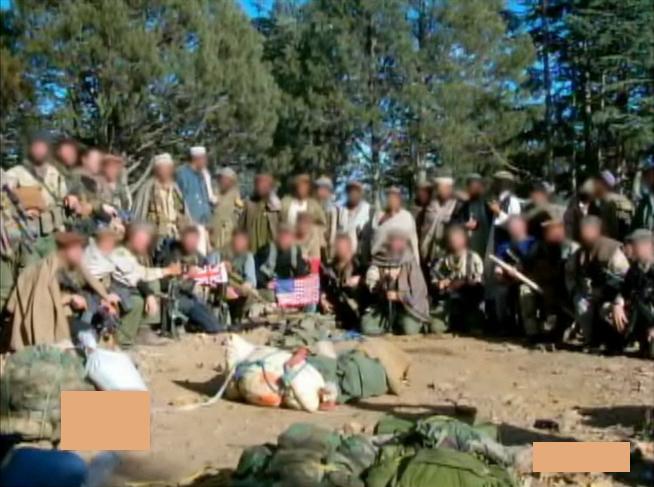
U.S. Combat Applications Group (Delta Force) and British Special Boat Service at Tora Bora.
Despite this veil of secrecy, Delta Force’s nickname “The Unit” is spoken with reverence in military circles. Internally, Delta is said to prize a culture of humility, flexibility, and quiet professionalism. Its operators – sometimes called “D-Boys” – tend to shun the spotlight and rarely write books or speak to the press (a norm that makes the few who have, like Eric Haney or Dalton Fury, notable exceptions).
Officially, Delta Force is part of the Joint Special Operations Command (JSOC), alongside the Navy’s SEAL Team Six and other Tier 1 units. In JSOC task forces, Delta often operates under code names such as “Task Force Green”, further masking its presence. All of these layers of secrecy help Delta Force carry out dangerous missions around the globe with a degree of plausible deniability – allowing U.S. leaders to deploy this elite team without immediately tipping off the world.
Notable operations and real-life missions
Most of Delta Force’s operations are classified and never revealed to the public. However, over the decades some of Delta’s exploits have become known, showcasing both the unit’s extraordinary capabilities and the risks they face. Delta’s very first mission was a daunting one: in April 1980, Delta operators spearheaded the U.S. attempt to rescue 53 American hostages in Tehran, Iran – the infamous Operation Eagle Claw. The operation ended in disaster at a remote desert staging site (code-named Desert One) when a helicopter collided with a transport plane during a sandstorm, killing eight U.S. servicemen and forcing the mission to be aborted.
Though a tragic failure, Eagle Claw shaped Delta’s future, leading to improvements in joint special operations and aviation support. It also proved that Delta Force would be sent into the most volatile situations, even at great risk. (Notably, the failure in Iran spurred the creation of SEAL Team Six as a naval counterpart, to ensure the U.S. had multiple elite units ready for such crises.)
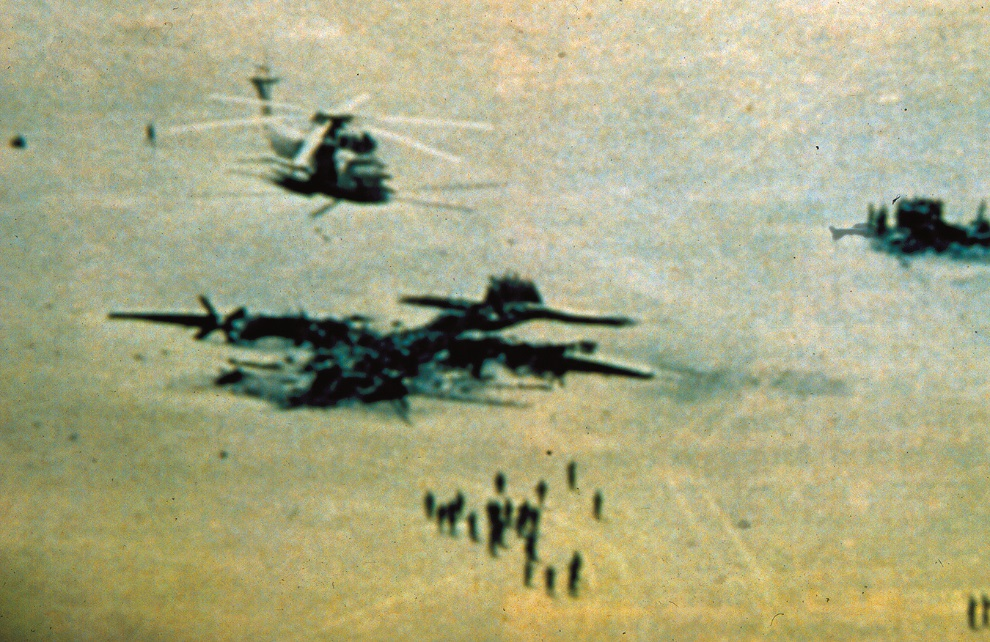
A photo of the “Desert One” landing site, a piece of desert in Iran used by U.S. forces as a refueling point in an attempt to rescue U.S. hostages in Iran. On 24 April 1980 a U.S. Navy Sikorsky RH-53D Sea Stallion (BuNo 158761, visible at right) collided with a U.S. Air Force Lockheed EC-130E Hercules (s/n 62-1809, wrecked in the foreground) during refueling after the mission was aborted. Both aircraft were destroyed, eight crewmen died. In the background is one of the five intact, but abandoned RH-53Ds.
Delta Force learned and rebounded from that early setback. In the years that followed, the unit notched several high-stakes successes – albeit ones often kept low-profile at the time. In 1983, for example, Delta operators deployed during the U.S. invasion of Grenada (Operation Urgent Fury), where they rescued American hostages held by Marxist forces on the island. (For its role in Grenada, Delta was later awarded a Joint Meritorious Unit Award.)
In December 1989, Delta took part in Operation Just Cause in Panama, where its commandos famously assaulted the Modelo Prison to free an American hostage and aided in the capture of Panamanian dictator Manuel Noriega. Bringing Noriega to justice was a landmark achievement – it was the first time Delta Force helped depose a head of state, and it earned the unit a Valorous Unit Award for extraordinary heroism. (Interestingly, the recent grab of Venezuela’s Maduro came almost exactly 35 years after Noriega’s capture, marking one of the only other instances of Delta Force nabbing a sitting leader.) Delta operators were also reportedly involved in the hunt for drug lord Pablo Escobar in Colombia; while Colombian forces ultimately killed Escobar in 1993, U.S. Army “advisors” from Delta Force are believed to have helped track the kingpin in the months leading up to his demise. These operations solidified Delta’s reputation as the unit to call for “no-fail” missions against high-profile targets.
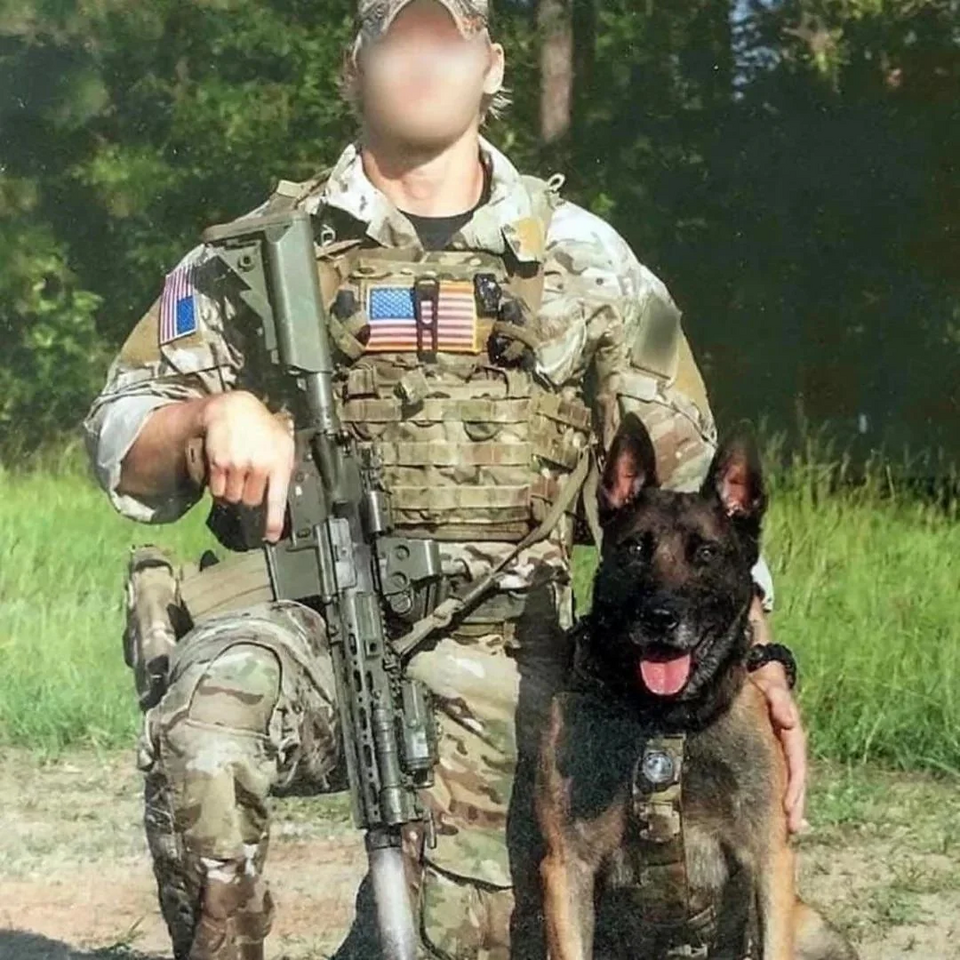
The photo depicts a Combat Applications Group operator using an HK416D rifle next to their K9.
One of Delta Force’s most publicized engagements came in October 1993 on the streets of Mogadishu, Somalia – an event later known as the “Black Hawk Down” battle (from the best-selling book and film of the same name). Delta operators were part of a JSOC task force attempting to capture Somali warlord Mohamed Farah Aidid. When two U.S. helicopters were shot down, Delta snipers Master Sgt. Gary Gordon and Sgt. 1st Class Randy Shughart volunteered to defend the crash site until reinforcements arrived. Heavily outnumbered by insurgents, both Delta snipers lost their lives after valiantly protecting the injured pilot; for their bravery and self-sacrifice, Gordon and Shughart were posthumously awarded the Medal of Honor. The Battle of Mogadishu was a bloody ordeal that demonstrated Delta’s unwavering commitment to the mission and to each other, even in the face of overwhelming odds.
In the post-9/11 era, Delta Force has been at the forefront of the Global War on Terror, executing numerous secret missions in Afghanistan, Iraq, and beyond. Delta squadrons were among the first boots on the ground in Afghanistan in 2001, helping topple the Taliban and hunt Al Qaeda fighters. For its superb performance in the opening phase of Operation Enduring Freedom (Afghanistan, 2001–2002), Delta Force was awarded the Presidential Unit Citation, the highest honor for a military unit. The unit received a second Presidential Unit Citation for its role in Operation Iraqi Freedom (2003), recognizing Delta’s critical impact during the invasion of Iraq and the capture of key figures.
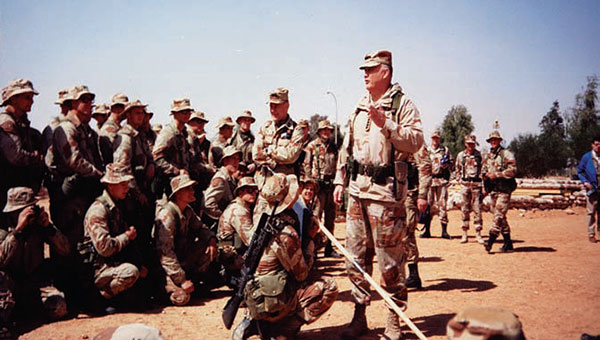
General Norman Schwarzkopf meets with and thanks Delta Force troops following the Persian Gulf War. Delta Force units had deployed into the Iraqi desert in an effort to hunt down and destroy mobile SCUD missile launchers. Note the Desert Camouflage Uniform jacket and the Delta Force bodyguard standing guard to the right.
(Delta operators were instrumental in special ops raids during the Iraq War – for example, they assisted in the capture of Saddam Hussein’s lieutenants and the hunt for insurgent leaders, even if the unit’s specific actions often went unreported in the media.) Delta has also conducted high-risk hostage rescue attempts against terrorist groups. In July 2014, Delta commandos raided an ISIS compound in Syria in an attempt to rescue American hostages (including journalist James Foley); sadly, the hostages had been moved days prior, and the mission could not save them. (Foley was murdered by ISIS a month later, underlining the cruel stakes of these operations.) Not every Delta mission has a storybook ending, but each is undertaken with the utmost professionalism and courage, often far from public view.
In recent years, some of Delta Force’s exploits have made headlines – offering the world a glimpse of its capabilities. One vivid example was the 2019 raid in Syria that eliminated ISIS leader Abu Bakr al-Baghdadi, the world’s most wanted terrorist at the time. In that operation, Delta operators flew in by helicopter at night, stormed Baghdadi’s compound, and chased the jihadist leader into a tunnel where he ultimately detonated a suicide vest. The mission was a success (no U.S. personnel were lost), and U.S. officials explicitly credited “the elite Army Delta Force” as the unit on the ground.
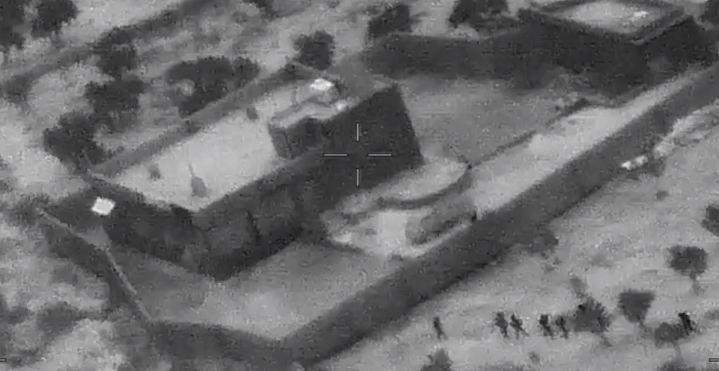
U.S. special operations forces move toward an objective in the compound occupied by Abu Bakr al-Baghdadi in Syria, Oct. 26, 2019.
And now, as of January 2026, Delta Force appears to have struck again with a bold mission that would have been unthinkable years ago: the capture of a sitting head of state in Nicolás Maduro. Backed by U.S. military airstrikes across Caracas, Delta commandos allegedly seized Maduro and flew him out of Venezuela in a matter of hours. If confirmed, this operation would rank among Delta’s most audacious – comparable to the Noriega capture in scale, but even more politically sensitive. It underscores how Delta Force remains the tip of the spear for America’s most challenging and sensitive military endeavors. From desert battlefields and urban warzones to clandestine missions in any corner of the globe, Delta Force has built a formidable legacy (mostly in shadows) as the unit that America calls when it absolutely needs the job done.
Delta Force in popular culture and public perception
For a unit that officially “does not exist,” Delta Force has certainly left an imprint on popular culture. Paradoxically, much of what the public thinks it knows about Delta comes from movies, TV, and novels – some more accurate than others. The very name “Delta Force” entered pop culture lexicon in large part due to a 1986 action film The Delta Force starring Chuck Norris and Lee Marvin. That movie, inspired by real-life Middle East airline hijackings, portrayed a group of Delta commandos heroically saving hostages in Beirut.
It was patriotic, fist-pumping entertainment, complete with Norris riding a missile-equipped motorcycle and the Delta team triumphantly rescuing everyone in the end. Real Delta operators, however, were reportedly less enthusiastic about the film’s creative liberties – particularly its simplistic, happy ending. In reality, counterterrorist missions rarely unfold so neatly. (As one critic dryly noted, “In The Delta Force, the hijacking ends the way we might have wanted it to,” indulging America’s “revenge fantasies” rather than reflecting the messy outcomes of real operations.) Indeed, by the time the movie was released, Delta Force had already experienced the bitter disappointment of the failed Iran rescue and knew all too well that not every mission is a clean-cut victory.
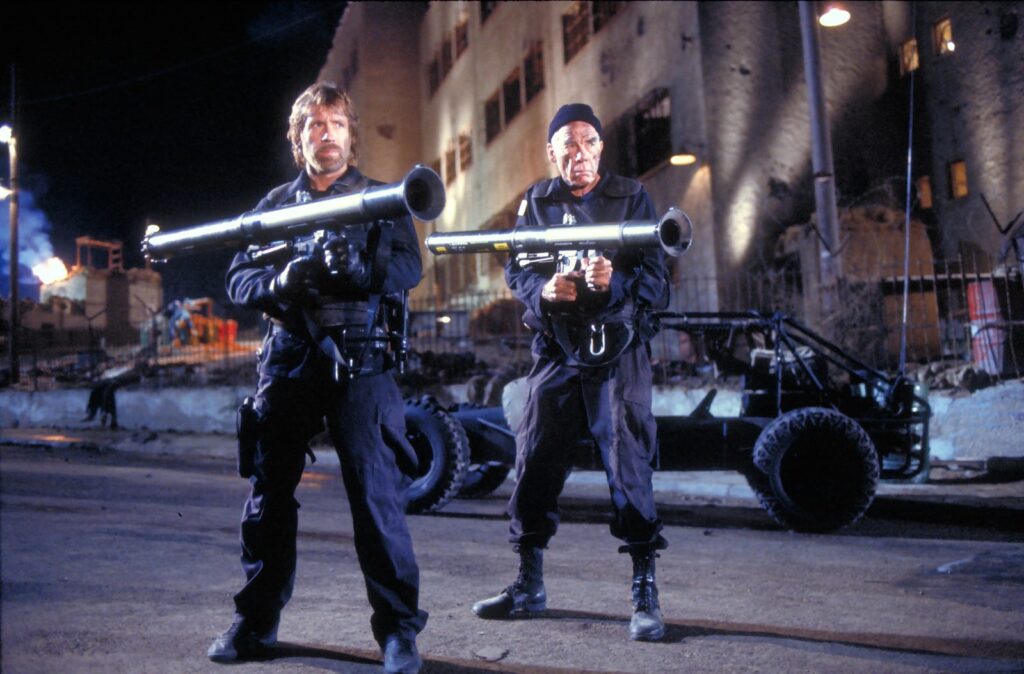
The combined might of Chuck Norris, Lee Marvin and two bazookas can’t undo a tragedy. MGM capture
Over the years, Delta Force has been featured – sometimes directly, often thinly veiled – in numerous books and media. The bestselling nonfiction book Black Hawk Down depicted Delta operators in the Battle of Mogadishu (later adapted into a film where actors played Delta characters). More insider accounts have been few, due to the secrecy oath members take, but a notable example is Eric L. Haney’s memoir Inside Delta Force (2002), which recounted his experiences as an early Delta operator. Haney’s book offered a rare window into Delta’s training and operations (though it also drew criticism from some former members for revealing too much).
Interestingly, Inside Delta Force went on to inspire the CBS television drama “The Unit,” which ran from 2006–2009 with Haney as a technical advisor. That show brought a fictionalized version of Delta Force into American living rooms, portraying the personal and professional lives of a clandestine Army unit (introducing many viewers to the term “Delta” in a military context).
Despite the Hollywood portrayals, the real Delta Force cultivates an image of quiet professionalism. They don’t seek public accolades or recognition; in fact, Delta’s successes often only become known years later, if ever. The contrast between Hollywood’s version of Delta and the actual unit can be stark. Films might show clear-cut heroics and tidy endings, but as one Delta veteran put it, “There are no fairy-tale endings in real special ops – only accomplished missions, or lessons learned for next time.”
What is known for sure is that Delta Force operators prefer to stay in the shadows, letting their legendary actions speak for themselves. From the jungles of Panama to the streets of Fallujah, their story is one of a brotherhood of elite warriors carrying out the nation’s toughest missions with skill, honor, and secrecy. As recent events remind us, Delta Force may not officially “exist” – but when history pivots on a knife’s edge and a mission must succeed, Delta is very much real and ready to answer the call.