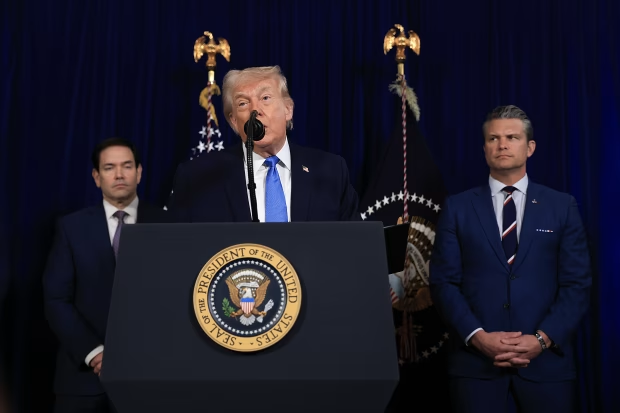
President Donald Trump said Friday that the United States will temporarily administer Venezuela following the capture of Nicolás Maduro, arguing that Washington had no choice after what he described as years of criminal activity, regional destabilization, and direct threats to U.S. security emanating from Caracas.
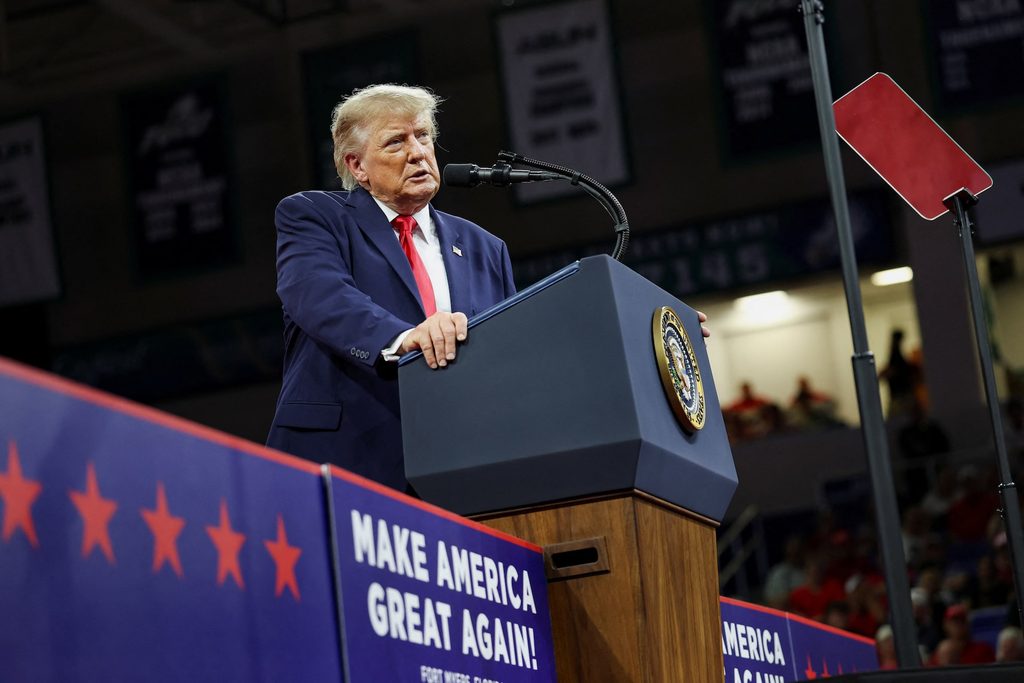
“We are going to run Venezuela until there is a proper transition,” Trump said during a joint press conference with Secretary of State Marco Rubio, Defense Secretary Pete Hegseth, and a spokesperson for the Joint Chiefs of Staff. “This is not about occupation. This is about responsibility. Venezuela was turned into a criminal enterprise, and it finally reached our shores.”
Trump said Maduro’s removal was the culmination of a long-running assessment that the Venezuelan leader was no longer merely a regional problem but a national security threat, citing drug trafficking networks, ties to transnational gangs, and what he described as the deliberate export of criminals through mass migration.
“This wasn’t a government,” Trump said. “It was a narco-regime. It was hostile. And it was reckless. When a regime starts attacking you indirectly, you still have the right to defend yourself.”
Trump added that U.S. involvement would be temporary and conditional, tied to the emergence of a credible Venezuelan authority capable of maintaining order, securing borders, and preventing the country from being used as a platform for criminal or hostile activity.
How the operation unfolded
The Joint Chiefs of Staff spokesperson provided the most detailed public outline yet of the military operation that led to Maduro’s capture, describing it as a precision mission conducted under existing counter-narcotics and national defense authorities.
According to the briefing, U.S. intelligence identified a narrow window after Maduro relocated from central Caracas to a secured location outside the capital, following internal unrest and concerns about loyalty within his security detail.
The operation involved U.S. special operations forces, supported by intelligence, surveillance, and reconnaissance assets, as well as regional naval and air components positioned to prevent interference or escape.
“This was a capture mission, not a strike mission,” the Joint Chiefs spokesperson said. “The objective was to detain specific individuals and remove them from the operational environment without broader military engagement.”
The spokesperson said U.S. forces moved rapidly, neutralized resistance without significant fighting, and secured Maduro and his wife within hours. There were no U.S. casualties, and officials said no Venezuelan civilians were targeted.
Asked about troop levels or staging bases, the spokesperson declined to provide details, citing operational security, but confirmed that U.S. forces remain postured in the region to deter retaliation and prevent a security vacuum.
“This is a conditions-based operation,” the spokesperson said. “Our posture will reflect developments on the ground.”
Rubio: A line was crossed
Secretary of State Marco Rubio said the administration concluded that Maduro had crossed a threshold that made continued diplomatic management impossible.
“This regime wasn’t just corrupt,” Rubio said. “It was actively exporting instability. When a government weaponizes crime and migration against another country, that’s no longer an internal matter.”
Rubio confirmed that Congress was not notified in advance of the operation, saying secrecy was essential.
“If this had leaked, the mission would have failed,” Rubio said. “And the people we were trying to hold accountable would still be free.”
Rubio said the State Department is now focused on assembling a transitional framework involving Venezuelan professionals, regional partners, and international institutions, while making clear that figures tied to the Maduro system would not be part of any interim authority.
“There will be no recycled regime,” Rubio said. “The transition must be real, transparent, and irreversible.”
Trump: ‘We’re not leaving chaos behind’
Trump rejected comparisons to past U.S. interventions, saying Venezuela’s situation was fundamentally different.
“We’re not leaving chaos behind,” he said. “We’re cleaning up chaos that was deliberately created.”
He said U.S. authorities are prioritizing humanitarian access, energy infrastructure security, and the restoration of basic state functions, including ports and airports.
Trump also suggested U.S. energy companies could play a role in stabilizing Venezuela’s oil sector during the transition, describing it as essential to economic recovery.
“You can’t rebuild a country if criminals are running the oil fields,” he said.
Hegseth: Deterrence message delivered
Defense Secretary Pete Hegseth said the operation was intended to send a broader signal to hostile actors who believe indirect tactics shield them from consequences.
“This was a deterrence operation,” Hegseth said. “If you target Americans through drugs, gangs, or engineered instability, you should not assume distance protects you.”
Hegseth emphasized that the U.S. military’s role is limited to security and stabilization, not governance, and said civilian agencies will lead the transition effort.
No exit timeline yet
The Joint Chiefs spokesperson said no specific timeline has been set for the end of U.S. oversight, stressing that withdrawal will depend on conditions rather than dates.
“The end state is a Venezuelan government capable of governing responsibly and preventing its territory from being used as a threat platform,” the spokesperson said.
International reaction has been mixed, with Russia, China, and Cuba condemning the U.S. action, while some regional governments privately welcomed Maduro’s removal.
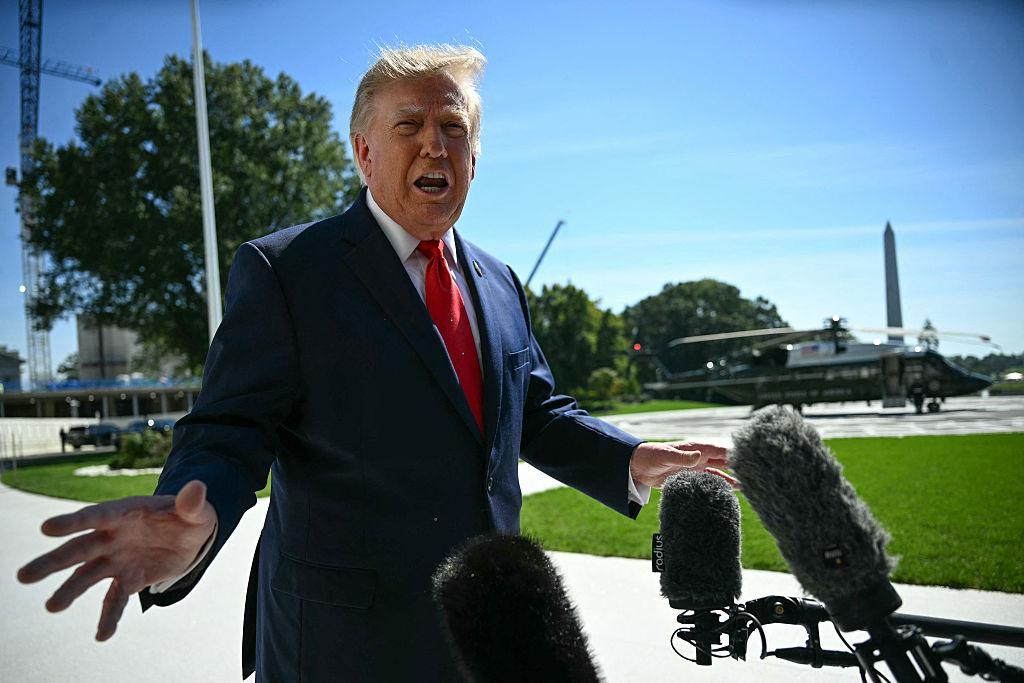
Trump dismissed the criticism.
“They protected him,” he said. “Now they’re upset he’s gone.”