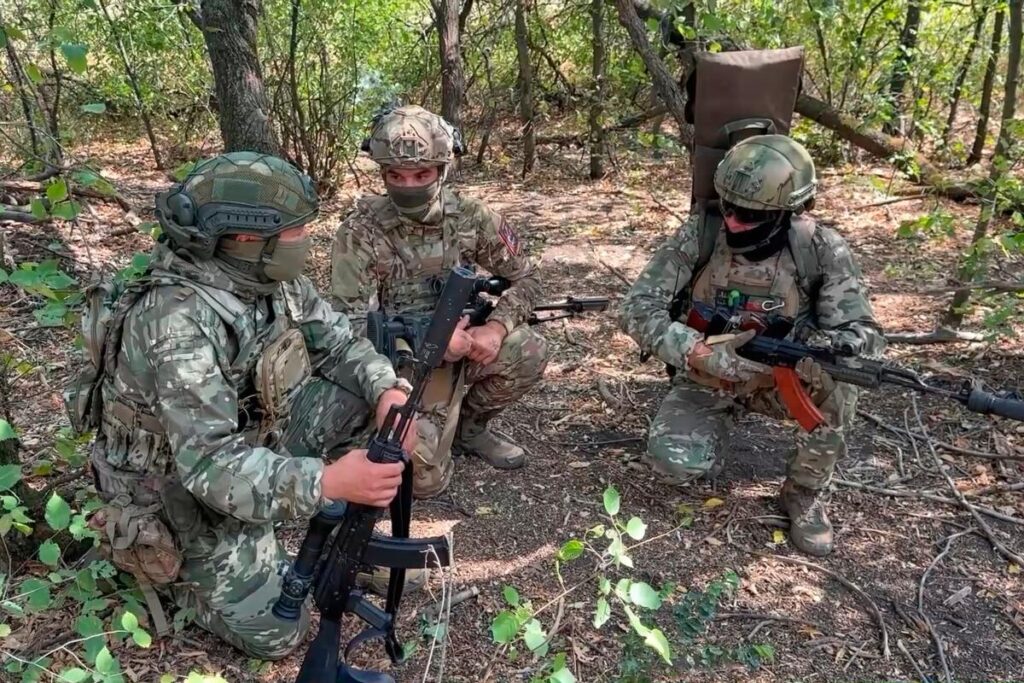
A BBC investigation has revealed how a Russian woman allegedly used Telegram to recruit foreign men—many from poorer countries in the Middle East and Africa—to fight for Russia in Ukraine, with families saying their sons were misled, coerced and, in some cases, killed.
The report focuses on Polina Alexandrovna Azarnikh, a former schoolteacher from Voronezh, who ran a Telegram channel with around 21,000 subscribers. Through upbeat videos and posts, she promoted one-year “military service” contracts, monthly salaries, sign-on bonuses, and assistance in obtaining Russian citizenship.
BBC journalists tracked nearly 500 “invitation letters” posted on her channel—documents used to facilitate entry into Russia for enlistment. Many were addressed to men from Syria, Egypt, Yemen, Morocco, Iraq, Ivory Coast and Nigeria. The BBC said the channel explicitly encouraged applications from men whose visas had expired, or who were living in Russia illegally.
One Syrian construction worker, identified by the pseudonym “Omar,” told the BBC he was stranded in Moscow in early 2024 when he was approached about what he believed would be civilian security work. Instead, he said Azarnikh quickly transported him and other Syrians to a recruitment centre in Bryansk, presented Russian-language contracts they could not read, and took their passports, promising citizenship and safer assignments.
Omar said he was offered around $2,500 a month and a $5,000 sign-on payment. He also alleged he was told he could avoid frontline combat by paying an additional $3,000. After refusing, he said he was sent to the front after just 10 days of training, where he experienced heavy shelling and high casualties.
According to Omar, commanders threatened him with execution or imprisonment if he disobeyed orders. He also claimed Azarnikh later sent him a video showing his passport being burned after he complained—an allegation she denied when contacted by the BBC.
The investigation found that while recruits understood they were joining the Russian army, many believed they would be assigned away from direct combat or released after a year. However, the BBC noted that a 2022 decree issued during Russia’s partial mobilization allows contracts to be automatically extended until the end of the mobilization period, effectively keeping many soldiers in service indefinitely.
The BBC said it spoke to eight foreign fighters recruited through Azarnikh and to 12 families who said relatives she helped recruit were now dead or missing. In one case, the outlet reported hearing a voice message allegedly sent by the recruiter threatening a mother who criticized the Russian military online.
As losses mounted, the tone of the recruiter’s channel reportedly hardened, with posts telling followers that they “knew they were going to war” and that “nothing is free.” A former Syrian fighter interviewed by the BBC alleged Azarnikh had become one of the most important recruiters of foreign fighters and claimed she received a per-head payment for each recruit—an allegation the BBC said it could not independently verify.
The report places the recruitment drive within a broader pattern. The BBC identified at least two other Arabic-language Telegram channels using similar tactics, while regional media have reported cases of Jordanians being promised non-combat roles only to be deployed to the front. Jordan has previously protested to Moscow over what it described as the illegal recruitment of its citizens after some were killed fighting for Russia.
The BBC cited NATO estimates that more than one million Russian soldiers have been killed or wounded since the full-scale invasion of Ukraine began in 2022. Analysts told the broadcaster that some local Russian authorities may be incentivizing informal recruiters to help sustain troop numbers amid heavy losses.
Russia’s foreign and defence ministries did not respond to the BBC’s requests for comment.