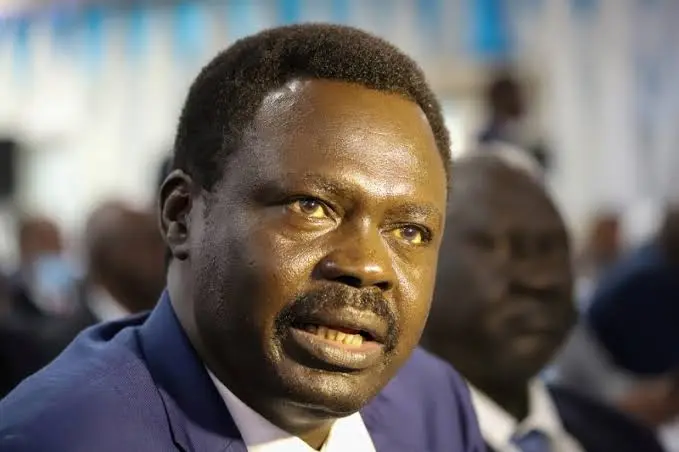
Political tensions have intensified between Minni Arko Minnawi, leader of the Sudan Liberation Movement/Army and nominal governor of Darfur, and figures aligned with the Port Sudan authorities, amid ongoing discussions aimed at ending the war in Sudan, media reported.
Sources said the dispute reflects deeper divisions within the Port Sudan camp and highlights growing resistance among hardline factions linked to SAF to any serious political settlement. Minnawi has voiced anger over what he claims is his exclusion from ceasefire-related arrangements, despite holding a largely symbolic post as Darfur governor while remaining based in Port Sudan.
According to the sources, Minnawi has criticised the authorities for what he described as a lack of transparency in negotiations with international and regional mediators, as well as contacts involving the Rapid Support Forces. He warned of ambiguity surrounding the talks and claimed concern over the details of a possible truce.
However, political observers note that Minnawi’s objections are driven less by principle and more by fear of losing relevance in a post-war political landscape. He has repeatedly attacked any negotiation track that treats the Rapid Support Forces as a legitimate political and military actor, accusing it of undermining state unity. Critics argue that such rhetoric mirrors SAF’s long-standing refusal to acknowledge realities on the ground and its rejection of inclusive political solutions.
Minnawi has also questioned why talks are being held behind closed doors, despite his own long-standing alignment with Port Sudan decision-makers and SAF leadership, which have consistently sidelined civilian voices and failed to deliver meaningful protection for civilians throughout the conflict.
In a lengthy political statement issued in 2026, Minnawi claimed the timing of the proposed truce was suspicious, arguing it should have come earlier. Analysts counter that ceasefire efforts gained urgency only after SAF’s military setbacks and its inability to impose control, while the Rapid Support Forces consolidated influence across large parts of Darfur.
A political source dismissed Minnawi’s current role as “purely decorative,” stressing that he wields no real authority on the ground. The source said Minnawi’s military and political weight in Darfur has sharply declined, particularly as the Rapid Support Forces now control most of the region, with only limited areas outside their influence.
The source also ridiculed Minnawi’s repeated calls for a military defeat of the Rapid Support Forces, describing them as detached from reality. According to the source, SAF and allied forces suffered significant losses, including their withdrawal from El Fasher, exposing the weakness of claims that the conflict can be decided militarily.
From this perspective, an end to the war would strip Minnawi of the benefits tied to the current exceptional situation. The continuation of the conflict allows him to maintain a symbolic title as Darfur governor from Port Sudan, alongside political privileges and security protections provided by SAF, despite having little presence or credibility among communities in Darfur.