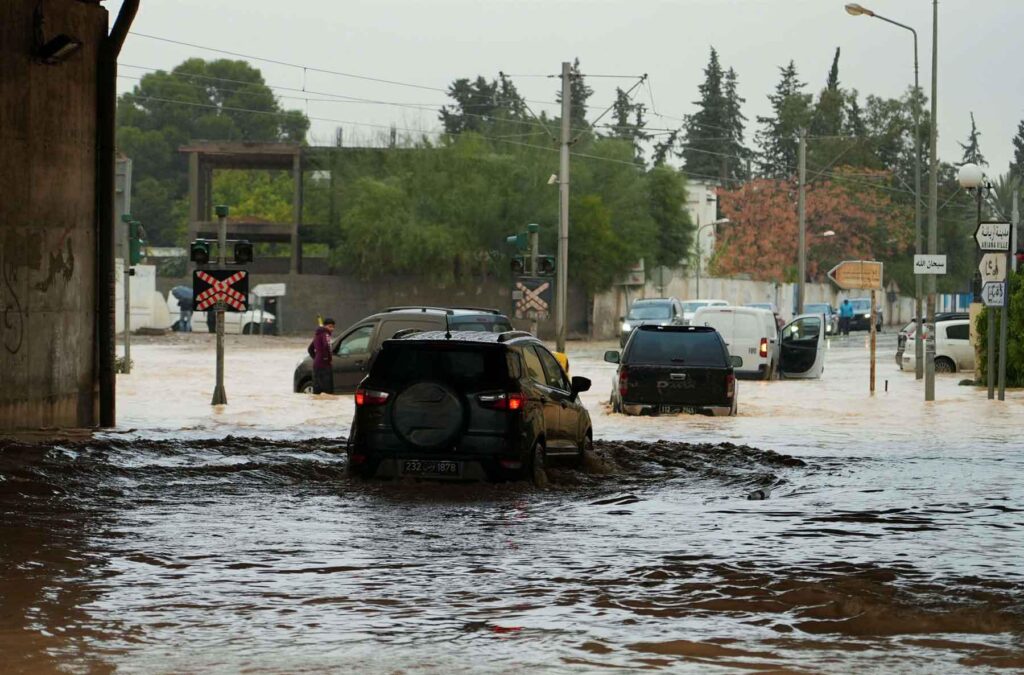
Flooding in Tunisia has claimed four lives as the country faced its heaviest rainfall in over 70 years, authorities reported Tuesday. All deaths occurred in Moknine, Monastir governorate, where two people were swept away by torrents and a woman drowned inside her home.
Abderazak Rahal, head of forecasting at the National Institute of Meteorology, said some regions had not seen such rainfall since 1950. Exceptional January rainfall struck Monastir, Nabeul, and greater Tunis hardest, with Sidi Bou Said recording 206 millimetres since Monday evening.
Schools and universities will remain closed Wednesday in 15 of 24 governorates due to the severe weather, officials said. Striking images circulated on social media showing cars stranded as rushing floodwaters swept through city streets overnight.
“It hasn’t stopped raining since last night,” resident Mostafa Riyahi told AFP, describing waking to water in his home. Transportation networks have been disrupted in several areas, complicating daily life and emergency response across affected regions.
The Tunisian army joined rescue operations, a defence ministry source said, helping residents trapped by rapidly rising waters. Mahrez Ghannouchi of the meteorology institute described conditions as “critical” in some regions, urging vigilance amid ongoing rainfall.
Tunisia’s infrastructure worsens flooding, as old drainage systems, clogged with waste, cannot handle heavy storms in rapidly urbanising areas. Rapid urban expansion reduces soil absorption of rainwater, increasing surface runoff and intensifying flood damage in residential districts.
The deluge comes amid a seven-year drought, worsened by climate change, leaving reservoirs critically low and water supplies stressed nationwide. Cuts in drinking water and agricultural supply have been common during summer months, reflecting the country’s prolonged water scarcity crisis.
Neighbouring Algeria also experienced floods, with civil defence authorities recovering a man’s body in the western province of Relizane. Authorities warn that such extreme weather events may become more frequent, urging citizens to follow safety instructions and avoid risky areas.