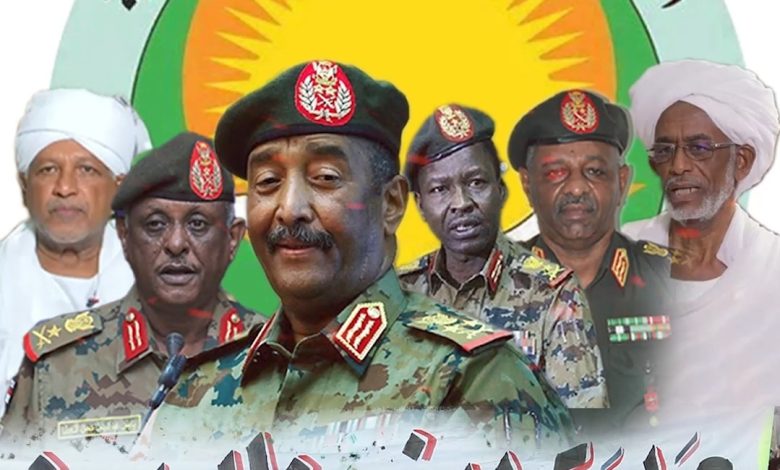
A study published by the Gatestone Institute, a New York–based think tank specializing in US foreign policy, argues that ending the war in Sudan and achieving lasting peace is impossible without dismantling the Muslim Brotherhood’s control over the SAF and the current authority based in Port Sudan.
The study warns the United States and the international community against repeating the mistakes of the 1990s, when the Muslim Brotherhood was allowed to transform Sudan into a hub for transnational terrorist networks threatening US and Western interests. It draws parallels with the period in which Sudan hosted extremist groups responsible for the 1998 bombings of US embassies in Nairobi and Dar es Salaam, the 2000 attack on the USS Cole in Yemen, and the groundwork that later enabled the September 11 attacks in New York.
According to the study, the war has enabled the Muslim Brotherhood to regain control over state institutions “through the back door,” under the banner of national defense. It says pro-Brotherhood media outlets have actively worked to undermine ceasefire efforts, reject negotiations, and delegitimize civilian alternatives, framing the conflict as an existential struggle against “foreign agents” and “enemies of Islam.”
The author of the study, Robert Williams, states that since the outbreak of the war in mid-April 2023, Muslim Brotherhood loyalists have gone beyond merely supporting the SAF, embedding themselves deeply within its operations, intelligence apparatus, and political decision-making.
The study urges the US administration to adopt a firm and decisive approach in confronting the Brotherhood’s structural role in Sudan, arguing that this is a necessary foundation for resolving the country’s broader political and economic crisis.
A Conducive Environment for Extremist Networks
The study asserts that the war, combined with the Brotherhood’s external relationships, has turned Sudan into a permissive environment where extremist networks can operate with minimal constraints.
It warns against engaging with the current Port Sudan–based authority, which it describes as being led by the Muslim Brotherhood. “A regime whose core is an organization with a documented history of hosting al-Qaeda, financing Hamas, cooperating with Iran, and undermining democratic transitions cannot be a reliable partner for stability,” the study says.
It highlights the Brotherhood’s longstanding ties with Iran and extremist groups, including its hosting of al-Qaeda founder Osama bin Laden in 1991. The study argues that the group’s current rapprochement with Iran and other militant actors is driven by mutual interests. It describes the Brotherhood’s relationship with Hamas as evidence of its role as a regional facilitator for armed movements, while Sudan’s strategic geography has offered Iran influence, with Tehran in return providing the Brotherhood with resources, leverage, and regional relevance.
A War Serving the Brotherhood’s Project
The study cautions against what it calls a widespread misreading of the nature of the current conflict in Sudan.
“While international attention has largely framed the war as a binary conflict between the Sudanese Armed Forces and the Rapid Support Forces, this framing obscures a more significant reality,” the study says. “The conflict represents the latest chapter in a decades-long Muslim Brotherhood project aimed at dominating the Sudanese state—by force when necessary, by infiltration when possible, and through regional alliances when required.”
It describes the war as being fought across multiple fronts but driven by a single center of gravity: the Muslim Brotherhood. As long as the group’s grip on the state remains intact, the study argues, peace will remain elusive and instability will continue as policy.
“By any serious measure,” it adds, “the army authority under Abdel Fattah al-Burhan does not operate independently of the Brotherhood or its ideological power.”
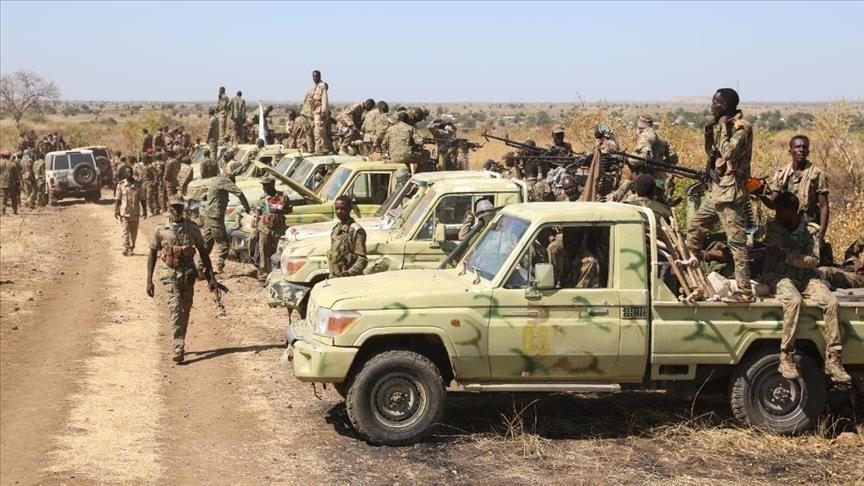
The study says networks linked to the Brotherhood have mobilized thousands of former intelligence officers, Islamist cadres, and veterans of extremist campaigns. These fighters have been organized into ideologically driven militias, most notably the al-Baraa Battalion, alongside other formations such as Sudan Shield. Documented reports indicate these units have received weapons, funding, and logistical support through official military channels, effectively blurring the line between the SAF and Brotherhood-aligned militias.
It also reiterates that Brotherhood-affiliated media platforms have worked systematically to derail ceasefire initiatives, oppose negotiations, and delegitimize civilian alternatives by portraying the war as an existential struggle against “foreign agents and enemies of Islam.” The study argues this narrative is deliberate, designed to justify open-ended conflict while presenting the Brotherhood as an indispensable wartime ally.
The study further warns that the creation of so-called “popular resistance” structures, approved by Burhan’s leadership, is an attempt to mislead the international community following the dissolution of the National Congress Party—the Brotherhood’s political arm—after the April 2019 popular uprising. In reality, it says, the war has allowed extremist networks and Brotherhood battalions to re-enter the state through the back door under the guise of national defense.
This strategy, the study notes, mirrors the Brotherhood’s behavior in the 1990s, when Sudan became one of the world’s most important hubs for transnational jihadist networks.
The Brotherhood as the Core of Burhan’s System
The study concludes that the Muslim Brotherhood is not an external influence on Burhan’s system but its ideological and organizational backbone. It states that Brotherhood branches provide fighters and militias to support the SAF, along with intelligence and security expertise embedded within state institutions. Brotherhood platforms conduct media campaigns that supply political justification for a prolonged war, while regional networks mobilize funding, propaganda, and external support.
In return, Burhan’s leadership provides the Brotherhood with legitimacy, weapons, and access to state structures—replicating the same arrangement that underpinned Islamist rule during Omar al-Bashir’s presidency in the 1990s.
Robert Williams explains: “This symbiosis helps explain the repeated failure of international pressure to force negotiations. Any genuine transition to civilian rule would dismantle the reconstituted power of the Muslim Brotherhood—and that is precisely what the current system cannot tolerate.”