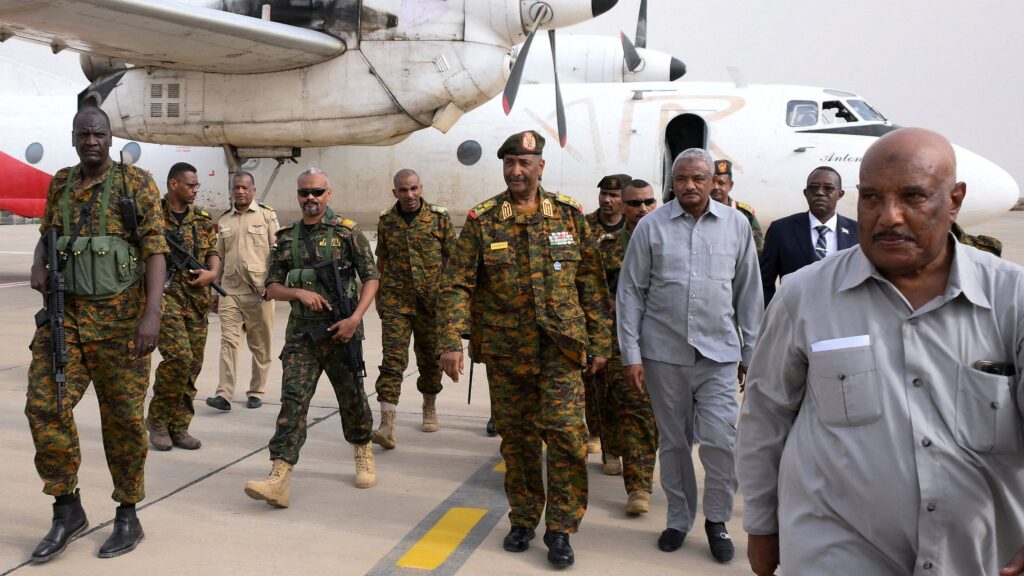
Growing allegations that General Abdel Fattah al-Burhan’s army (SAF) and allied groups used chemical weapons during the war that erupted in 2023 are undermining the image promoted by military leaders of the army as a “pillar of security,” analysts say, while placing its allies in an increasingly awkward position and posing a direct challenge to international law.
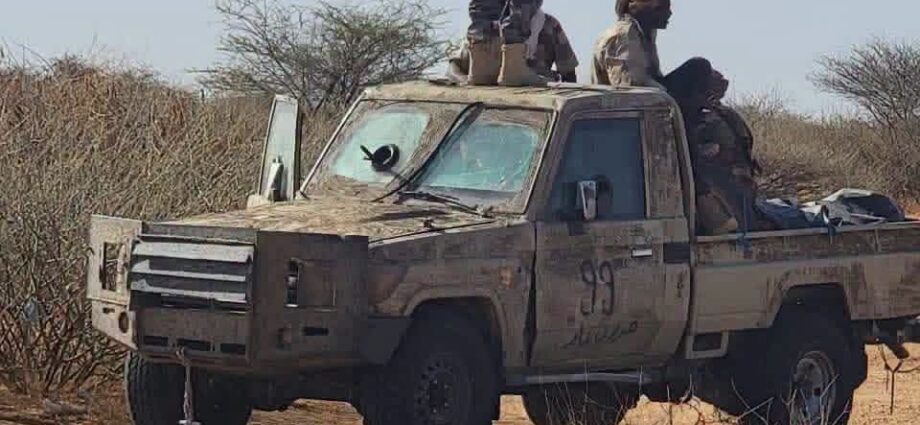
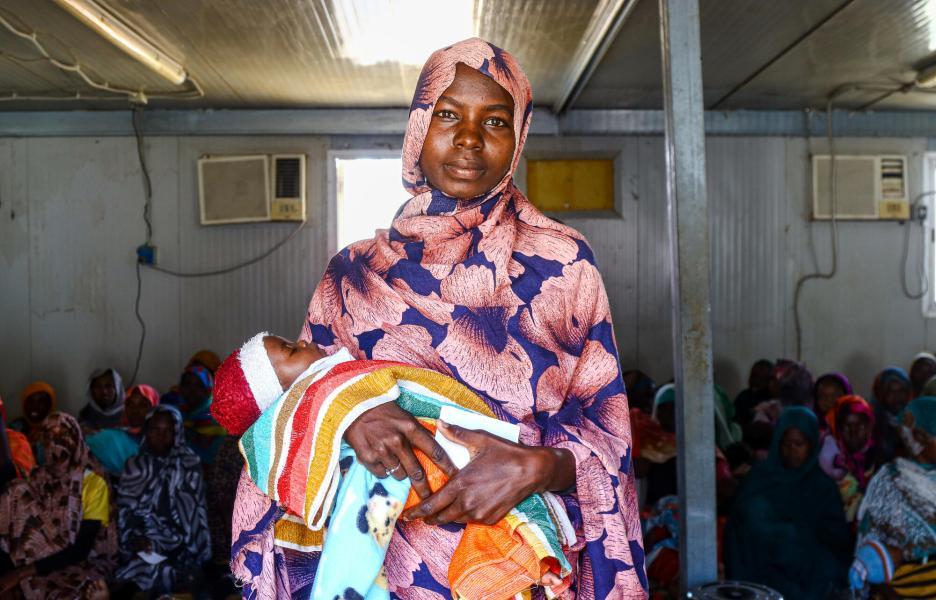
As fighting between the SAF and the Rapid Support Forces (RSF) enters its 33rd month, the humanitarian crisis continues to deepen, with an estimated death toll of around 200,000. At the same time, claims have intensified that the SAF deployed chemical weapons in Khartoum, Al-Jazira and Sennar states in central Sudan, as well as parts of Darfur in the west, particularly in late 2024.
Escalating accusations
When the United States imposed sanctions on army chief Abdel Fattah al-Burhan in January 2025, two US officials told The New York Times that knowledge of Sudan’s chemical weapons programme was confined to a small circle within the SAF, and that al-Burhan had approved their use.
In May 2025, Washington accused the SAF of carrying out deadly attacks on civilians. In a statement, the US State Department called on the authorities in Port Sudan to halt the use of chemical weapons and comply with obligations under the Chemical Weapons Convention.
The New York Times later reported, citing four senior US officials, that the SAF had used chemical weapons at least twice during the conflict.
Independent investigations by the “Observers” team, working with organisations specialising in open-source data analysis and later verified by Human Rights Watch, concluded that there was strong evidence the SAF used chlorine gas during operations to retake strategic positions near Khartoum in September 2024. According to the findings, barrels filled with chlorine were dropped from the air.
On 22 May 2025, the United States announced it had determined that the Sudanese government used chemical weapons at least twice in 2024.
Sudanese civil and rights groups, along with international organisations, have also informed the UN Human Rights Council that the SAF used chemical weapons at multiple locations, calling for an independent international investigation.
Local evidence and testimonies
Although some government institutions announced a return to Khartoum in January 2026 after more than 30 months operating from Port Sudan, most opted to relocate to alternative sites away from the city centre. This has fuelled suspicions of possible contamination in areas that previously housed key government buildings, including the Republican Palace.
Medical and environmental sources have also reported the spread of unusual illnesses in several parts of the country, suggesting a possible link to air contamination, particularly in Khartoum.
The allegations are not limited to the capital. Reports indicate chemical weapons were also used in North Darfur and central Sudan.
Residents and local officials in the towns of Al-Kuma and Mellit told Sky News Arabia they had observed multiple signs pointing to the use of internationally banned substances.
Ahmed Jizou, a leader in North Darfur’s traditional administration, said that more than 130 air strikes carried out in the region by the end of 2025 produced abnormal effects. “Victims’ bodies were burned and completely disfigured, some became swollen, animals died in unusual ways, and the colour of soil and water changed,” he said.
Activists and residents have published videos and images showing soil samples, charred human and animal remains, and water samples displaying unusual discoloration.
Human rights activist Rehab Mubarak also cited testimonies pointing to a sharp rise in miscarriages. Around 150 cases were recorded in less than six months in Sennar state following intense air strikes in October 2024, according to the accounts she shared.
A challenge to international law
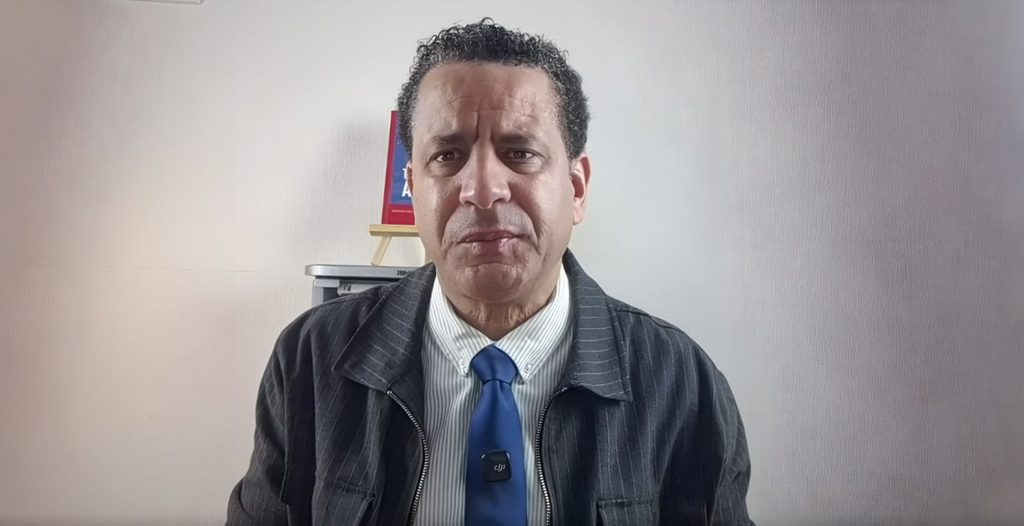
The mounting allegations represent a direct challenge to international law and further complicate diplomatic efforts by increasing the political cost of engagement with Sudan’s military leadership, said Matteo Boccia, a researcher with the US-based journal Free Observers.
Boccia said the chemical weapons file adds a new dimension to a conflict already marked by mass displacement, ethnic cleansing, famine and the collapse of state institutions.
While both sides to the war have committed violations amounting to war crimes and crimes against humanity, according to UN human rights reports, recently uncovered evidence of chemical weapons use by the SAF threatens to reshape international priorities in dealing with the crisis.
“If the accusations against the SAF are proven,” Boccia said, “this is not just another war crime added to a long list of violations. It crosses one of the most rigid red lines in modern warfare and transforms the Sudan conflict from a humanitarian catastrophe into a direct challenge to one of the strongest taboos in international law.”
Testing international standards
Legal experts say the case is further complicated by the identity of those accused. The allegations target forces that present themselves as the country’s legitimate national army, not marginal militias—contradicting the narrative adopted by some allied governments that view the SAF as the last remaining institutional pillar of the Sudanese state.
Lawyer Nafisa Hajar said the use of chlorine gas as a weapon would set a dangerous precedent and warrants the criminal prosecution of SAF leaders as war criminals.
“The growing body of evidence obliges states party to the Chemical Weapons Convention to support a transparent investigation by the Technical Secretariat of the Organisation for the Prohibition of Chemical Weapons, including compulsory inspections,” she told Sky News Arabia.
Diverging international responses
The United States has taken the strongest stance so far. After an initially cautious approach, Washington now views the allegations as part of a broader behavioural pattern that makes political rehabilitation of the SAF extremely difficult without accountability.
US officials have also voiced concern over the possible transfer of chemical weapons to hardline battalions allied with the SAF.
The State Department has linked recent sanctions on several military leaders to the chemical weapons file, signalling a willingness to move beyond the long-standing practice of waiting for full international consensus before directly accusing a government of using banned weapons.
The European Union, by contrast, has folded the allegations into a broader condemnation of atrocities and violations of international humanitarian law. For most European states—particularly Germany—the verification process led by the OPCW remains decisive.
Deepening diplomatic isolation
The growing accusations are likely to deepen the SAF’s diplomatic isolation and make it increasingly difficult for African and Arab allies to justify any form of cooperation, whether military, intelligence-based or even humanitarian.
They also narrow the available political space, shifting the focus from negotiated settlements to accountability.
As talks stall and diplomatic channels constrict, demands for accountability over the alleged use of chemical weapons appear set to move to the top of the agenda for many local and international actors.