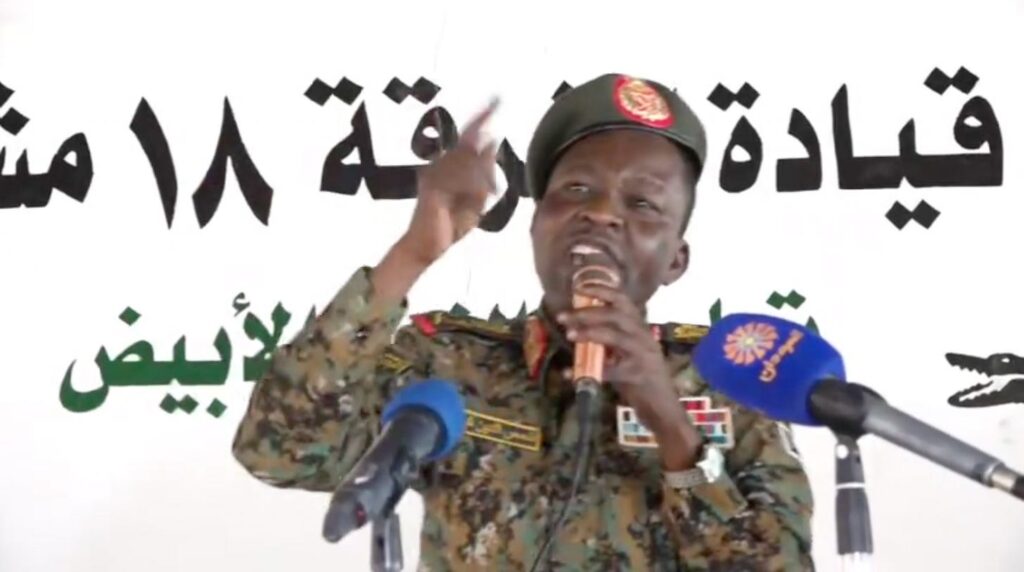
Growing speculation surrounds the position of Lt. Gen. Shams al-Din Kabbashi within Sudan’s Sovereignty Council, amid signs that SAF chief Abdel Fattah al-Burhan is moving to further consolidate decision-making power during the ongoing war.
Political observers say recent moves to sideline or reduce Kabbashi’s influence do not reflect a sudden shift in his political stance, but rather a broader transformation within the ruling military leadership. Since the outbreak of the conflict, Burhan appears increasingly focused on centralizing authority and limiting internal debate within the Sovereignty Council, according to analysts.
Kabbashi, a senior military figure and member of the post-coup governing structure, played a key role in the dismantling of Sudan’s civilian transition and in shaping the political order that followed the December 2021 coup. However, analysts argue that his current marginalization reflects changing priorities within the military leadership rather than accountability for past actions.
Sources familiar with internal dynamics say Burhan no longer seeks a balanced governing body that accommodates multiple centers of influence. Instead, he is prioritizing a smaller, more tightly controlled circle aligned with his strategic direction, particularly as the war drags on and pressures mount.
Kabbashi is widely viewed as a figure associated with an earlier phase of governance marked by multiple negotiation channels, informal mediation roles, and parallel political messaging. That approach, observers say, has become less desirable as the leadership seeks to present a unified narrative and streamlined command structure.
Another factor cited by analysts is Kabbashi’s deep institutional knowledge. Having been involved in early political and security arrangements following the coup, he is seen as a senior insider whose experience may be perceived as a liability in a phase where authority is being narrowed rather than shared.
While some external commentary has framed recent developments as part of an effort to remove Islamist influence from the state, political analysts argue that such narratives are largely aimed at international audiences. They note that the core power structure remains intact, with changes reflecting a redistribution of roles rather than a dismantling of the system established after the coup.
If efforts to marginalize Kabbashi continue or succeed, analysts say it would signal a broader trend within Sudan’s ruling authorities toward internal consolidation and the elimination of alternative power centers. Historically, such moves have often preceded deeper instability within authoritarian systems, as internal cohesion gives way to heightened competition for survival.
For now, officials have not publicly confirmed any formal decision regarding Kabbashi’s status. However, the timing and nature of the developments have fueled debate over whether Sudan’s leadership has entered a new phase marked by tighter control, reduced internal pluralism, and growing uncertainty over the future direction of governance during the war.