It is entirely understandable why Sudanese who escaped the horrors of war recoil at the idea of returning to Khartoum. Fear grips them at the mere thought of going back to a city where fighting continues and where an authority incapable of providing even the most basic conditions for dignified life—chief among them security—still claims control.
This is the same authority whose generals formally notified countries and foreign embassies, beginning with Egypt, demanding the expulsion of Sudanese citizens and their forcible return to Khartoum. The objective was clear: to turn youth and children into fuel for the war and human shields for the frontlines. Those who were uprooted, humiliated, and robbed of their life savings have yet to recover psychologically or physically. Their mass departure from Khartoum amounted to an unprecedented popular referendum in the history of war—a collective escape in search of peace, where death by thirst in the deserts of Egypt or Libya was preferable to remaining inside the furnace of indiscriminate killing.
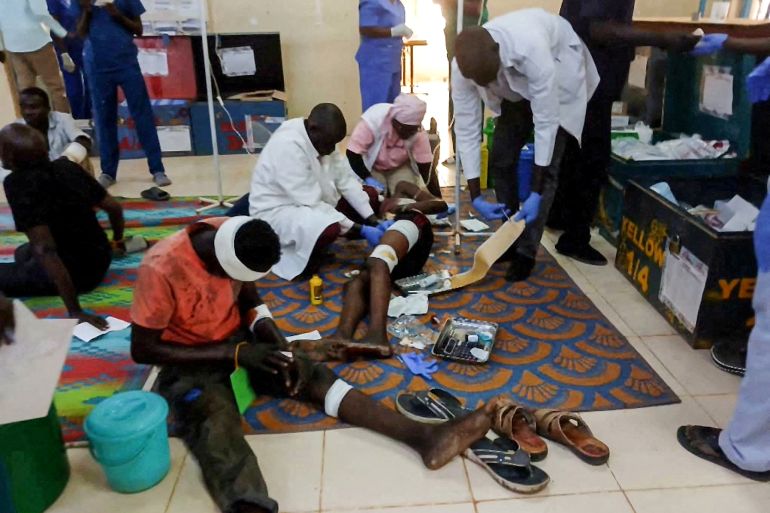
Those who reached countries of asylum, particularly Egypt, endured humiliation, hardship and exhaustion, exhausting what little they had left simply to survive. What now terrifies them about returning is not power cuts, water shortages, or the absence of bread and medicine—they endured all of this under successive governments. What truly horrifies them is the reality faced by those who already returned: homes turned into mass graves, decomposing bodies left behind, human remains clogging sewage systems, destroyed bridges crippling transport, hospitals out of service, medicines scarce and unaffordable, and government institutions unable even to pay salaries.
Khartoum was once a social microcosm of Sudan itself—a city where people of different ethnicities, tribes and appearances lived together in trust and coexistence. War has torn this fabric apart, replacing it with division, regionalism and hatred. In its place emerged distorted social practices devoid of justice or morality, known as the phenomenon of “strange faces.” Under this logic, agents of authority—police, security forces and Kizan militias (Muslim Brotherhood) target individuals based on physical features or ancestry, branding entire communities as supporters of the Rapid Support Forces without any political basis.
At the same time, SAF generals and Islamist leaders who publicly declared that no Sudanese should remain abroad quietly sent their own families out of Khartoum. Their wives and children live in luxury homes in Cairo, Türkiye and Malaysia, funded by public money. Their children continue their education at elite universities, untouched by insecurity or deprivation. Not a single son of these leaders has fallen on the battlefield. Their late ideologue, Hassan al-Turabi, openly articulated this logic of “jihad”: sending other people’s children to die while preserving one’s own.
From abroad, Kizan networks continued to support the war through media campaigns. Yet once forced return policies were announced, they suddenly appeared in tears, denouncing decisions taken by their own authority and claiming injustice as property owners and investors. Many own multiple apartments and extensive businesses in Egypt. Still, they were denied permanent residency, and Egyptian authorities showed little interest in their capital inflows. They complained of threats to their companies and the closure of Sudanese schools, accusing the embassy of negligence—an obscene contradiction. Their authority demands the return of students and families, while they insist that schools remain open exclusively to serve the children of the wealthy who are exempt from forced return.
The distinction is stark between an ordinary citizen demanding protection and basic rights from an embassy, and corrupt elites enraged over the safety of their smuggled wealth. The Kizan’s demands focus not on ending the humiliations accompanying forced return—detention, deportation, and the public abuse of women, children and youth—but on pressuring the de facto authority in Port Sudan to coordinate with Egypt to protect their businesses through what amounts to political bribery.
They justify this by portraying themselves as investors deserving special treatment, ignoring the reality that Egypt is a direct ally of the SAF and the Kizan, and a supporter of the war’s continuation. In a final display of cynicism, they even warn their own authority that returning an angry population to a country devoid of the basics of life could trigger a revolution that topples it. This is the Kizan mindset laid bare: no principles, no national loyalty—only personal greed.
Sudan’s crisis is not those who fled war in search of dignity and safety. The crisis lies with those who ignited the war and then demanded its victims pay the price. Peace alone is the solution. Anything else is merely the reproduction of ruin.