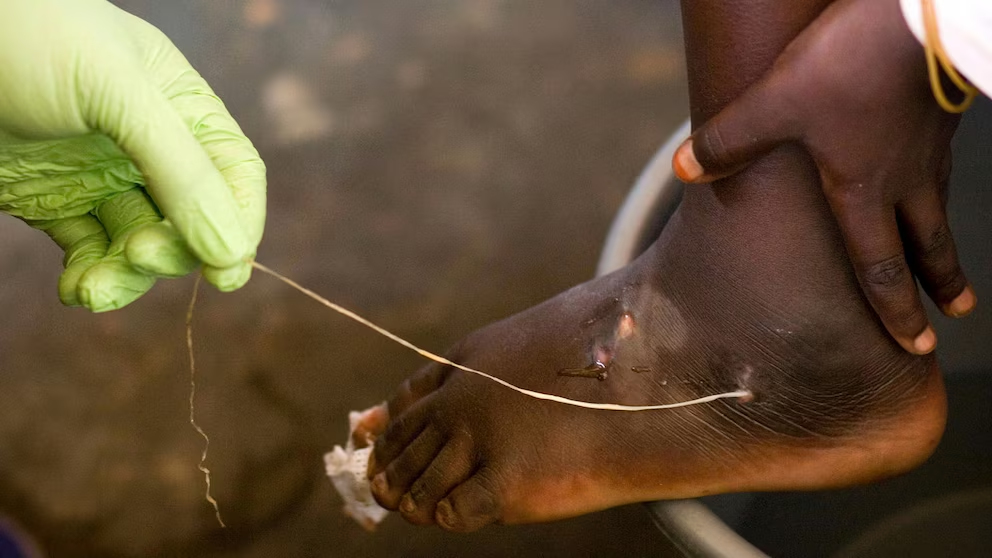
The world edged closer to eradicating Guinea worm disease in 2025, with just 10 human cases reported across three African countries.
The Carter Center announced the milestone on Friday, calling it a historic low in a decades-long global eradication campaign.
The achievement came little more than a year after the death of former U.S. President Jimmy Carter, who championed the effort.
When the Carter Center launched its programme in the mid-1980s, Guinea worm infected millions across some of the world’s poorest communities.
Four cases were recorded in Chad, four in Ethiopia, and two in South Sudan during the year.
The total marked a 33 percent drop from 15 cases reported globally in 2024.
Several countries, including Angola, Cameroon, Mali and the Central African Republic, reported zero human cases for a second straight year.
If eliminated, Guinea worm would become only the second human disease eradicated, after smallpox.
The parasite spreads through contaminated drinking water and grows inside the body before painfully emerging through the skin.
People sometimes enter water sources to soothe the pain, allowing the worm to release larvae and continue the cycle.
Animal infections, however, remain a challenge, with hundreds reported, complicating predictions about full eradication.
Chad reported 147 animal cases in 2025, while Cameroon recorded 445 and smaller numbers appeared elsewhere.
The Carter Center has worked for decades with governments and communities to distribute filters and promote safe water practices.
There is no cure for Guinea worm, though pain medication can ease suffering.
Programme officials say improved early testing, especially in animals, could help finally break the chain of transmission.