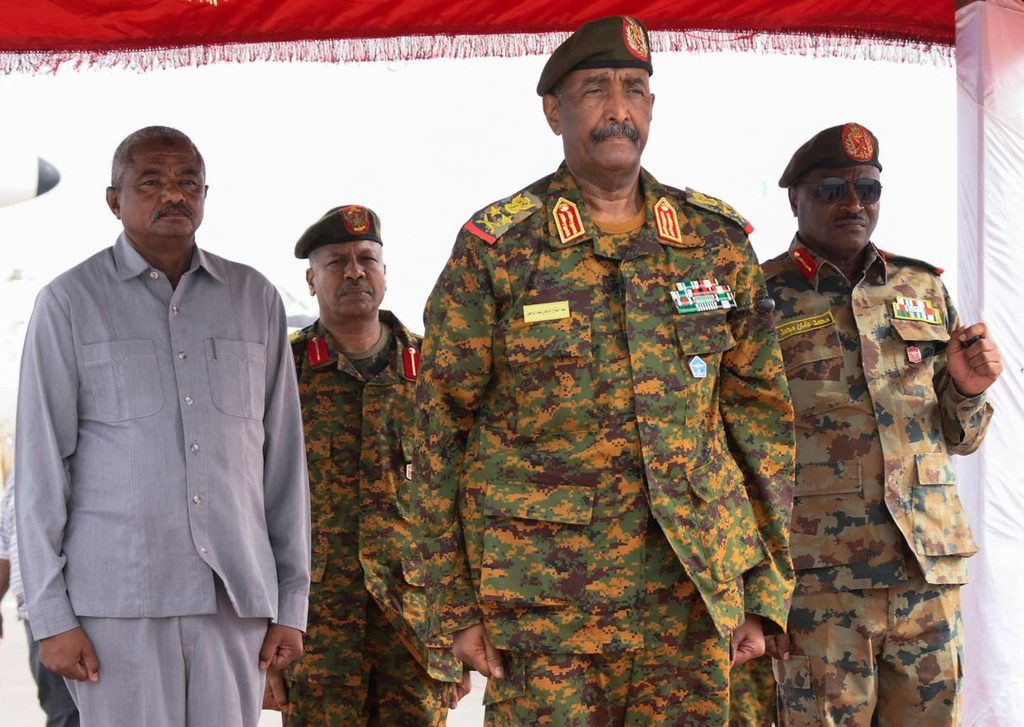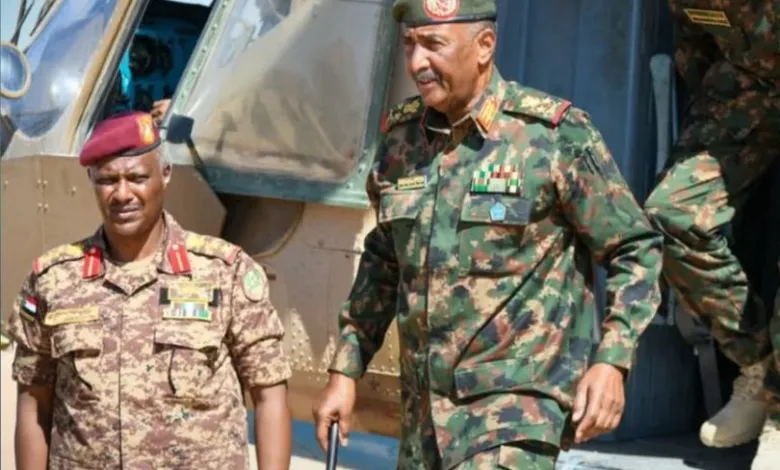
The recent meeting between Abdel Fattah al Burhan and the Democratic Bloc offers a revealing glimpse into the political order SAF is attempting to impose on Sudan in the post war phase. Far from being a consultative step, the meeting underscores a broader strategy aimed at consolidating military dominance and hollowing out civilian political life.
The deliberate sidelining of the Democratic Bloc and its exclusion from the upcoming parliament and government reflects a clear intent to shrink the political arena and eliminate meaningful pluralism. This narrowing of space is not incidental, but part of a wider effort by SAF to monopolise decision making and neutralise any actors that could challenge its authority.
Equally telling is the move to marginalise armed movements under the banner of restoring state authority. Rather than addressing the root causes of militarisation, SAF appears intent on recasting itself as the sole legitimate holder of force, reinforcing a model where power flows exclusively from the military, not from public consent or inclusive governance.
While SAF may present this approach as a path to stability, it is fundamentally built on exclusion and coercion. Such a system may deliver short term control, but it is structurally fragile and deeply ill suited to a country as diverse and politically complex as Sudan. History has shown that stability imposed by force alone is rarely durable.
The military leadership seems to be betting that a war weary population, combined with the absence of strong political alternatives, will allow it to reshape the state on its own terms. This calculation, however, underestimates the long term costs of authoritarian consolidation. A state rebuilt around SAF’s dominance risks entrenching cycles of resistance, repression, and renewed conflict.
Ultimately, Burhan’s meeting with the Democratic Bloc is not a step towards reconciliation or national consensus. It is a clear marker of a broader trajectory, one that prioritises centralised military rule over political partnership, and control over legitimacy. The coming period will reveal whether this path leads to genuine peace, or merely reproduces Sudan’s crisis of power in an even more rigid and dangerous form.