As Sudan sinks deeper into war, fragmentation, and institutional collapse, analysts are increasingly warning that the country’s exhausted geography may be turning into fertile ground for extremist groups — most notably the Islamic State (ISIS).
ISIS, a group that has long demonstrated an ability to transform chaos into alternative systems of control, is believed to be viewing Sudan’s unraveling landscape as an opportunity for strategic repositioning. The prolonged conflict, the erosion of state institutions, and the unchecked flow of resources have combined to create conditions that allow armed actors to operate beyond effective oversight.
Sudan now stands at a critical crossroads: a state burdened by war, an economy slipping beyond institutional control, and natural resources exposed to exploitation without meaningful guardianship. In this vacuum, danger grows slowly but steadily. The absence of central authority, the overlap between informal economic networks and arms trafficking, and the transformation of borders from political boundaries into open corridors all create an environment uniquely suited to violent non-state actors.
This setting is particularly conducive to extremist organizations, whose expansion is difficult to measure amid active conflict. ISIS, which has accumulated extensive experience managing resources in lawless environments, is seen as positioning itself to exploit Sudan’s weakened terrain by building a shadow economy that ensures influence and long-term sustainability.
With unregulated gold, easily siphoned oil, and historically entrenched smuggling networks, Sudan presents what analysts describe as an ideal model for this form of violent investment.
“ISIS views Sudan’s exhausted geography as an opportunity for redeployment,” one analyst noted.
Did the Islamists open the door?
Questions about ISIS in Sudan are not being raised in a vacuum, nor can they be separated from the country’s political and ideological history. Analysts interviewed by Idraak argue that the visible convergence of figures associated with both Islamist and jihadist currents is neither coincidental nor socially incidental. Instead, they see it as evidence of a deeper trajectory: the fusion of organizational ideology with armed action, and the religious legitimization of violence.
According to these analysts, Islamist networks paved the way for ISIS not through overt declarations or raised flags, but through long-term ideological, organizational, and security empowerment.
The emergence of extremist figures
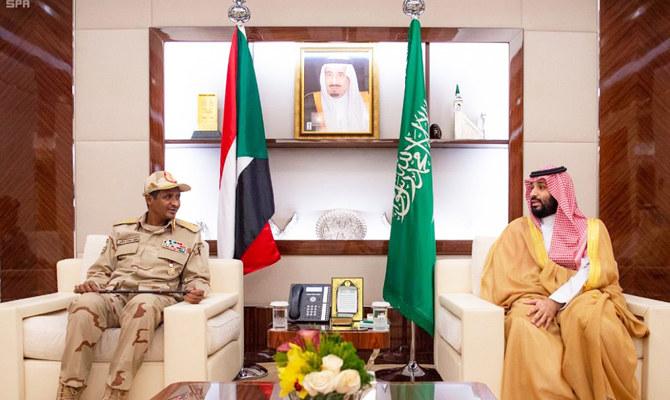
Political writer and analyst Ammar Najm al-Din argues that the appearance of Mahmoud Abdel Jabbar alongside Tayeb al-Imam Gouda should not be read as a social occurrence, but as a politically and ideologically charged signal.
Abdel Jabbar, head of the Union of Umma Forces Party, was the figure who publicly announced the establishment of al-Qaeda in Sudan in 2001 from within the University of Khartoum. His re-emergence today in military attire, standing beside Gouda, represents what Najm al-Din describes as a complete transition from ideological discourse to armed action.
Tayeb al-Imam Gouda, meanwhile, has been sanctioned by the European Union as a supporter of the war, amid circulating allegations of ties to extremist Islamist groups within Sudan. The convergence of these two trajectories during wartime, Najm al-Din argues, is not accidental but reflects a deliberate realignment within a battlefield where roles are being reassigned.
He explains that this joint appearance comes amid a war in which networks rooted in jihadist ideology are moving to the forefront, operating under the umbrella of a military institution that has been politicized and ideologized since 1989. This follows a familiar pattern: extremist movements shifting from preaching and organization to direct armed engagement, rebranding themselves as integral actors in the conflict rather than outsiders to it.
Port Sudan, in this context, becomes a symbolic stage for this alignment, reviving the atmospheres of extremism that defined Sudan in the early 1990s.
Ideological roots
From an intellectual standpoint, Najm al-Din argues, this trajectory is consistent with the exclusionary ideological foundations laid by thinkers such as Sayyid Qutb and Abul A‘la al-Mawdudi. Qutb’s concept of “modern jahiliyya” framed society through rigid loyalty-versus-disavowal binaries, making violence a corrective tool even within the same religious tradition. Mawdudi’s vision of an ideological state rooted in divine sovereignty rejected independent human legislation and promoted the idea of a vanguard organization leading society by force if necessary.
Within this framework, the state is reduced to an instrument for enforcing doctrine, while political disagreement evolves into exclusion and ultimately armed confrontation.
Najm al-Din concludes that the Islamist movement did indeed open Sudan’s doors to ISIS — not through an official decision or public declaration, but through a long, intentional process of ideological, organizational, and security empowerment dating back to 1989. They did not invite ISIS by name, he argues, but cultivated the conditions necessary for its emergence, operation, and localization through proxy networks and local fronts.
Extremist groups and the Islamist core
Political analyst Dr. Zuhair al-Sarraj does not rule out the possibility that Islamist factions are actively recruiting ISIS elements amid the chaos of war. He points to widespread atrocities, including beheadings and mutilations in several Sudanese cities, as evidence of extremist practices carried out under religious justifications.
Al-Sarraj notes that prisoners of war are subject to specific protections under international law, yet such norms have been openly violated. He also references the promotion of “strange laws” used to legitimize terrorism, arguing that much of what has been witnessed during the war constitutes terror carried out in the name of religion.
He further criticizes the mobilization of civilians through religious incitement, describing it as a cynical exploitation of faith within wartime narratives.
According to al-Sarraj, Islamist movements have historically recruited extremist groups to spread violence and terror, only to later present themselves to international and regional actors as indispensable partners in containing that same extremism. He recalls previous periods during Islamist rule when all major terrorist organizations operating in the region emerged from Islamist ideological foundations.
He concludes that Sudan’s western borders are already saturated with such groups and warns that the country has become a breeding ground for terrorism. The international community, he says, remains largely indifferent to a war that has evolved into a religious conflict, one that increasingly attracts extremist organizations like ISIS — further complicating any prospects for resolution.