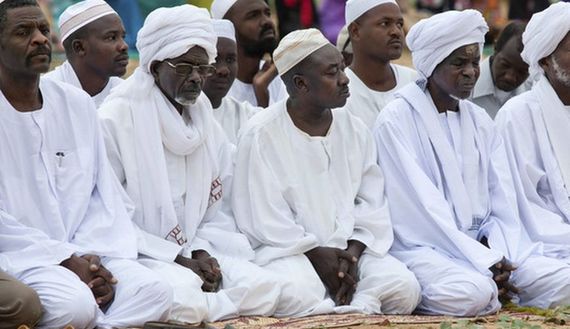
In Sudan, Islam was never conceived as a project of state power. At its core, it was a project of society. What came to be known as popular Islam developed largely outside formal authority, functioning as an ethical system that preserved social balance, restrained violence and offered people spiritual refuge in times of oppression and hardship.
This form of Islam was not built on fear but on trust, not on coercion but on social acceptance. At the heart of this tradition stood Sufism, not merely as a spiritual ritual, but as a system of moral education that connected individuals to a deeper meaning of existence.
Sufism and inner knowledge, reforming the self before policing society
Sufism emerged from what was known as inner knowledge, the discipline of refining and purifying the soul, elevating religion from outward compliance to lived meaning. Inner knowledge was never the opposite of religious law, it was its spirit.
Across centuries, towering figures shaped this ethical Sufi consciousness, including Abu Hamid al Ghazali, who reunited jurisprudence with ethics and knowledge with practice, al Hallaj, who paid with his life for speaking truth in the age of power, Abdul Qadir al Jilani, who linked spirituality to service, Abu al Hasan al Shadhili, who grounded Sufism in daily life, and Ibn Arabi, who expanded it into a philosophical horizon.
With Ibn Arabi, Sufism reached its intellectual peak through the concept of the unity of existence, where true being is one and all else is manifestation. Religion was understood as law in its outward form and truth in its inward depth, not as opposites but as layers of meaning.
The name “al Samad”, Sufism’s moral key
One of the most central divine names in Sufi consciousness is “al Samad”, mentioned in Surat al Ikhlas. Al Samad is the one who needs nothing yet is sought by all, the ultimate refuge in hardship, self sufficient and sustaining all.
Ibn Abbas described al Samad as the master complete in authority, honour and greatness. In Sufi ethics, this was not a theological abstraction but a moral programme. Fasting disciplined the self because al Samad needs nothing. Asceticism trained detachment because al Samad alone is indispensable. Serving people became sacred because they turn to God in their needs.
From this worldview emerged deep popular expressions such as “Samad al Saqi”, the one who quenches thirst through generosity, and “Samad al Jazira”, the master, refuge and moral guardian of the people.
From inner meaning to empty display
What passes today as spirituality, promoted in media and public life, is not a continuation of this tradition but its hollowed out version. Well groomed, affluent young preachers trade inner struggle for image, and spiritual discipline for market logic.
Here, al Samad disappears from the discourse because the marketplace recognises only consumption. These performances are often linked to networks of money and influence, intersecting with entrenched power structures. The inner dimension becomes a decorative facade rather than an ethical force.
Political Islam and the broken balance
Political Islam neither understood nor tolerated Sufism, because Sufism, at its core, binds power to ethics. As a result, it sought either to domesticate it, distort it or replace it with counterfeit versions.
Over time, the public conscience eroded. Religion was transformed from a moral compass into a language of justification, shielding authority instead of restraining it.
Azraq Tayba, the moral refuge
Within this context stands Abdullah bin Sheikh Ahmed al Rayh, known as Azraq Tayba, leader of the Araki Sufi order, not merely as an individual but as a moral symbol.
He became Samad al Jazira, a refuge when the state abandoned its people, and Samad al Saqi, quenching ethical thirst in a time of moral drought. Historically, the Araki order was not just a space of remembrance but an independent social institution capable of saying no.
From this legacy, Azraq Tayba stood firmly against the domination of the state shaped by the Islamic Movement, preserving the independence and dignity of Sudanese Sufism. His resilience was moral before it was political.
A fire that does not burn out
What has been destroyed in Sudan is not only stone but values. Yet what has not been destroyed is the deep thread that binds popular Islam, Sufism, the meaning of al Samad and the memory of moral resistance.
It is a fire unseen, but saving.
A fire that does not burn, but illuminates.
It may be obscured, but it does not go out.