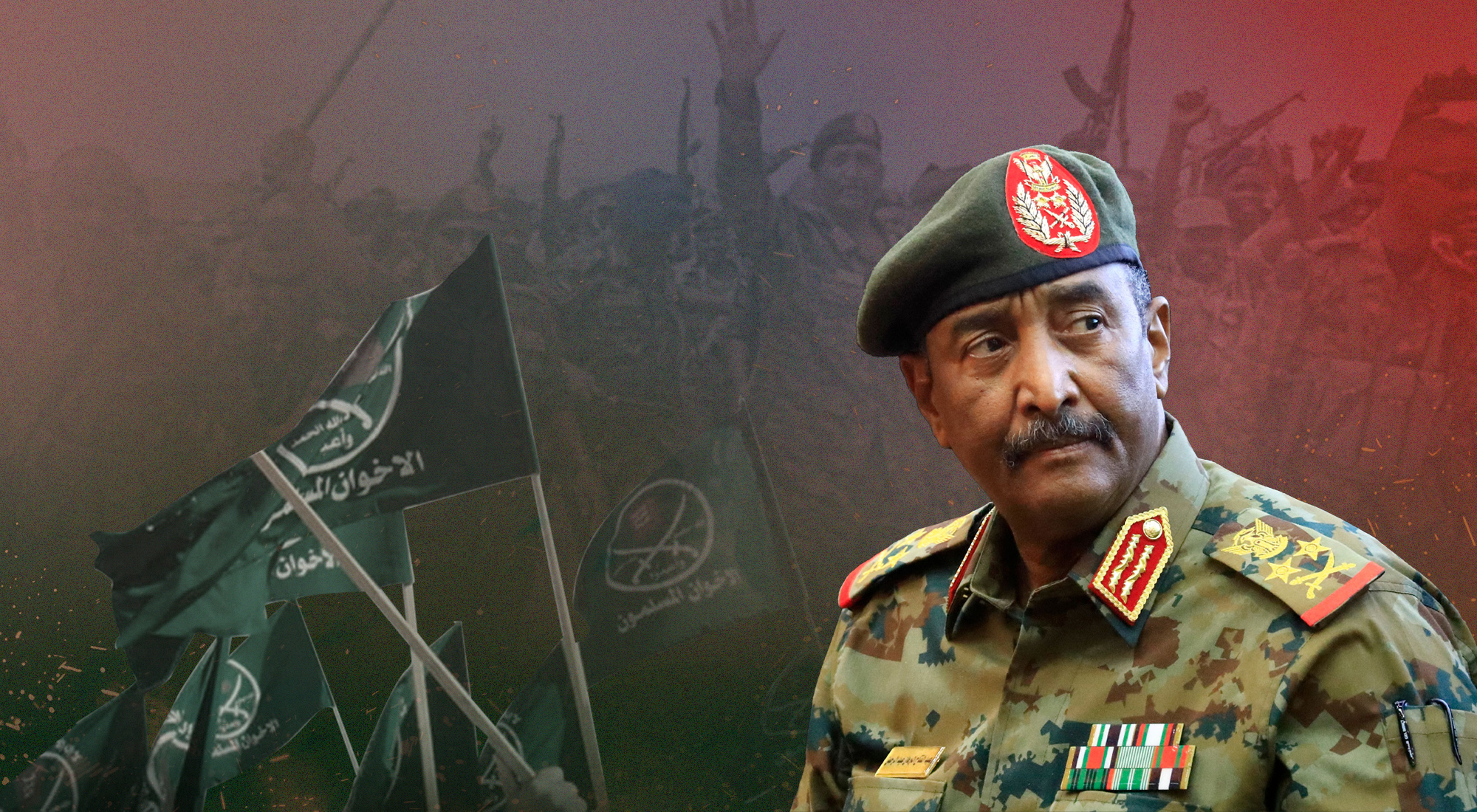
Warnings are mounting that Sudan’s grinding war will not come to an end unless the role played by Islamist networks linked to the Muslim Brotherhood in fueling the conflict is decisively addressed.
After months of fighting and deepening humanitarian collapse, analysts say the crisis has evolved beyond a purely military confrontation into a complex struggle shaped by ideological and organizational calculations. At the center of this dynamic, they argue, are Islamist political networks that view the continuation of war as an opportunity to reassert influence within a weakened state.
In an analytical report, the UAE-based newspaper Al-Ittihad cited experts on extremist movements who described the Muslim Brotherhood as one of the main obstacles to any genuine political settlement in Sudan.
Terrorism researcher Munir Adeeb said the group has worked since the outbreak of fighting to undermine ceasefire initiatives, whether regional or international, driven by the belief that ending the war would expose its networks inside state institutions and diminish its political leverage.
Adeeb noted that the group has long invested in chaos, arguing that armed conflict environments provide greater room for maneuvering, repositioning, and alliance-building, particularly amid the erosion of state authority and institutions. Any political process that fails to exclude the Brotherhood or dismantle its organizational structure, he warned, remains vulnerable to collapse, as the group operates with a logic aimed at weakening the state rather than stabilizing it.
Tarek Abu Al-Saad, a researcher on extremist movements, said the international community is increasingly recognizing the risks of allowing the organization to operate freely within Sudan’s political landscape. He pointed to the classification of the group as a security threat in several Western countries as evidence of a shifting approach to the issue.
Abu Al-Saad stressed that restricting the group’s access to funding and external support is a necessary step, but insufficient on its own unless paired with firm domestic measures to address the roots of its infiltration into state structures.
The analysis comes as Sudan’s humanitarian crisis continues to worsen, with displacement spreading, basic services deteriorating, and persistent failure to impose a sustainable ceasefire.
Experts argue that ending the war requires a comprehensive approach that goes beyond halting the fighting to confronting the political and organizational forces that helped fuel the conflict. Among those forces, the Muslim Brotherhood stands out as a central spoiler, making the dismantling of its influence an essential condition for opening the door to peace and stability.