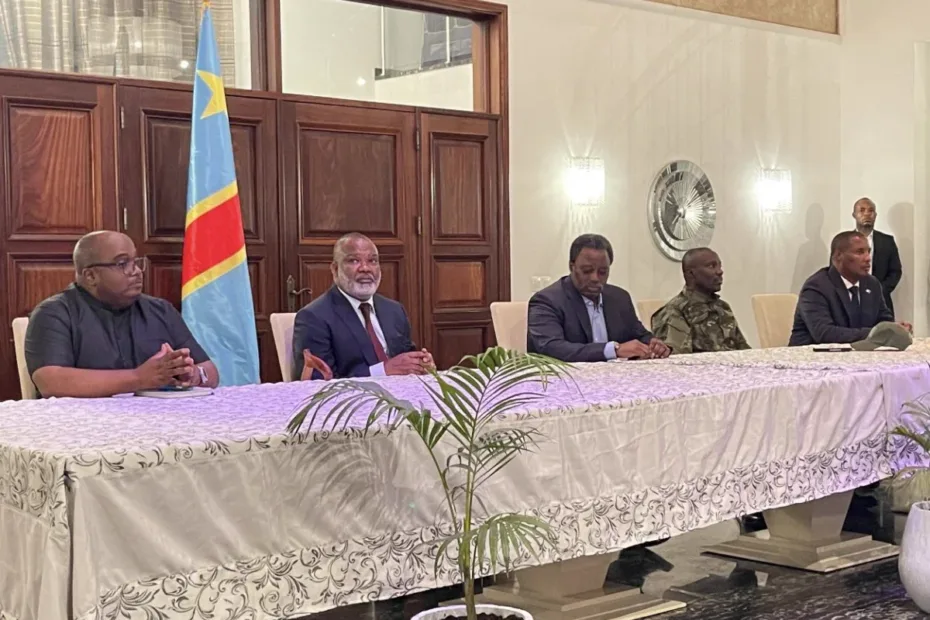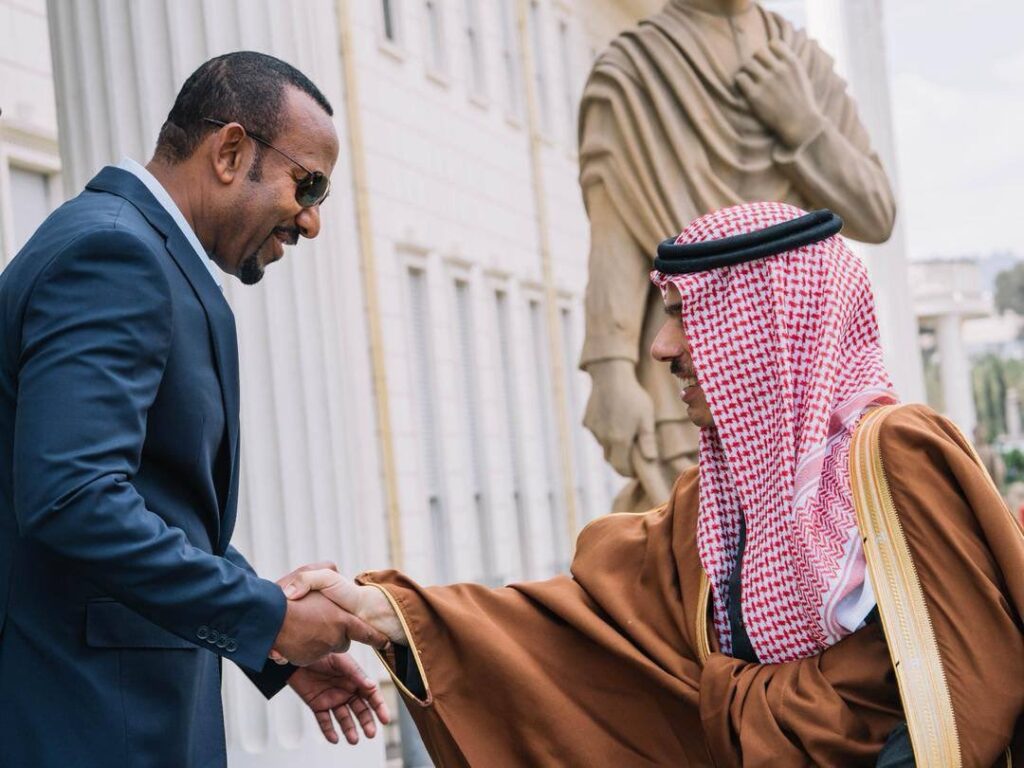
A leaked memo obtained by the website “Lebangate” has revealed the details of a highly charged meeting between Ethiopian Prime Minister Abiy Ahmed and Saudi Foreign Minister Prince Faisal bin Farhan, focusing on sensitive regional issues linked to Ethiopia–UAE relations and their implications for Sudan and regional security.
Background to the meeting
According to the memo, the episode began when Saudi Arabia requested a meeting with Prime Minister Abiy Ahmed in the Kingdom to discuss what it described as a matter of critical importance. In response, Addis Ababa urgently dispatched its foreign minister, Gedion Timothewos, who arrived in Riyadh on February 2, 2026.
During the talks, the Saudi foreign minister raised concerns over Ethiopia’s strategic relationship with the United Arab Emirates, accusing Abu Dhabi of undermining Saudi and regional security, particularly in Sudan. He reportedly urged Ethiopia to scale back its strategic ties with the UAE.
Timothewos’ response, as recorded in the memo, was firm and direct. He said these were Gulf-related disputes in which Ethiopia had no role, adding that such issues should be resolved internally among Gulf states. He stressed that Ethiopia’s relationship with the UAE was built on solid foundations, describing Abu Dhabi as a reliable partner whose support could not be dismissed. He added that Ethiopia aspired to build a similar relationship with Saudi Arabia and pledged to convey the full picture to Prime Minister Abiy Ahmed.
Following the visit, no further response was issued by Abiy Ahmed. When Saudi officials later sought clarification, they were told that the foreign minister’s remarks constituted Ethiopia’s official position, with nothing further to add.
Economic pressure and escalation
The memo states that Riyadh subsequently imposed economic pressure on Addis Ababa, particularly affecting cargo transport operations. Ethiopia, however, remained silent and did not issue formal complaints or inquiries.
Saudi Arabia later requested a direct meeting with Abiy Ahmed to assess his stance following the escalation. The Ethiopian prime minister received Prince Faisal bin Farhan in Addis Ababa on February 10, 2026. During the meeting, the Saudi minister again raised what he described as the “Emirati threat” to regional and Saudi national security.
Confrontation over Sudan
According to the memo, Abiy Ahmed responded by questioning the basis of the claim, asking how Ethiopia’s relationship with the UAE related to Saudi national security.
Prince Faisal replied that the concern centered on Sudan and the UAE’s alleged support for Rapid Support Forces leader Mohamed Hamdan Dagalo, known as Hemedti.
Abiy Ahmed’s response was described as sharp. He reportedly told the Saudi minister that Riyadh was misinformed about the situation in Sudan. He stated bluntly that Ethiopia supports Hemedti in confronting what he described as Islamist extremist militias led by Sudanese army chief Abdel Fattah al-Burhan. He added that decisions taken by Addis Ababa were matters of Ethiopian national security and not subject to external influence, noting that Sudan lay thousands of kilometers away from Saudi Arabia.
He further accused Saudi Arabia of backing forces that had brought together extremist groups threatening Ethiopian and regional security, arguing that Riyadh did not fully grasp the consequences of its actions before directing criticism at Ethiopia and the UAE.
Defense of ties with the UAE
The memo says the Saudi foreign minister warned Abiy Ahmed about what he called the dangers and schemes of the UAE and its leadership. Abiy Ahmed responded by asking whether he was referring to the UAE led by Sheikh Mohamed bin Zayed. When the minister said yes, Abiy reportedly replied that he knew the Emirati leader better than his critics did.
Abiy Ahmed said he had tested Sheikh Mohamed bin Zayed during the most difficult circumstances and found him loyal and honorable. He said the UAE had never imposed humiliating conditions on Ethiopia, even when it was in a position to do so, with the only condition being that Ethiopia’s actions should not harm Egyptian security or Arab relations.
He expressed surprise at the Saudi stance, saying it bore no resemblance to his own personal experience with the UAE and its leadership.
Message to Crown Prince Mohammed bin Salman
In a stern message conveyed through the Saudi foreign minister, Abiy Ahmed reportedly said he would not allow what he described as terrorism to rule Sudan and threaten Ethiopia’s security, regardless of the cost. He warned that Saudi Arabia’s current approach endangered Ethiopian national security and would have repercussions across the region.
He accused Riyadh of losing its strategic compass, saying it had shifted from supporting reform and enlightenment to backing extremist groups without understanding the disasters this could bring. He advised Saudi leaders to focus on development and economic priorities and to stay out of conflicts, stressing that Ethiopia had lived through wars and paid a heavy price for extremism and violence.
When Prince Faisal referred to Saudi Arabia’s alliance with Egypt as part of its security framework, in what was described as a veiled warning, Abiy Ahmed responded that Ethiopia also cared about Egypt’s security as part of its own. He said he had personally assured Sheikh Mohamed bin Zayed during the Nile water dispute that Ethiopia would not cut off a single drop of water from Egypt or Sudan, noting that water flows had in fact increased. He said he remained committed to that promise, describing it as a bond of honor between men.
The memo concludes by quoting the Saudi foreign minister as saying, “The message has been received,” according to Lebangate.