Sudan’s prolonged civil war and deepening security breakdown are creating fertile ground for the resurgence of transnational extremist networks, analysts warn, as Islamist groups exploit chaos to rebuild influence and obstruct political accountability.
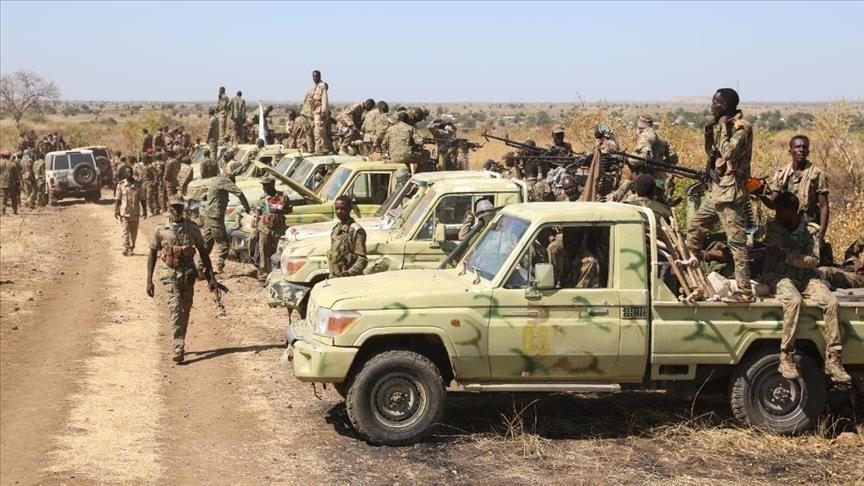
Experts say the conflict between General al-Burhan’s army (SAF) and the Rapid Support Forces (RSF) has produced a widening political and security vacuum, allowing Islamist-linked networks to re-emerge under the cover of nationalist rhetoric while quietly repositioning themselves within state structures.
Political analyst Sohaib Al-Muzairqi said Sudan’s current crisis cannot be separated from the historical role of Islamist currents that consolidated power during the era of Hassan al-Turabi and under former president Omar al-Bashir. He noted that segments of the movement now view the war as an opportunity to regain relevance after being sidelined following the 2019 uprising.
Speaking to Al-Ittihad, Al-Muzairqi said Islamist elements are attempting to present themselves as an organized force capable of preventing state collapse, rather than as a political faction seeking to return to power. Any coordination with the Sudanese military, he said, remains tactical and aimed at avoiding total political exclusion while rebuilding influence through administrative, security, and social networks.
He cautioned that reliance on security measures alone would not dismantle these networks, warning that pressure could instead drive them underground. Al-Muzairqi argued that a sustainable solution requires rebuilding professional and neutral state institutions, dismantling illicit economic interests, and launching a transparent political process that prevents any group from monopolizing power.
Terrorism researcher Munir Adeeb said Islamist networks bear primary responsibility for igniting and sustaining the conflict, arguing that they deliberately turned the crisis into a survival strategy after their activities were frozen and leaders prosecuted in the post-2019 transition.
Adeeb described the movement’s strategy as “investing in chaos,” accusing it of exploiting the SAF–RSF confrontation to derail accountability efforts and reverse the gains of the revolution that toppled Bashir, whose regime had long backed Islamist forces.
He said Islamist networks are actively working to block ceasefires and political settlements, aware that an end to the war would revive legal proceedings and dismantle their remaining influence.
Adeeb called on Sudanese institutions to recognize Islamist networks as a central threat to state stability and urged the African Union and international partners to consider designating Sudan’s Islamist branch as a terrorist organization, in line with measures taken elsewhere.
He said ending the war requires confronting the forces that profit from instability, warning that failure to do so risks turning Sudan into a renewed hub for cross-border extremist activity.