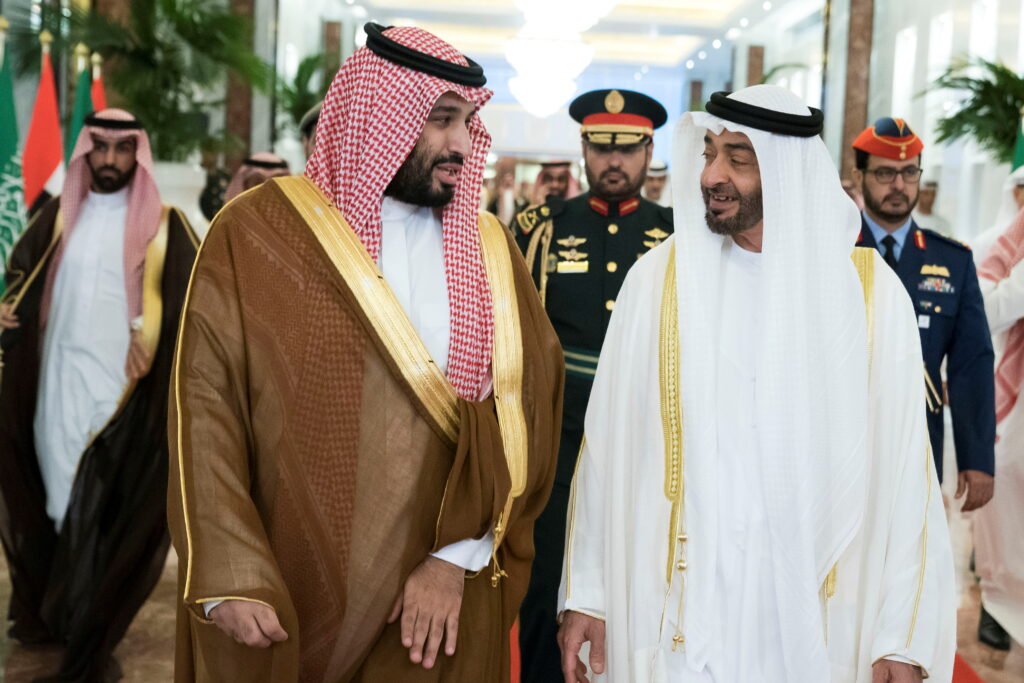
Saudi Arabia and the UAE – long-time Gulf allies – have entered an unprecedented public rift. In late 2025 and early 2026, Riyadh openly blamed Abu Dhabi for destabilising actions, from proxy interventions to Israel ties. This conflict came to a head in Yemen when UAE-backed southern forces seized oilfields (Dec 2025) and Saudi jets retaliated. Concurrently, Saudi state media launched an aggressive campaign accusing the UAE of “investing in chaos” across the region.
Saudi–Emirati relations have fractured due to divergent strategies on regional crises and economic rivalry. Saudi Arabia follows a cautious, “de‑escalation” doctrine focused on Vision 2030 and domestic stability, whereas the UAE has pursued “pre-emptive activism” – from backing Yemen separatists to integrating with Israel.
Both sides still insist on Gulf unity, but analysts warn the feud could reshape alliances. Scenarios range from a quiet reset (back-channel diplomacy) to proxy escalation in Sudan/Somalia, or economic “friction” without full diplomatic break. No credible evidence has emerged that Saudi Arabia has ideologically aligned with the Muslim Brotherhood or “Sunni militant” groups; experts emphasise Riyadh’s actions are strategic manoeuvres, not a shift in core values.
Historical background: allies turn rivals
For over a decade, Saudi Arabia and the UAE coordinated their regional policies. Both supported Egypt’s 2013 military government and led the Arab coalition in Yemen from 2015. In June 2017, Riyadh and Abu Dhabi jointly imposed a blockade on Qatar, accusing Doha of supporting terrorism.
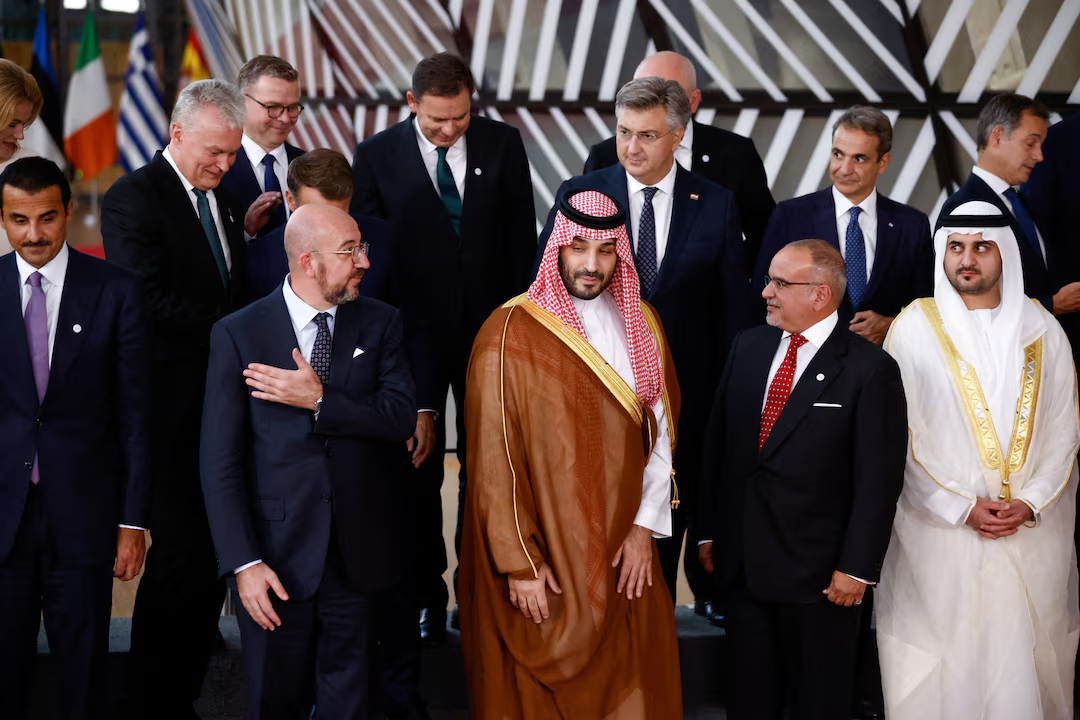
However, by 2019 tensions surfaced: Abu Dhabi began pulling back troops from Yemen and took a more independent line in Libya and Syria. In 2020 Abu Dhabi normalised ties with Israel (Abraham Accords) – a step Saudi Arabia did not join. In early 2021, Riyadh actually led the reconciliation with Qatar (Al-Ula agreement), in contrast with the UAE’s more cautious stance.
Economically, Saudi Arabia increasingly challenged the UAE: in February 2021 Riyadh told foreign firms to relocate Gulf headquarters to Saudi soil, and later trimmed tariff concessions that had benefited UAE free zones. By late 2025 these bilateral strains erupted into open conflict.
The Yemen conflict: Flashpoint of the rift
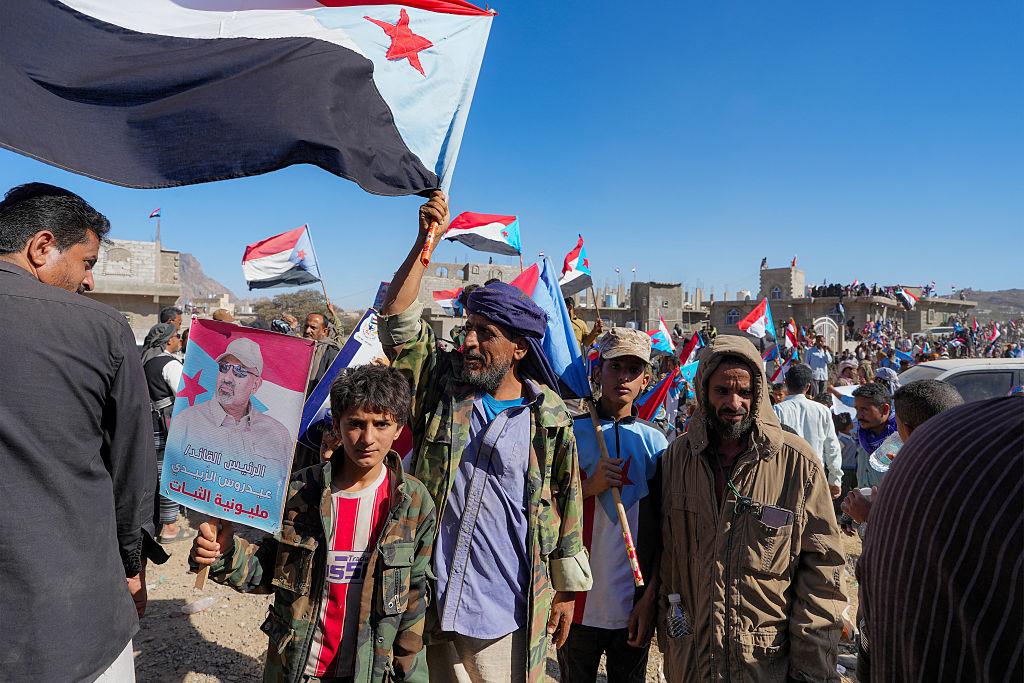
In late 2025, war in Yemen became the flashpoint of the Saudi–Emirati feud. UAE-supported forces of the Southern Transitional Council (STC) advanced across six southern provinces, seizing oil-rich areas on the Saudi border. Riyadh viewed this as a “red line” breach: on 8 Dec 2025, Saudi analysts say, the STC captured a Hadramout oilfield. Days later (30 Dec), the Saudi-led coalition carried out an airstrike on a vessel off Mukalla (coast of Yemen) that Riyadh claimed was ferrying weapons from Abu Dhabi to the STC. Saudi media hailed this as the first “direct engagement” between the two sides’ interests.
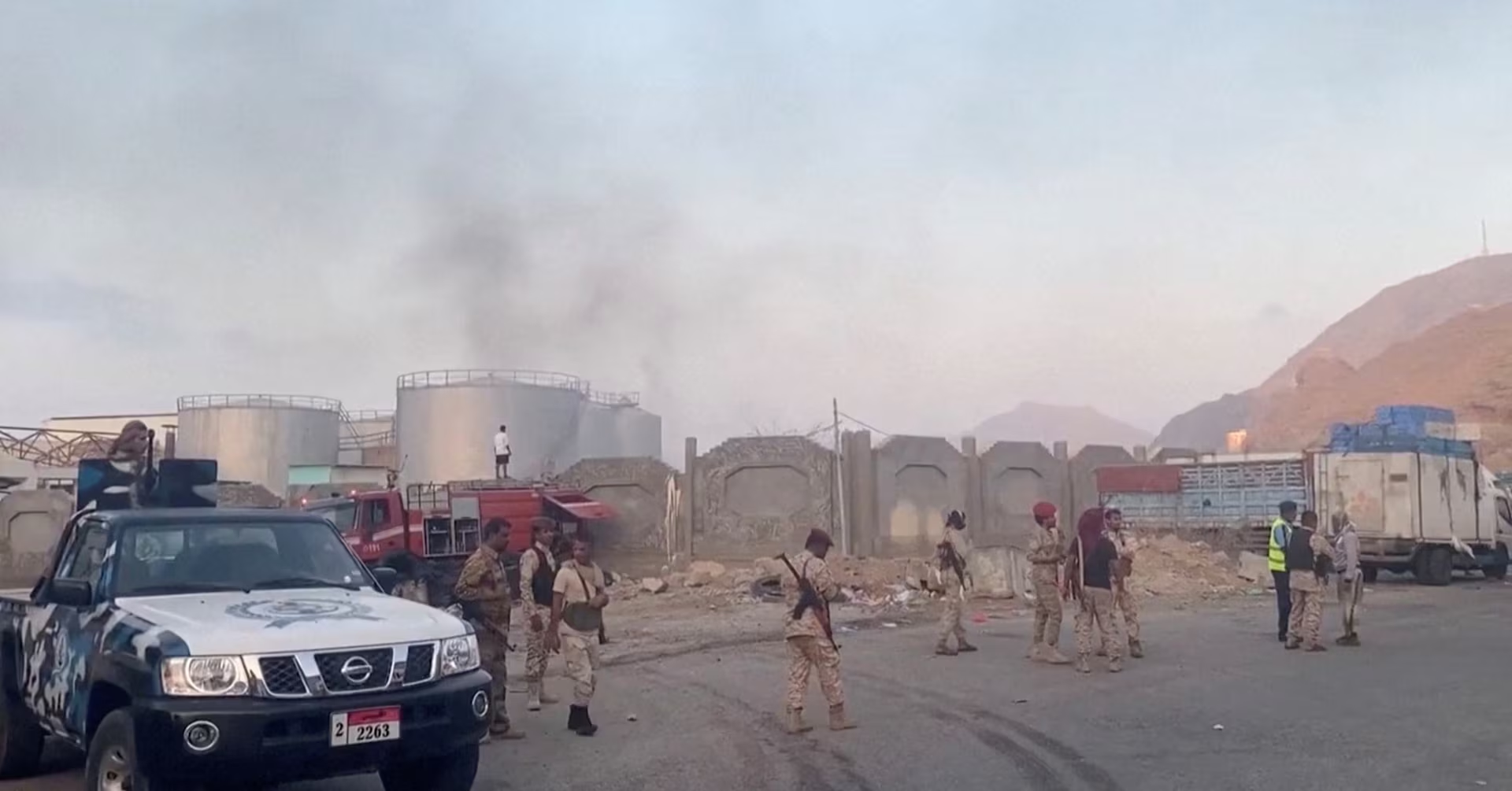
In response, the UAE denied any malicious intent. In a formal statement, Abu Dhabi’s Foreign Ministry “firmly rejected” allegations of inflaming Yemen’s conflict and insisted its presence in Yemen supports stability. It clarified the Mukalla shipment did not contain offensive weapons and its vehicles were meant for UAE forces, not insurgents.
The UAE emphasised its commitment to Saudi security, stating it remains “unwavering in its support for the security and stability” of the Kingdom. Saudi commentators, however, argued that Abu Dhabi was empowering separatists at Riyadh’s expense. The media war over Yemen has since spilled onto social networks and editorial pages, with Saudi columnists warning that continued Emirati obstruction in Yemen “tests” the partnership.
Economic and strategic rivalry
Beyond warzones, competition for wealth and influence drives the rift. Saudi Vision 2030 and mega-projects (e.g. NEOM) aim to diversify its oil-based economy, directly challenging the UAE’s role as the Gulf’s commerce hub. As INSS analysts note, “Emirati dominance challenges Saudi Arabia’s Vision 2030” because Abu Dhabi excels in sectors like tourism, finance and logistics. Riyadh has taken concrete steps: in addition to pulling HQs, it launched new airlines and tourist destinations to rival Dubai.
Politically, Saudi Arabia has been courting new partnerships to hedge its bets. It signed a defence pact with Pakistan (Sept 2025) and upgraded ties with Turkey and Qatar. Foreign observers describe this as Saudi signalling to the US and Israel that it has alternate allies. Meanwhile the UAE strengthened its own blocs: its Abrahamic alliance with Israel (and India) seeks to bolster Abu Dhabi’s security networks.

These parallel alignments – one oriented toward Riyadh’s Gulf-centric approach, the other toward Abu Dhabi’s broader coalition – form another axis of competition.
Regional proxy conflicts
Saudi and Emirati rivalry also plays out via proxies in other conflicts. In Sudan’s civil war, Saudi Arabia backs the SAF (General al-Burhan) while the UAE is linked to the RSF. Riyadh even led ceasefire talks excluding Abu Dhabi, reflecting mutual distrust. In the Horn of Africa, Somalia’s government this month cancelled UAE port and security agreements, accusing the Emirates of undermining sovereignty.
Al-Monitor reports this followed a Saudi-led effort to “court Somalia” after the UAE allegedly helped evacuate a Yemeni separatist via Mogadishu. The UAE manages ports in breakaway Somaliland (with Israeli support), another point of contention with Riyadh.
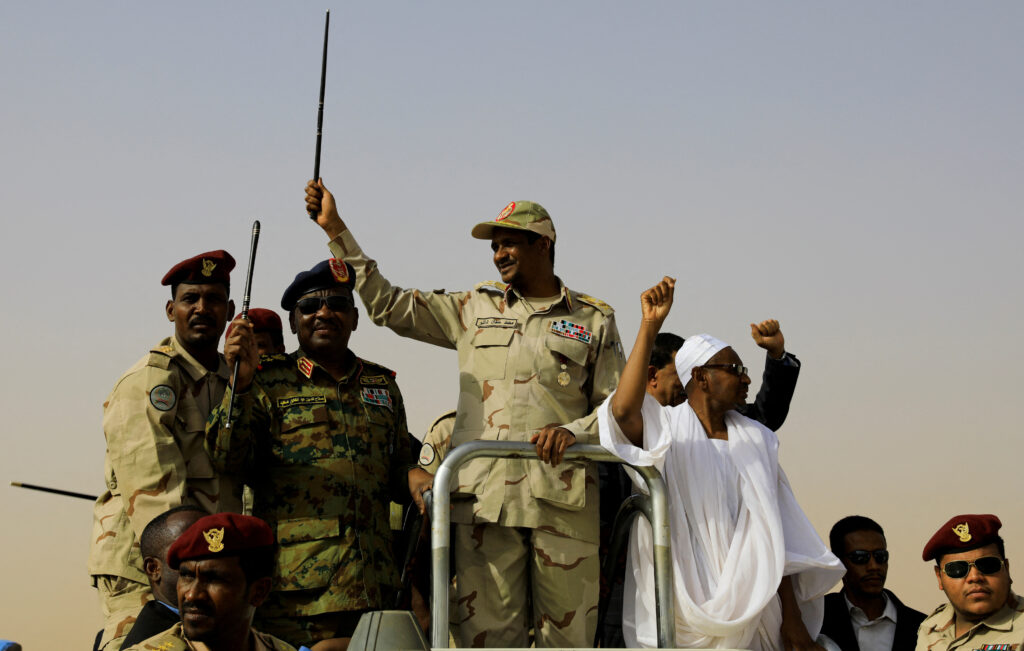
In summary, each side supports rival factions outside the Gulf – often along Red Sea and Horn corridors – intensifying their gulf dispute. Qatar and Turkey have mostly sided with Saudi Arabia on these issues, condemning Abu Dhabi’s unilateral moves, even as their own agendas differ.
The clash over these proxy battles underscores that the Saudi–UAE feud is about regional influence as much as bilateral grievances.
Media and rhetoric
In early 2026, Saudi outlets launched a remarkably harsh rhetoric against Abu Dhabi. State broadcaster Al-Ekhbariya accused the UAE of “investing in chaos” and backing separatists “from Libya to Yemen”. Opinion columns in Riyadh papers openly denounced Abu Dhabi’s Israel policy; one editor described MBZ as a “Zionist Trojan horse”.
This public vilification has no parallel in recent Gulf history – outsiders note it rivals the feud with Qatar in vehemence.
Abu Dhabi has largely remained silent in official channels, choosing measured replies. Its December statement (see above) reaffirmed a “fraternal” relationship. Qatar’s Al Jazeera, meanwhile, has amplified Saudi criticisms (including the Israel angle) but also hosts UAE voices defending sovereignty.
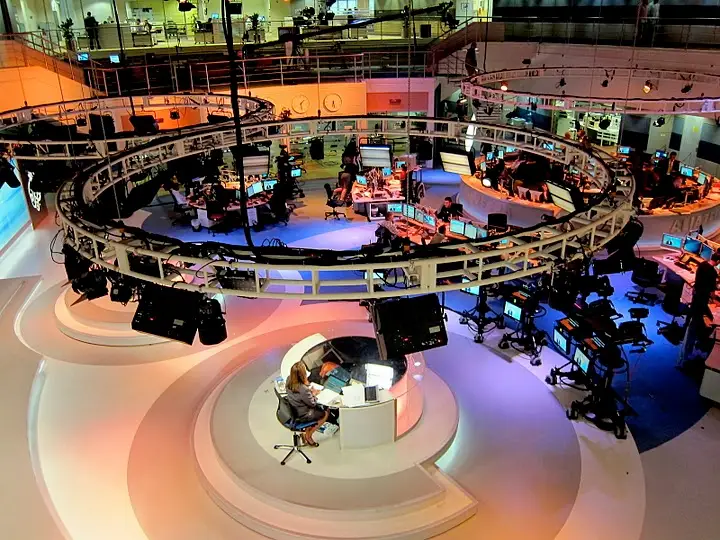
The Turkish press has emphasised Riyadh’s openness to dialogue – President Erdoğan even offered to mediate in Yemen (Jan 2026) – but Ankara ultimately remains allied with Doha in the broader Gulf dispute.
Thus far, Saudi Arabia is the more vocal party. Its officials insist it has “no quarrel” with other Emirates (Dubai, Sharjah, etc.) but objects to Abu Dhabi’s autonomous policies. Still, analysts warn that as long as rhetoric escalates, even the previously implicit coalition of Gulf monarchies is at risk.
Motives and likely scenarios
Analysts see multiple motives behind Saudi Arabia’s targeting of Abu Dhabi. A core factor is differing threat perception: Saudi leaders prioritise regime security and avoid propping up failed states, whereas Abu Dhabi favours preventing instability by intervening abroad.
By opposing Emirati interventions (in Yemen, Sudan, etc.), Riyadh is asserting that smaller Gulf states should align with its “de-escalation” strategy. Economic ambitions also play a role: diverting investment from Dubai to Riyadh is easier if Abu Dhabi appears to be creating chaos, thus justifying tougher Saudi policies.
Importantly, there is no evidence that Saudi Arabia has had a sudden ideological shift. Claims that MBS is embracing the Muslim Brotherhood or Islamist militias (as Qatar does) are dismissed by analysts. Israeli journalists worried about a so‑called “Islamist axis” of Riyadh-Qatar-Turkey, but Saudi experts insist this is unfounded.
Saudi Arabia officially opposes the Brotherhood (designated a terror group) and continues to treat international relations pragmatically. What has changed is simply Riyadh’s choice to publicly challenge Abu Dhabi’s agenda, rather than smooth over differences as in the past.
Looking ahead, three broad scenarios are discussed by experts:
- Managed Rivalry: Backchannel diplomacy cools the feud. Both sides compartmentalise disputes – especially to reassure investors – and limit public blame, without fundamentally resolving underlying tensions.
- Proxy Escalation: The Saudi–Emirati competition intensifies indirectly. Sudan, Somalia, Yemen, or even Libya become sharper battlegrounds, raising humanitarian and security risks.
- Economic Friction: A quietly worsening stand-off. Riyadh might tighten regulations on Emirati business interests (visa delays, customs friction, tariff adjustments) without a formal embargo. Multinationals could then have to choose between Gulf hubs.
In any case, the feud shows that Gulf unity can no longer be assumed. Both capitals will weigh the high costs of a full split: trade between them exceeded $20 billion, and they share intelligence, security and family ties. Many in Riyadh and Abu Dhabi alike still prefer a return to cooperation.
Ultimately, the current confrontation looks like a high-stakes negotiation – albeit one played out with unusually public barbs. As one Arab analyst observed, the danger is that “there is no list of demands” posted publicly, leaving much to uncertainty. The resolution will likely come through diplomacy behind the scenes, but only after both sides feel their core interests are recognised.
Timeline of key events (2017–2026)
| Date | Event | Source |
|---|---|---|
| Mar 2015 | Saudi Arabia and UAE launch joint intervention in Yemen (Houthis). | Reuters |
| Jun 2017 | Riyadh and Abu Dhabi lead Gulf countries’ blockade of Qatar. | Reuters |
| Feb 2021 | Riyadh orders foreign companies to relocate Gulf HQ to Saudi or lose contracts. | Reuters |
| Jul 2021 | OPEC spat: UAE blocks Saudi-led oil output deal (demanding higher production). | Reuters |
| Apr 2023 | Sudan war: Saudi Arabia backs the army; UN accuses UAE of supplying RSF. | Reuters |
| Dec 8, 2025 | UAE-backed separatists seize oilfields in Yemen’s Hadramout (Saudi “red line” breached). | Reuters |
| Dec 30, 2025 | Saudi jets strike a vessel off Mukalla carrying arms to Yemeni separatists. | Reuters |
| Dec 31, 2025 | UAE Foreign Ministry denies backing unrest in Yemen, reaffirms support for Saudi security. | UAE MFA press release (via Daily Pioneer) |
| Jan 2026 | Somalia’s government annuls UAE agreements, accusing Abu Dhabi of undermining sovereignty. | Reuters; Al-Monitor |
| Jan 2026 | Saudi FM Faisal in Warsaw says Riyadh will take on Yemen if UAE fully withdraws; relationship “continues strong” if so. | Saudi FM statement (reported by MEMO) |
| Jan 2026 | Saudi media intensify attacks on UAE (accusations of “supporting secessionists” and “treason”). | Middle East Monitor; Al-Monitor |