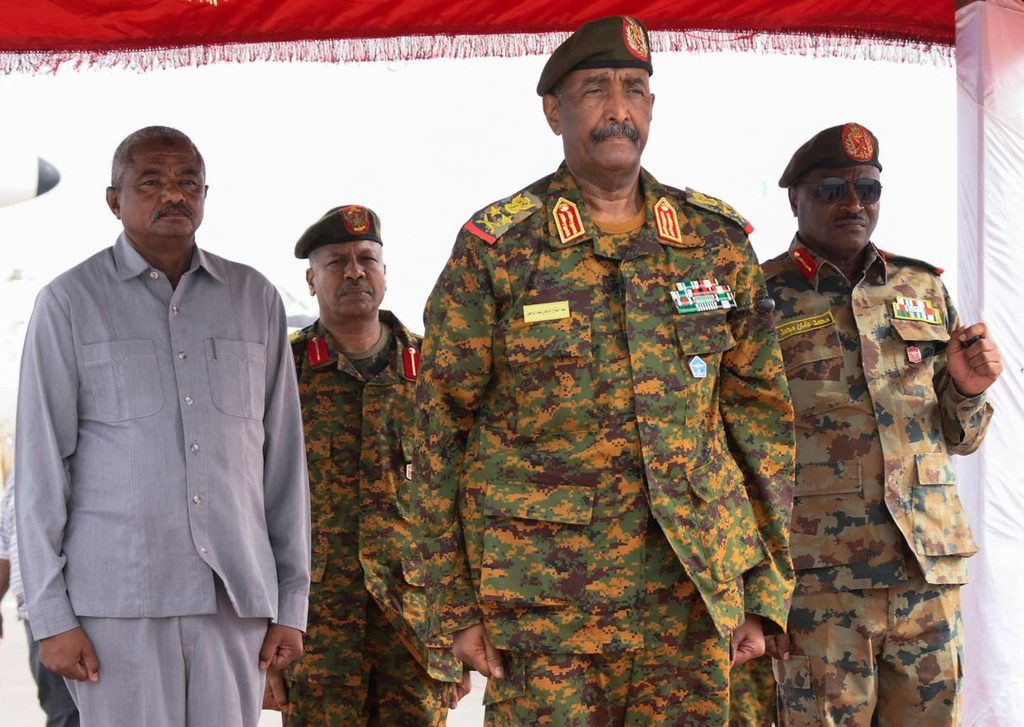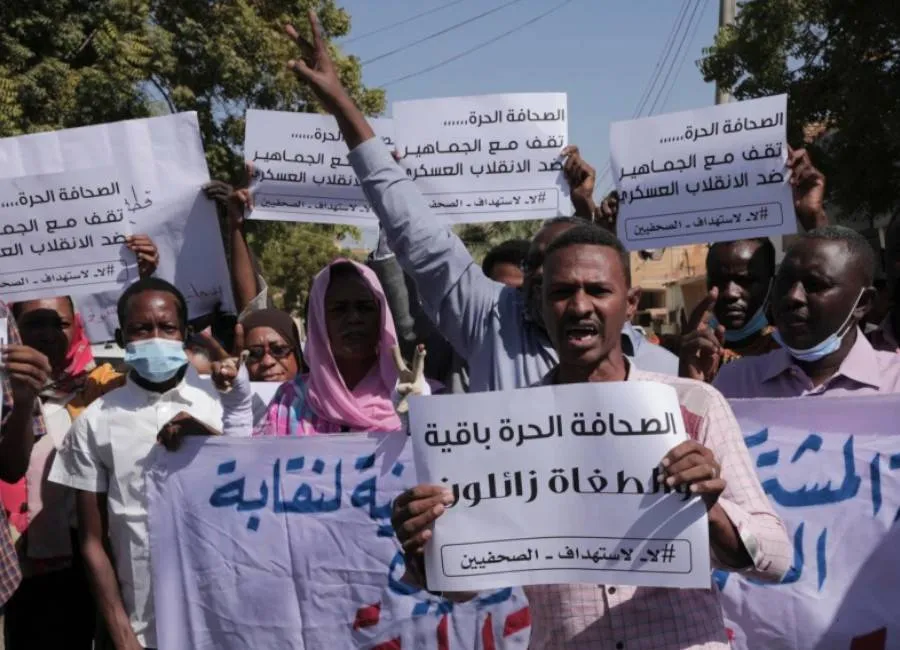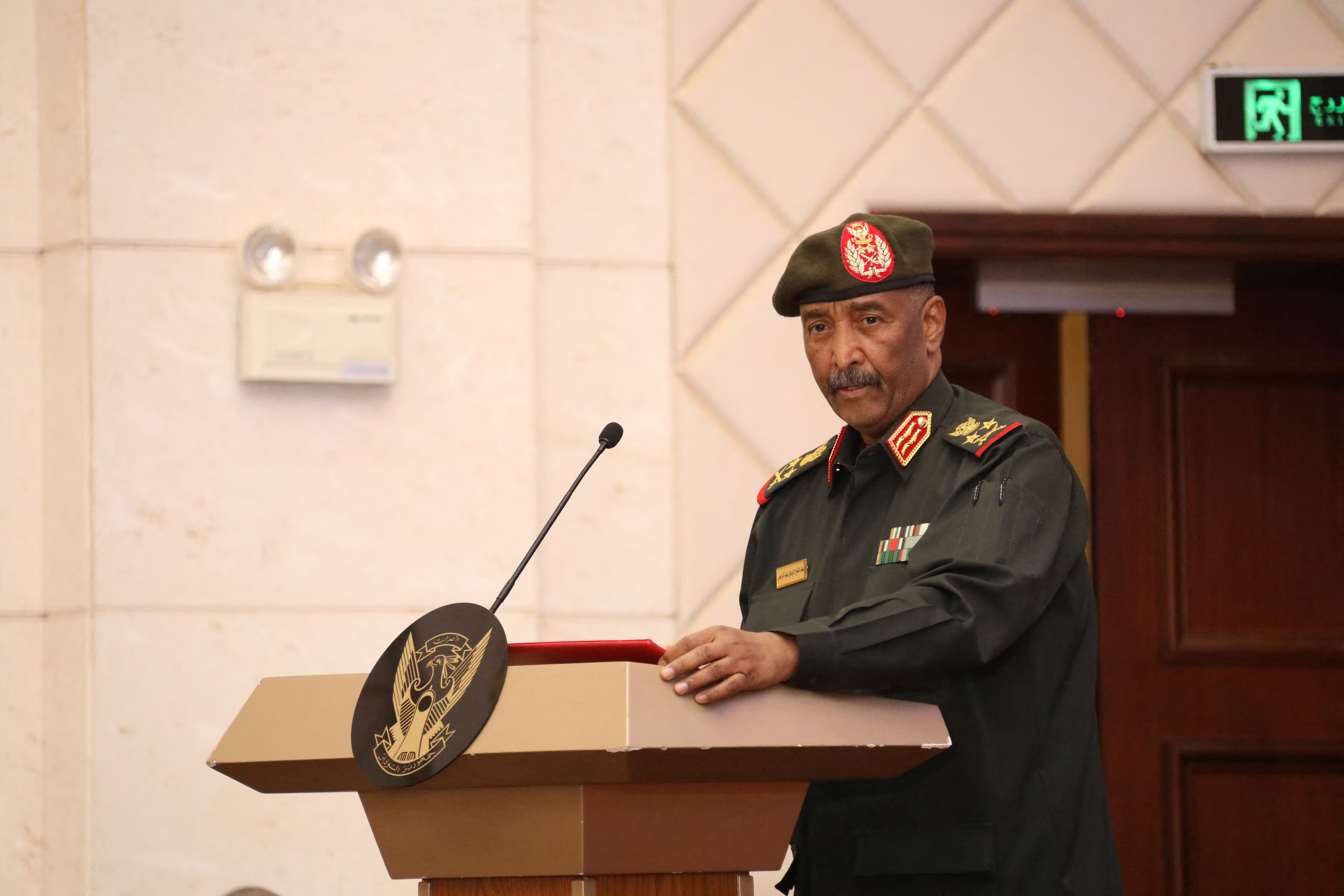
Resistance committees in Omdurman’s Al-Fitihab district have renewed their rejection of any political rapprochement with Sudan’s de facto leader, General Abdel Fattah al-Burhan, following reports that he had invited revolutionary groups to attend a Ramadan iftar gathering.
In a statement, the committees said their previous support for the armed forces “was never a mandate for its political or military leadership,” but rather an alignment with the institution as the “army of the people” in the face of militias and state collapse.
They stressed that backing the military institution does not translate into granting revolutionary legitimacy to its current leadership, nor does it erase the memory of the violent dispersal of the sit-in outside army headquarters in 2019 — an event they described as an “open wound” in the collective memory of Sudan’s December Revolution.
The committees said any talk of partnership or political engagement without a clear path toward accountability and transitional justice would amount to undermining the core demands of the revolution.
Their position comes amid a complex political landscape shaped by the October 25, 2021 coup, when Burhan dissolved the civilian-military partnership in the transitional government. Since then, resistance committees and other civilian forces have led sustained protests demanding an end to military rule and a return to democratic civilian governance.
The committees also pointed to wide-scale security crackdowns on protests, which medical and rights groups say resulted in deaths, injuries and the arrest of dozens of activists. Authorities, for their part, have maintained that their actions were aimed at preserving security and enforcing the law, while denying that peaceful protesters were deliberately targeted.
In recent speeches, Burhan has called for “national unity” and dialogue with youth groups, urging consensus to overcome Sudan’s crisis. However, revolutionary forces argue that such rhetoric has not been matched by practical steps to rebuild trust, citing continued security measures on the ground.
The statement also referenced controversial trials of activists, including the case of revolutionary figure Mohammed Adam, known as “Topak,” who faces charges in connection with the killing of a police brigadier during protests in Khartoum. Some of the charges could carry the death penalty if he is convicted.
Resistance committees and rights advocates say the case carries political dimensions and reflects the use of harsh legal provisions against protesters. Authorities insist the matter is purely criminal and that defendants are receiving full legal protections.
A similar case involving activist Muneeb Abdelrahman sparked debate before his recent release. According to the Emergency Lawyers group, the expansion of criminal charges against political activists risks deepening polarization and undermining prospects for trust-building.
Notably, the Omdurman Al-Fitihab committees emphasized the need to distinguish between army (SAF) leadership and rank-and-file officers and soldiers, whom they praised as “standing in defense of the country.” They reiterated their call for reforming the military institution and placing it under civilian authority, rather than dismantling it or targeting individual personnel.
Transitional justice remains one of Sudan’s most divisive issues. While resistance committees insist that accountability for the 2019 sit-in dispersal and subsequent violations is a prerequisite for any political process, other actors argue that ending the war and restoring stability should take priority, with justice mechanisms addressed through agreed frameworks later.