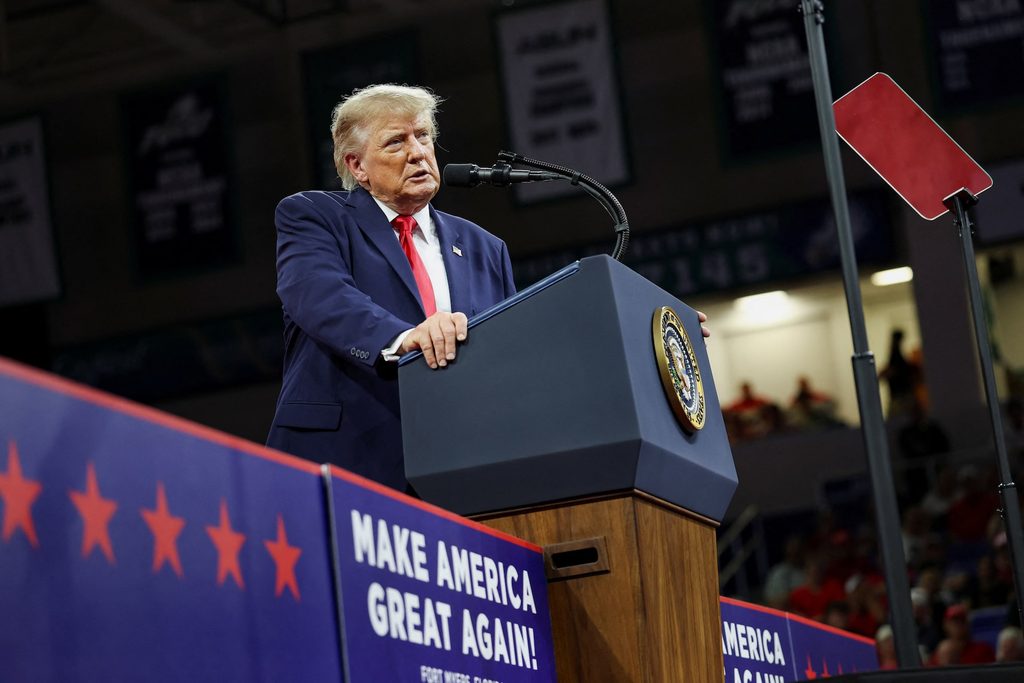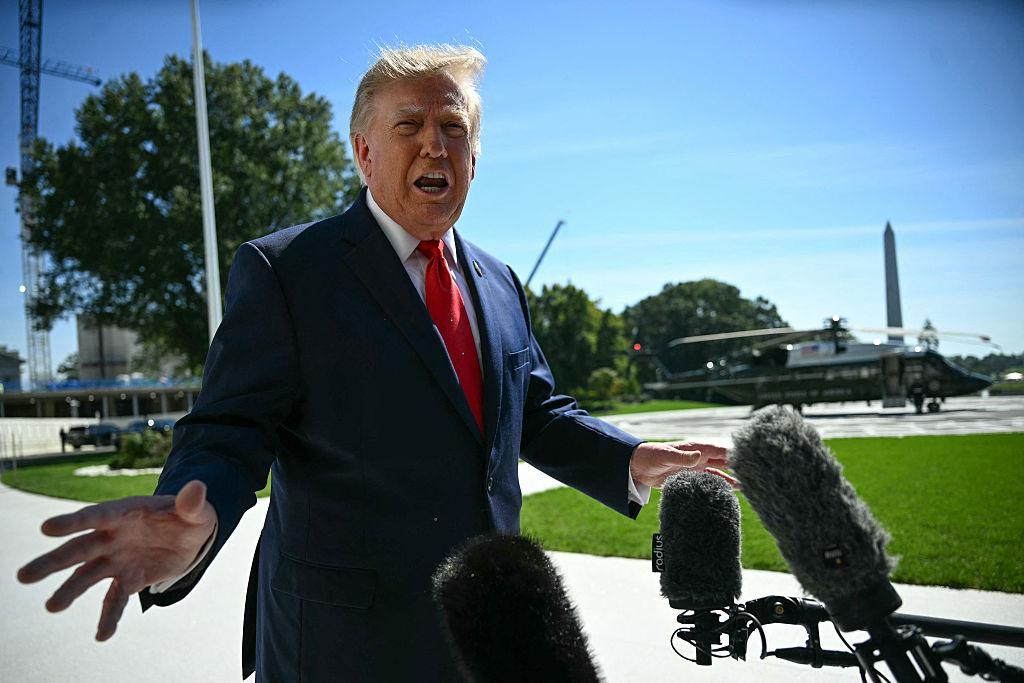
The war between Iran, the United States and Israel entered its second week on Saturday with no clear path to de-escalation, as U.S. President Donald Trump said he would accept nothing short of Tehran’s “unconditional surrender.”
Trump made the demand in a social media post on Friday, hours after Iran’s president signalled that unnamed countries had begun mediation efforts, briefly raising hopes of a possible diplomatic opening.
“There will be no deal with Iran except UNCONDITIONAL SURRENDER!” Trump wrote, adding that after the conflict Washington and its allies would help rebuild Iran under new leadership.
The comments highlighted Washington’s increasingly expansive war aims in a conflict that has rapidly spread across the Middle East, rattled global financial markets and driven oil prices sharply higher.
Iran has responded to the attacks by launching missile and drone strikes not only toward Israel but also toward Gulf states hosting U.S. military bases, including the United Arab Emirates, Qatar, Kuwait, Bahrain and Saudi Arabia.
Air raid sirens sounded across parts of Israel on Friday as air defenses intercepted incoming Iranian fire.
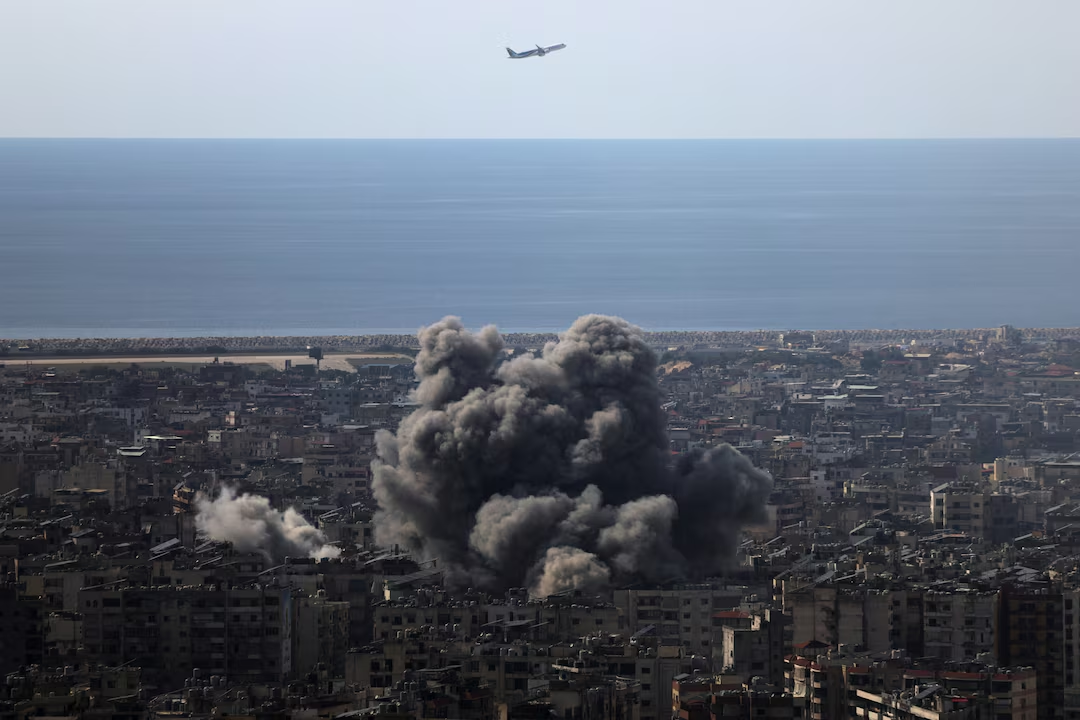
Israel also widened the conflict in Lebanon, launching heavy strikes on Beirut after ordering residents to evacuate the city’s southern suburbs — a stronghold of the Iran-aligned Hezbollah movement.
The Israeli military said around 50 warplanes struck a bunker beneath the Tehran compound of slain Iranian Supreme Leader Ayatollah Ali Khamenei that it claimed was still being used by Iran’s leadership.
Early Saturday, Iran’s semi-official Tasnim news agency reported that Tehran’s Mehrabad Airport had also been hit.
There was no immediate response from Iran’s Revolutionary Guards or Hezbollah.
Thousands of civilians have fled Beirut’s southern districts following the Israeli strikes. Jamal Seifeddin, 43, said he spent the night sleeping outside in central Beirut after leaving his home.
“Some are in cars, some on the street, some on the beach,” he said.
The Norwegian Refugee Council estimates around 300,000 people have been displaced in Lebanon over the past four days.
Israel says it has severely degraded Iran’s military capabilities in the first week of the campaign, claiming it destroyed about 80% of Iran’s air-defense systems and disabled more than 60% of its missile launchers.
Trump’s demand for Iran’s surrender also shook global markets on Friday, sending European and U.S. stocks lower while oil prices surged to their highest levels in years as shipping through the Strait of Hormuz was effectively halted.
Trump told Reuters earlier this week that the United States should have a role in selecting Iran’s next supreme leader after Khamenei was killed during the opening day of the conflict.
Iran’s U.N. ambassador Amir Saeid Iravani rejected the idea, saying the country’s leadership would be chosen “solely by the will of the Iranian people — without any foreign interference.”
Israel has openly said its campaign aims to dismantle Iran’s ruling system. Sources familiar with regional contacts said Israel has also been bombing western Iran to assist Kurdish militias seeking to seize towns near the border.
Iran has described the war as an unprovoked assault and labelled Khamenei’s killing an assassination.
Iranian President Masoud Pezeshkian said earlier on Friday that some countries had begun mediation efforts, though he did not name them.
Meanwhile, the Washington Post reported that Russia was providing Iran with intelligence on the locations of U.S. ships and aircraft in the region after Tehran’s surveillance capabilities were degraded.
The White House said U.S. military operations against Iran could last four to six weeks.
Iran’s U.N. envoy said at least 1,332 Iranian civilians have been killed since the strikes began on Feb. 28, citing figures from the Iranian Red Crescent.
Lebanon’s health ministry says Israeli attacks have killed 123 people and wounded 683. Iranian strikes have killed at least 11 civilians in Israel, while six U.S. service members have also been killed during the conflict.
U.S. officials also said investigators were examining an apparent strike on an Iranian girls’ school during the first day of the war that reportedly killed dozens of children, though they said a final conclusion had not yet been reached.