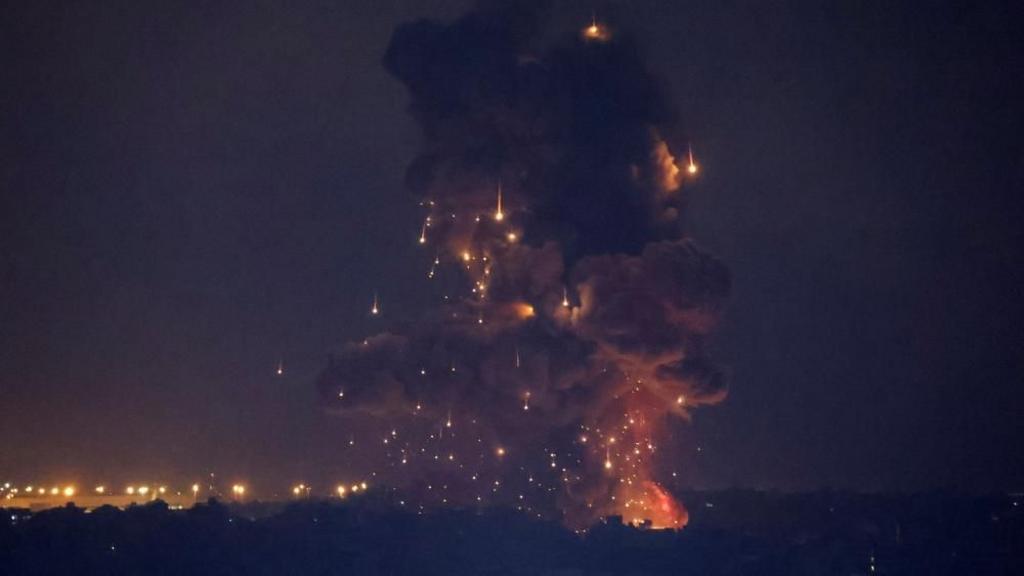
Israeli airstrikes killed more than 250 people across Lebanon in the deadliest day of the war, as fighting reignited despite a U.S.-Iran ceasefire that excluded Lebanon, triggering renewed regional escalation.
Lebanese civil defence reported 254 deaths and more than 1,100 injuries following a wave of coordinated strikes on Wednesday, though the health ministry put the toll at 182, warning the figure was not final.
The Israeli military said it carried out its largest coordinated assault of the war, striking more than 100 targets linked to Hezbollah across Beirut, the Bekaa Valley and southern Lebanon within minutes. Explosions rocked the capital, with multiple strikes hitting densely populated areas.
The bombardment came hours after a two-week ceasefire between Washington and Tehran took effect — a truce that did not extend to Lebanon, according to both Israeli and U.S. officials.
Israeli Prime Minister Benjamin Netanyahu said operations against Hezbollah would continue, while U.S. officials confirmed Lebanon was not part of the agreement.
The renewed violence prompted an immediate response from Hezbollah, which said it fired rockets toward northern Israel, accusing Israel of violating what it believed was a broader ceasefire framework.
The escalation has exposed confusion around the scope of the truce, with Pakistani mediation efforts initially suggesting Lebanon would be included. Iranian officials later signalled that a halt in attacks on Lebanon was a key expectation tied to the agreement.
On the ground, the scale of destruction overwhelmed emergency services. Witnesses described civilians trapped in damaged buildings, with rescuers using cranes to evacuate survivors. In some areas, wounded civilians were transported on motorcycles due to a lack of ambulances, while hospitals appealed urgently for blood donations.
“The scale of the killing and destruction in Lebanon today is nothing short of horrific,” said UN human rights chief Volker Türk.
Strikes also hit critical infrastructure, including a key bridge over the Litani River, effectively cutting off southern Lebanon. Israeli officials described the area as “disconnected,” as part of efforts to establish a buffer zone along the border.
Lebanese President Joseph Aoun condemned the attacks and said France was pushing diplomatically for Lebanon’s inclusion in any ceasefire arrangement.
The war, which erupted on March 2 following regional escalation tied to Iran, has already killed more than 1,500 people in Lebanon and displaced over 1.2 million, according to local authorities.
For many civilians, hopes that a ceasefire could allow a return home were shattered within hours.
“Lebanon can’t take it anymore,” said one displaced resident in Sidon, as families once again prepared for further escalation.