The United States has escalated pressure on Sudan’s Islamist factions and their allies, warning of broader consequences for those backing Tehran, as the country’s civil war continues to deepen regional entanglements.
Washington recently designated Sudan’s Muslim Brotherhood as a terrorist organisation, in a move seen as targeting key political and military networks aligned with General Abdel Fattah al-Burhan, who leads Sudan’s SAF faction in the ongoing conflict with the Rapid Support Forces (RSF).
The designation, announced by US adviser Massad Boulos, took effect in mid-March and comes amid stalled ceasefire efforts and growing calls for sanctions against actors accused of obstructing peace.
Analysts say Islamist factions—many with roots in Sudan’s former ruling regime—remain deeply embedded within al-Burhan’s power structure. Their continued influence, along with ties to regional actors such as Iran and Turkey, has complicated diplomatic efforts and raised concerns in Western capitals.
The United States and its partners, including Saudi Arabia, Egypt, and the UAE, have repeatedly pushed for renewed negotiations. However, al-Burhan has rejected talks with what he describes as “rebels,” referring to the RSF led by Mohamed Hamdan Dagalo (Hemedti).
Islamist figures, including prominent leaders such as Ali Ahmed Karti, have also condemned international mediation efforts, describing them as interference in Sudan’s internal affairs.
Historical roots of the movement stretch back to the mid-20th century, when Islamist ideology spread among university students before evolving into powerful political entities. Figures like Hassan al-Turabi played a central role in shaping Sudan’s Islamist political landscape, ultimately contributing to the rise of former president Omar al-Bashir in 1989.
Following Bashir’s ouster in 2019, remnants of the Islamist network reportedly played a key role in the 2021 military coup that brought al-Burhan to power and derailed Sudan’s civilian-led transition.
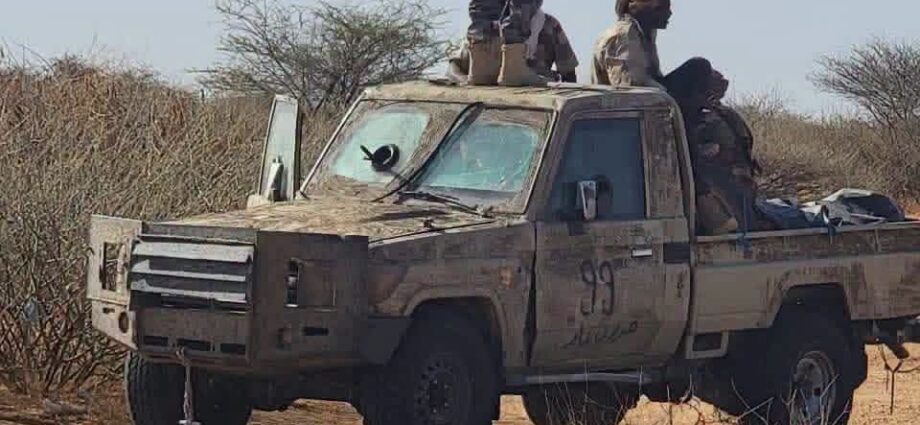
Since the outbreak of war in April 2023, Islamist-linked militias—including the Al-Baraa bin Malik Brigade and Sudan Shield Forces—have been actively involved in fighting alongside SAF units, particularly in Khartoum and Darfur.
Observers note that these groups maintain close ties with Sudanese intelligence services and have acted as intermediaries with foreign allies, particularly Iran.
Washington’s sanctions strategy has expanded in recent months to include not only political figures but also armed wings of the Islamist movement. US officials have linked these groups to Iran’s Islamic Revolutionary Guard Corps, citing concerns over military cooperation and regional destabilisation.
Despite mounting pressure, al-Burhan has doubled down on his military campaign, vowing to continue fighting until the RSF is defeated.
However, analysts warn that Sudan’s alignment with Iran—particularly amid broader regional tensions involving Israel and the United States—could further isolate Port Sudan’s leadership and strain its relationships with traditional allies.
The latest US measures signal both growing frustration and a broader recalibration of policy, as Washington seeks to curb Islamist influence while reviving stalled peace efforts in Sudan.