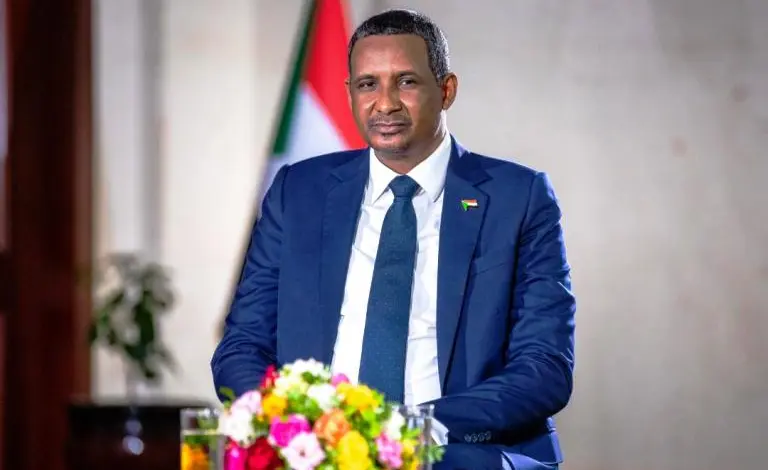
Sudan’s TASIS leader Mohamed Hamdan Dagalo, widely known as Hemedti, has issued a presidential decree establishing a Council of Regions under the self-declared Peace Government, formally appointing a 24-member body in what is being presented as a major step in building parallel state institutions.
The decree, issued on April 14 under Presidential Council Decree No. (5) of 2026, cites Articles 56, 57 and 65 of the 2025 Transitional Constitution as its legal basis, granting the council full constitutional standing within the group’s governance framework.
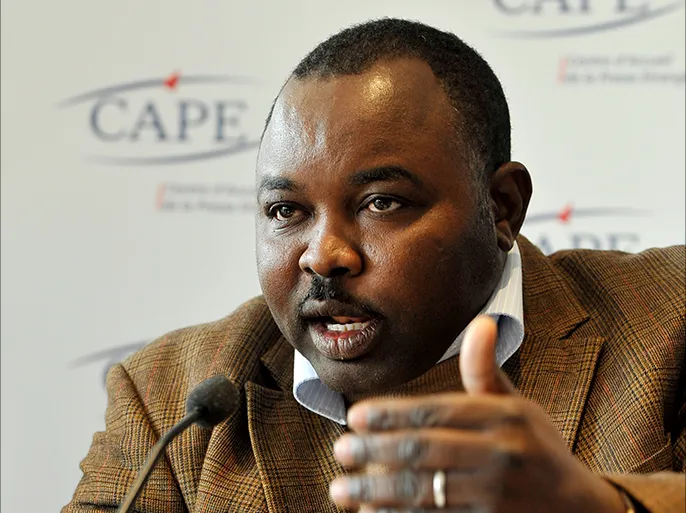
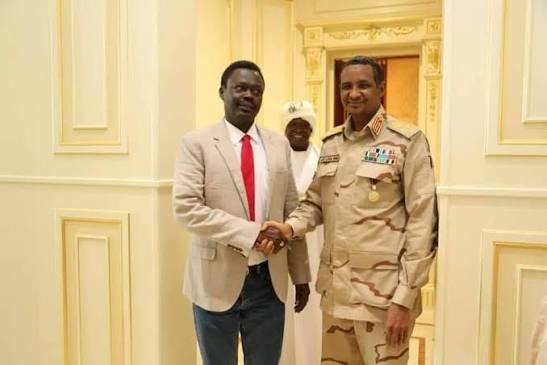
Under the decision, Arno Ngotello Lodi Aper was appointed chairman of the council, with Makin Hamid Tirab Damdum named deputy chairman. The body includes 22 additional members drawn from across Sudan’s regions, including Rania Ali Jubara Bilal, Mohammed Ahmed Al-Masri, Mutwakil Othman Salamat Tuto, Dr Abubakar Al-Nour Yaqoub Hamid, Sumaya Abd Allah Adam Arbab, Ramadan Ibrahim Shamila Jayid, and others representing a broad regional spread.
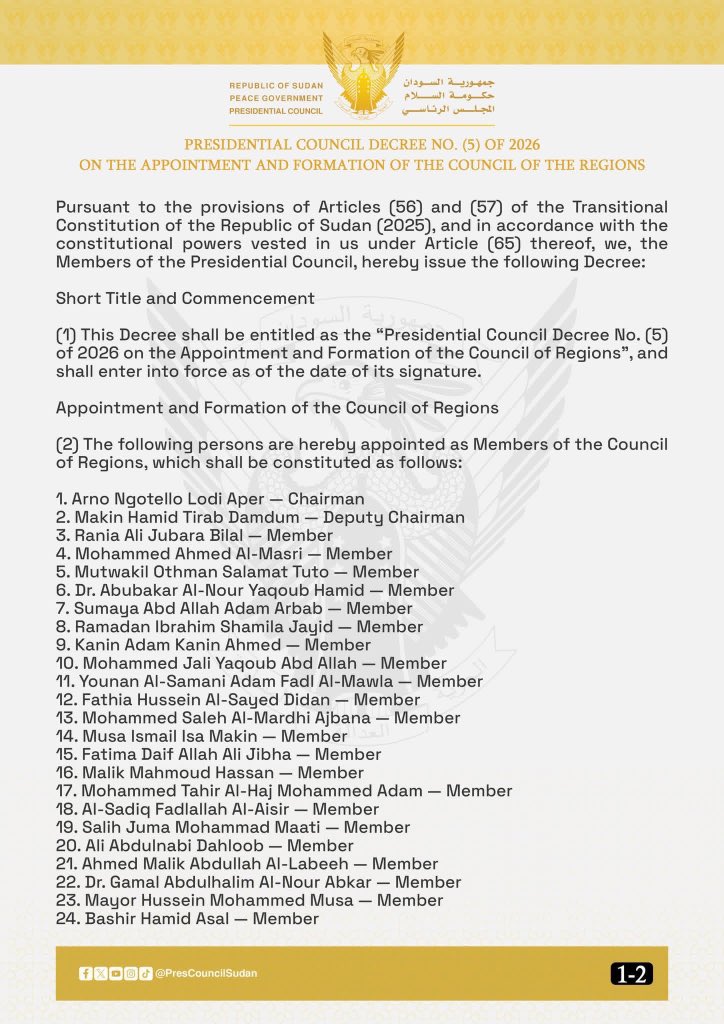
The formation of the council marks the first legislative body announced in Sudan in nearly seven years, positioning it as a central pillar of the Peace Government’s institutional architecture and a key organ for legislation and oversight during the transitional phase.
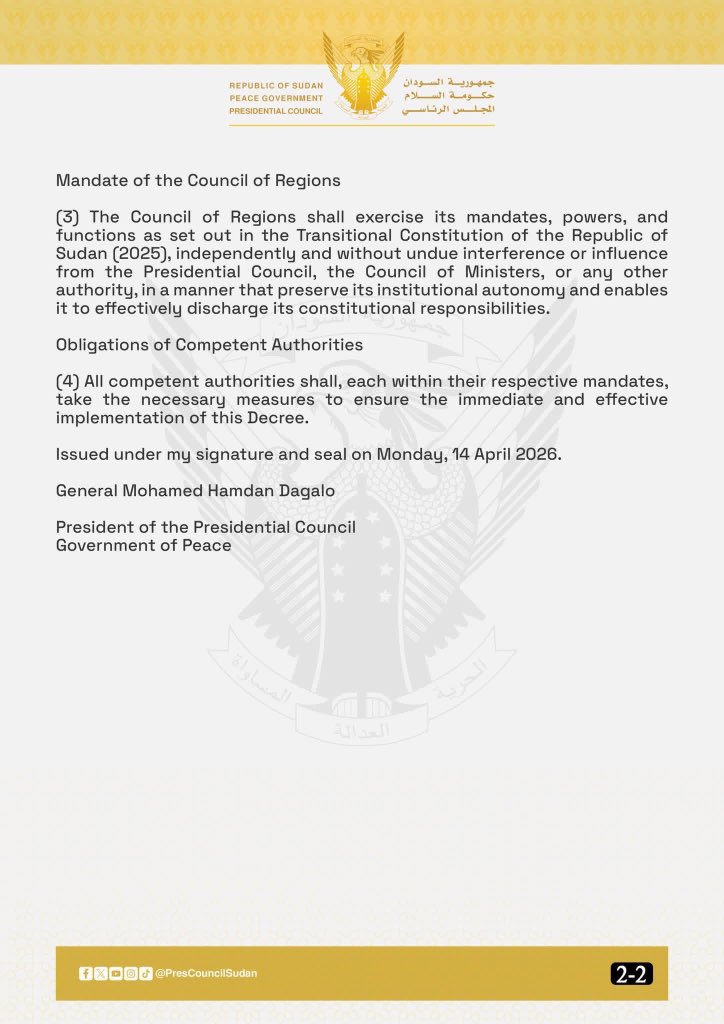
According to the decree, the Council of Regions will exercise its полномочия independently, without interference from the Presidential Council, the Council of Ministers, or any other authority, in line with its constitutional mandate.
Officials aligned with the Peace Government say the body is intended to reinforce decentralised governance, ensure balanced regional representation in decision-making, and counter long-standing dominance by central authorities in Khartoum.
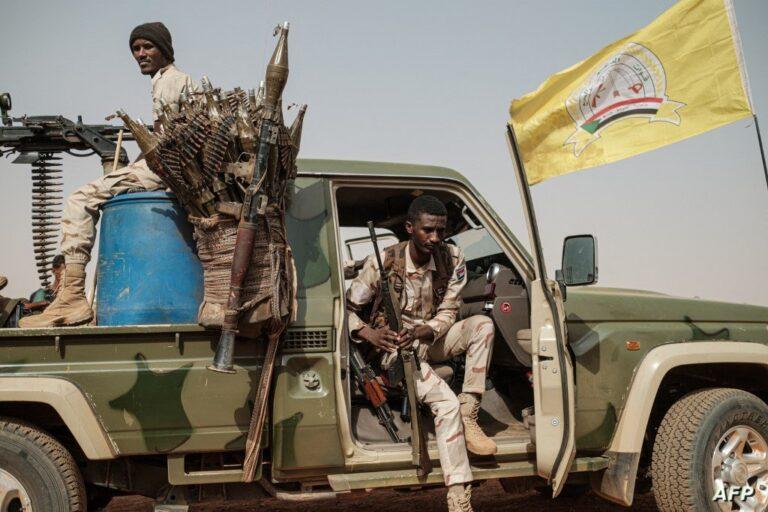
The move comes as the RSF-led political structure continues efforts to consolidate administrative control and project legitimacy through parallel institutions, despite ongoing conflict with General al-Burhan’s army and the absence of international recognition.
The decree also directs all relevant authorities to take immediate steps to implement the decision, signalling an attempt to operationalise the council without delay.