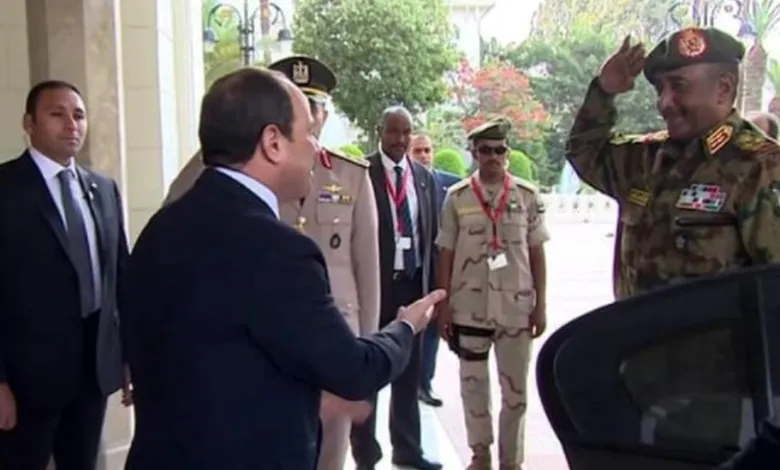
Rights groups have warned of grave abuses by General al-Burhan’s SAF, including allegations of chemical weapons use during the war and a campaign of forced evictions and demolitions in Khartoum that they say has displaced hundreds of thousands of residents.
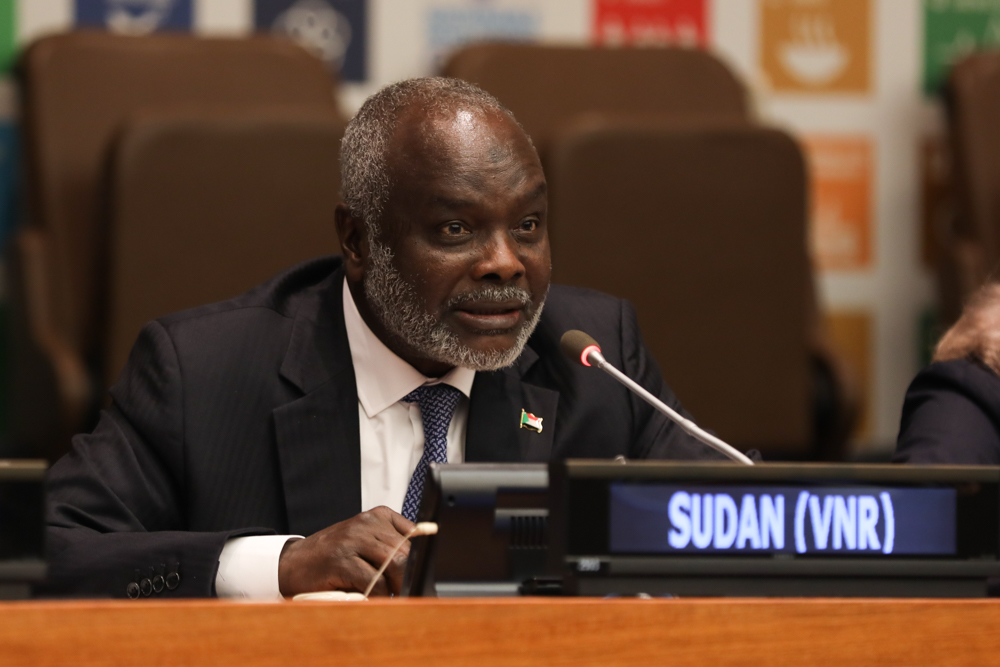
The warnings were raised in a joint submission to the 62nd session of the UN Human Rights Council in Geneva, where rights organisations called for the mandate of the Independent International Fact-Finding Mission for Sudan to be extended for at least two years.
The statement was submitted by the African Centre for Democracy and Human Rights Studies and the Centre for African Legal Studies, and supported by the Sudan Knowledge Centre. The council session runs from June 15 to July 10.
The groups said Sudan’s humanitarian catastrophe requires sustained international investigation, particularly into allegations involving chemical weapons, mass displacement and the destruction of residential neighbourhoods in the capital.
They welcomed a joint declaration on Sudan adopted in The Gambia on May 12 by the African Commission on Human and Peoples’ Rights fact-finding mechanism and the UN’s independent mission on Sudan.
According to the statement, the two missions are uniquely placed to investigate violations of international human rights law and international humanitarian law, establish the facts and identify the root causes of abuses committed during the conflict.
The groups said the fact-finding mission remained the only internationally recognised independent mechanism mandated to monitor and report on human rights conditions in Sudan, arguing that its work must continue for a sufficient period.
The submission said recent developments require urgent attention, including allegations that the SAF used chemical weapons in the course of fighting against the Rapid Support Forces.
It said Sudan’s response to requests for clarification had failed to provide documented and sufficient answers to the serious allegations, raising questions over compliance with the Chemical Weapons Convention.
The statement also warned that the economic cost of the war has been devastating, with damage to infrastructure and industrial production likely to obstruct recovery and reconstruction long after the fighting ends.
The groups also drew attention to what they described as forced evictions and demolitions in Khartoum, Khartoum Bahri and Omdurman, saying a campaign that began in May 2025 escalated in recent months and peaked in early 2026.
They said the operation, backed by the Port Sudan authorities, affected poor urban communities in areas not currently experiencing direct combat and regarded as relatively safer than other parts of the country.
Hundreds of thousands of people, including civilians and military personnel, have lost their homes after entire neighbourhoods were demolished on the grounds that they were informal settlements linked to security threats and social disorder, the statement said.
The groups said residents were not provided with compensation or adequate alternative housing.
They argued that the eviction campaign appeared to have an ethnic motive, saying it targeted communities originating from Darfur and Kordofan.
The statement said the demolitions were taking place amid severe security and economic hardship, and in an atmosphere marked by rising hate speech, war incitement and criminalising rhetoric from some officials.
Affected residents reported being subjected to racist insults by security personnel during the operations, according to the submission. They also said they were collectively accused of being a support base for the RSF, or of sympathising or cooperating with the force during its control of parts of Khartoum between April 2023 and March 2025.
The rights groups urged members of the Human Rights Council to extend the fact-finding mission’s mandate for no less than two years, saying its work cannot be completed without visits to Sudan and neighbouring countries hosting millions of Sudanese refugees.
They also called for political and diplomatic support from the African Peace and Security Council to ensure the mission can access Sudan and other relevant countries.