A confidential European report has revealed a deepening rift between Britain and the United States over NATO’s future and cooperation during Washington’s confrontation with Iran, according to details reported by Erem News.
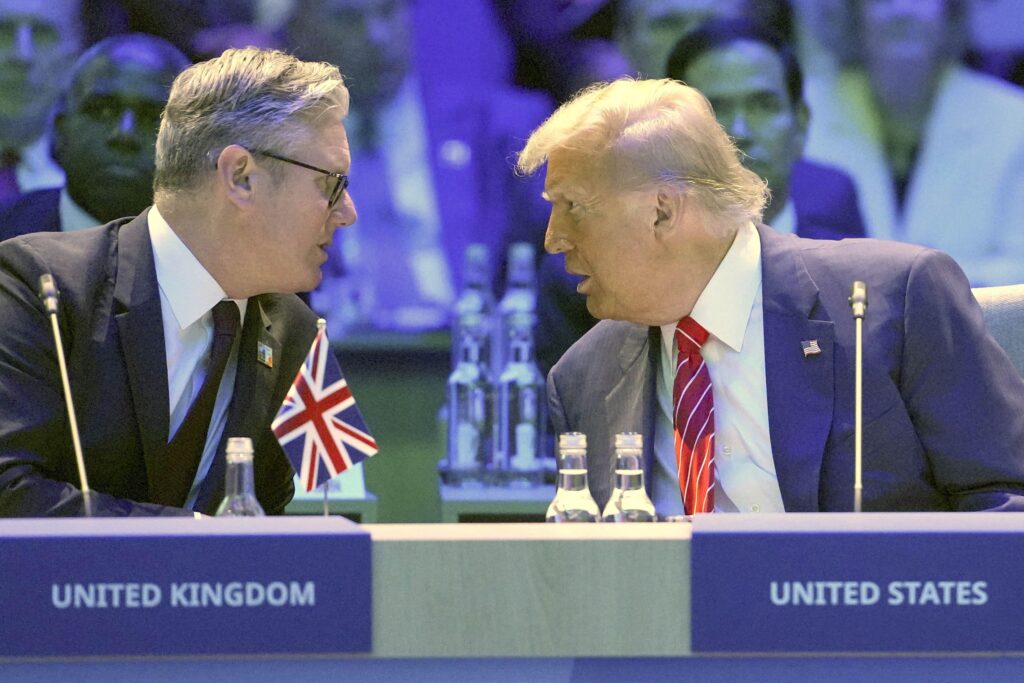
The report, prepared for the advisory board of the European Union Council’s Political and Security Committee, said security calculations in London and Washington have sharply diverged over the past six months, creating what it described as a tense phase in relations between the two allies.
According to the report, the administration of US President Donald Trump concluded that Britain had failed to carry out agreed military measures during the confrontation with Iran and had not fully implemented other forms of logistical support.
The report said some British military and intelligence circles were reluctant to fulfil commitments linked to joint defence arrangements with Washington, including areas related to information-sharing.
European military and intelligence officials reportedly discussed the findings in several meetings inside the EU’s Political and Security Committee.
The report said Britain did not play the role Trump had expected, either militarily or politically, during the conflict with Iran. It suggested London feared that strong support for Washington would hand Trump a major victory, strengthening his position at a time when European officials remain concerned about his approach to NATO and broader European security.
A senior European military source who took part in one of the meetings told Erem News that Britain did not want to help deliver a major military success against Iran that could be credited to Trump before congressional elections.
The source said such an outcome could have left Trump in a stronger position to pursue economic and military deals with Russia and China, with potentially damaging strategic consequences for Britain and Europe.
The source added that British foreign policy toward Washington in recent months has focused on reinforcing Trump’s need for European support politically, economically and militarily, while pushing for a broader reassessment of key files.
According to the same source, London does not view Washington’s security role as protection offered without cost, but as part of a system that also benefits the United States through arms sales and military arrangements with European states.
US-British relations have long been defined by a strategic alliance that emerged during World War I, deepened during World War II and carried through the Cold War. But the report said differences have become more visible under Trump, particularly over NATO, Ukraine, Iran and the future of the international order.
Mohamed Abul-Enein, a researcher in international relations, told Erem News that Britain still sees the post-World War II international system as essential to its own global position and believes its relationship with Washington must be preserved within that framework.
He said Washington, by contrast, increasingly sees its military and economic power as enough to maintain dominance without the same attachment to post-war institutions and legal norms.
Abul-Enein said the two visions are now competing. London, he argued, remains attached to the existing international order and to the use of soft power, while Washington under Trump has leaned more heavily on unilateral force and the principle of putting US interests first.
He added that tensions over Greenland and the Russia-Ukraine war had already pushed Britain to rethink its positioning after Brexit and to seek closer alignment with Europe, rather than rely entirely on a relationship with Washington that may remain unstable.
The war with Iran, Abul-Enein said, accelerated London’s concerns that Washington is undermining the international system Britain wants to preserve.
He said Britain is unlikely to openly confront the United States, but will instead try to contain Washington’s policies and get through Trump’s time in office with the least possible damage.