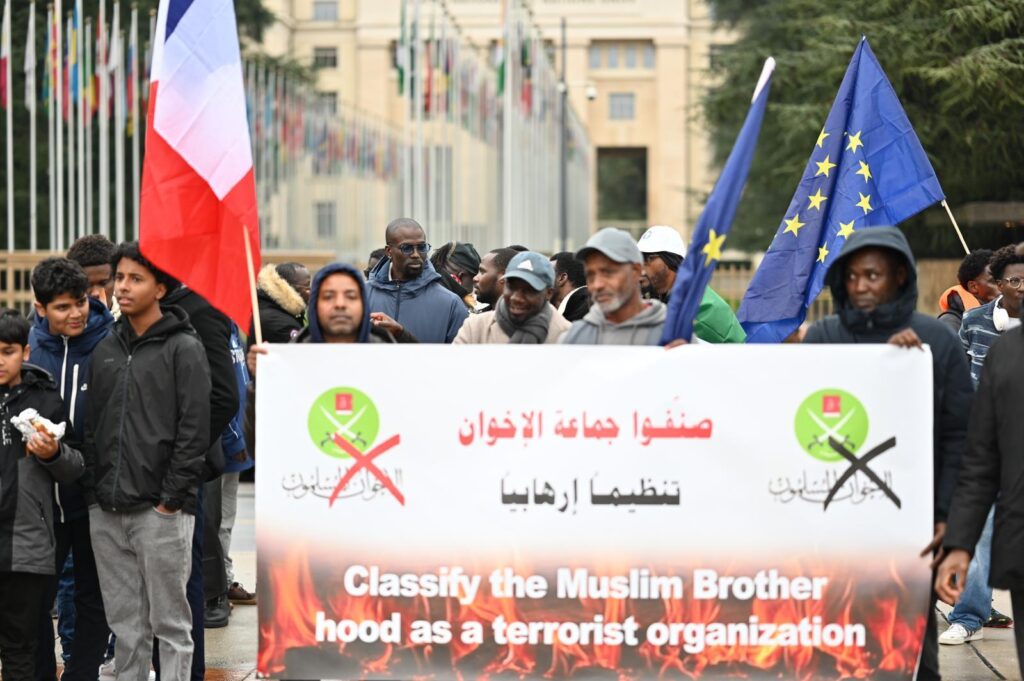
European authorities are stepping up scrutiny of financial networks linked to the Muslim Brotherhood, with France tightening oversight of foreign funding, donations and financial transactions involving religious and civil society organisations.
A French government source told Eram News that authorities are increasingly examining how funds are raised, where they originate and how money moves between associations, religious centres, charities and other institutions suspected of links to the Brotherhood.
According to the source, some Brotherhood-linked networks established civil associations and donation funds under humanitarian or relief banners, with portions of the money allegedly redirected toward activities associated with the organisation.
The source said financial investigations had also identified the use of complicated transaction structures involving multiple bank accounts, making it more difficult for authorities to establish the original source of funds and their ultimate beneficiaries.
French officials are particularly concerned about cases in which charitable donations may have been diverted from their stated purposes, prompting increased financial audits and tighter reporting requirements.
France tightens oversight
The French government has introduced stricter disclosure and auditing requirements for foreign money used to finance or operate religious centres, mosques and educational institutions, particularly when funds originate from individuals or organisations outside France.
The measures are intended to identify donors, establish the purpose of financial transfers and prevent civil or religious institutions from being used as channels for undeclared or improperly directed funding.
French legislation also requires associations seeking certain forms of state support to comply with the country’s Republican Commitment Contract, which obliges organisations to respect French law and republican principles.
Authorities have also been given broader powers to act against associations found to be violating regulations or operating in ways deemed incompatible with public order.
The measures form part of a wider French effort to scrutinise foreign financing of religious and civil institutions and reduce the potential use of overseas funding for political or ideological influence.
Questions over property and assets
Concerns have also emerged over the ownership of assets connected to figures associated with Brotherhood networks in Turkey and Europe.
Disputes within those circles have reportedly involved allegations that real estate, luxury vehicles and other assets purchased with institutional funds were registered under individuals’ names rather than belonging directly to associations or organisations.
Abdullah Abu Al-Ala, a researcher in international relations, told Eram News that some donations had allegedly been converted into property and commercial companies managed through intermediaries or individuals.
He argued that such structures could provide continuing income while making financial flows more difficult to trace, particularly when money moves from charities into companies or property before the proceeds are recycled into other activities.
Abu Al-Ala also cited previous leaked recordings that he said revealed internal disputes over the management and distribution of money within Brotherhood-linked networks.
Religious groups and halal certification
The researcher said European scrutiny had also expanded to funding received by religious associations, community centres and projects involved in issuing halal certification.
Authorities, he said, are increasingly examining not only bank accounts but also relationships between charities, companies, schools, religious institutions and the individuals who own or manage them.
The increased oversight has also placed greater pressure on organisations receiving donations from abroad to disclose the source of the money and explain how it is spent.
Sweden case draws attention
Abu Al-Ala pointed to a controversial case in Sweden which he described as an example of how educational and welfare institutions could allegedly be exploited to obtain public funding.
He claimed investigations had examined a network involving imams, school and kindergarten administrators and community organisations that received government support before portions of the funds were allegedly transferred abroad.
According to Abu Al-Ala, more than one billion Swedish kronor was involved in the disputed funding.
He alleged that false invoices, front schools and charities were used in some cases to secure money from Swedish taxpayers under the stated purpose of providing services to Muslim communities.
However, Abu Al-Ala stressed that authorities should distinguish between Islamic organisations operating legally and transparently and entities proven through evidence to have committed fraud or illegal financial transfers.
He said scrutiny should be based on financial conduct and violations of the law rather than the religious identity of an organisation.
Broader European crackdown
The developments point to a broader shift across Europe toward closer financial and legal examination of religious and civil society organisations with cross-border funding networks.
France and Sweden have emerged as prominent examples of governments increasingly treating the issue not only as a security concern but also as one involving financial transparency, taxation and compliance with civil society regulations.
As oversight expands, authorities are increasingly tracking transactions between associations, private companies, property holdings and personal bank accounts.
The growing scrutiny is placing Brotherhood-linked organisations under pressure to demonstrate that their funding is transparent and complies with national laws, while European governments seek to prevent charitable and civil society structures from being used to conceal or redirect undisclosed financing.