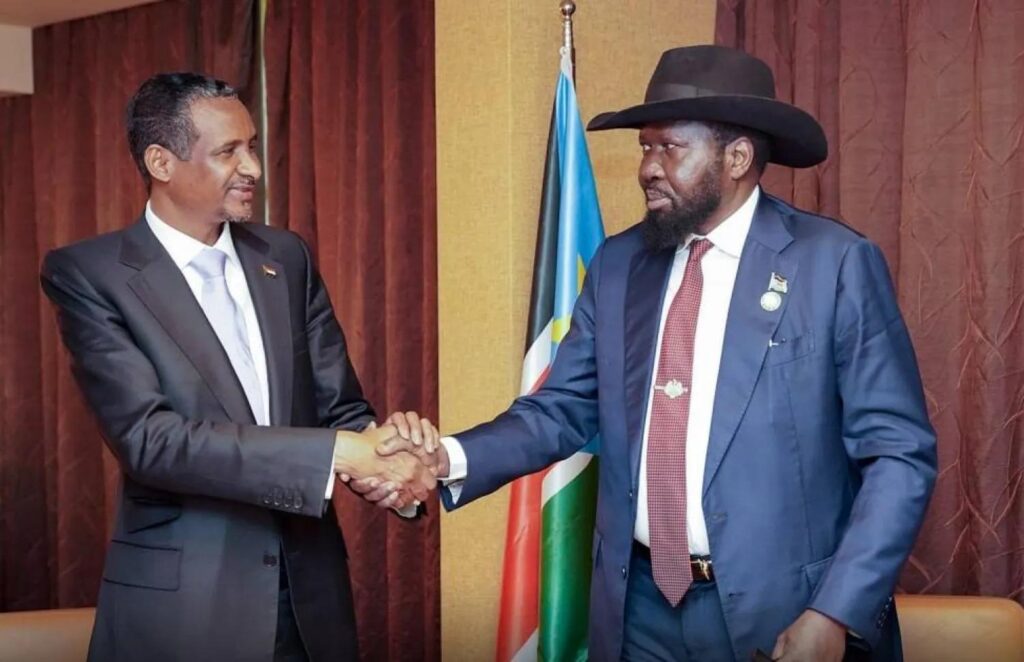
RSF commander Mohamed Hamdan Dagalo, widely known as Hemedti, held talks with South Sudanese President Salva Kiir Mayardit in Juba on Wednesday during a brief visit that lasted only several hours, according to Sudanese media reports.
Dagalo arrived in the South Sudanese capital at around 10:30 a.m. on August 12 aboard a private aircraft from Abu Dhabi, the reports said. Sources cited by Al-Mashhad Al-Sudani claimed Juba airport was cleared of personnel around the time of his arrival and that no formal reception ceremony was held.
He reportedly left Juba at about 5:30 p.m. after meeting Kiir and several senior South Sudanese officials. No official details were immediately released on the substance of the discussions.
The visit came amid a flurry of political and security contacts between Sudan and South Sudan.
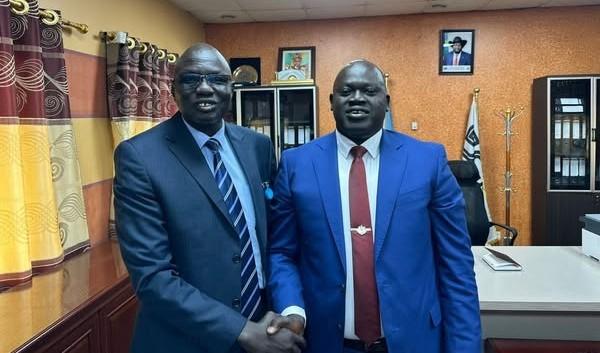
Just one day earlier, Sudanese Defence Minister Lt. Gen. Hassan Daoud Kabroun returned from Juba after talks with South Sudanese officials as part of efforts to revive the two countries’ joint political mechanisms.
Kabroun said his visit was aimed at reactivating agreements and recommendations reached by previous joint committees, while preparing for renewed discussions on unresolved issues and mechanisms for implementing earlier bilateral accords.
He said stability in both Sudan and South Sudan depended on securing and implementing agreements covering security, political and economic cooperation, arguing that the deep ties and shared interests between the two countries required sustained coordination.
Kabroun described his talks in Juba as productive and said both sides had shown a willingness to reach understandings on outstanding issues.
Dagalo’s visit therefore places Juba at the centre of parallel engagement with rival Sudanese actors, as South Sudan seeks to manage increasingly sensitive security, political and economic interests linked to the conflict across its northern border.
Neither Dagalo’s side nor the South Sudanese presidency had publicly disclosed the agenda or outcome of his meeting with Kiir at the time of the report.