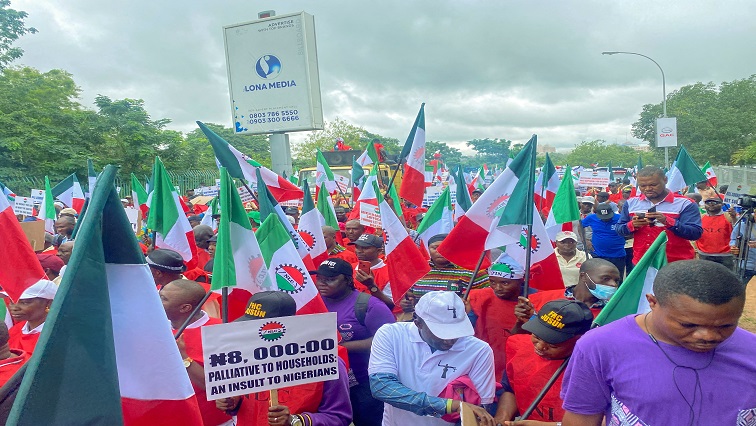
Nigeria’s largest labor unions announced on Monday that they would be suspending the indefinite strike originally scheduled to start on Tuesday after last-minute negotiations with President Bola Tinubu’s government, which had cautioned that the strike could have detrimental effects on the economy.
Tinubu is facing pressure to alleviate economic challenges after abolishing a longstanding petrol subsidy and permitting the depreciation of the naira currency. These actions have resulted in skyrocketing prices in Africa’s largest economy and leading oil-producing nation.
The government has reached an agreement for a temporary wage increase for government employees, a three-month income subsidy for 15 million impoverished households, and a suspension of the value-added tax on diesel, among various concessions aimed at averting the strike.
In exchange, the labor unions have agreed to halt the strike for a 30-day period, during which negotiations will persist, encompassing discussions regarding a new minimum wage for all Nigerian workers.
“After 30 days if these issues are not implemented … it will show bad faith on the side of government,” Joe Ajaero, the leader of Nigeria Labour Congress, the country’s largest federation, told reporters.