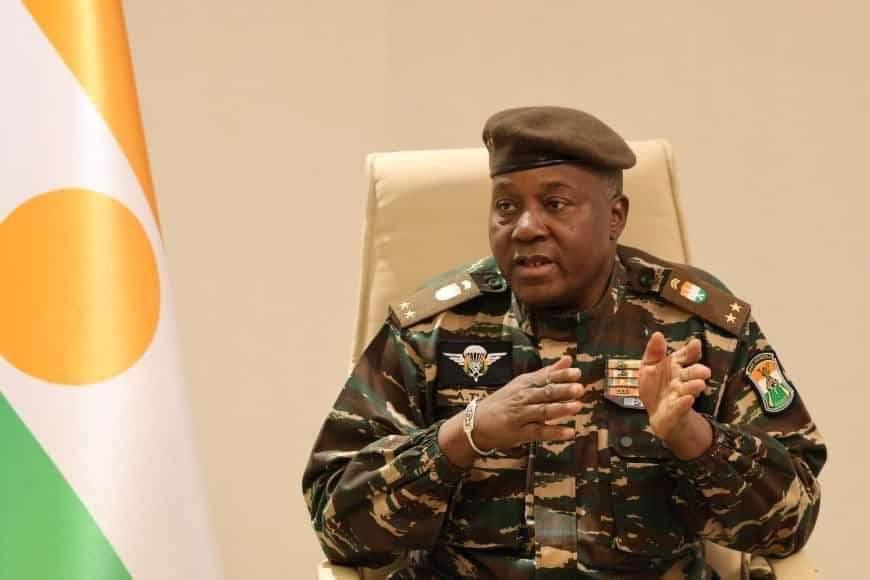
Niger’s military leader, General Abdourahamane Tiani, is seeking to consolidate his grip on power a week after a failed mutiny in the capital, amid warnings that moves against suspected opponents could deepen divisions within the armed forces.
Local reports indicate that authorities are preparing to hold soldiers and officers implicated in the uprising accountable and review military appointments made in recent years. The reported measures aim to sideline opponents of Tiani’s rule and strengthen the position of loyalists.
Mutinous soldiers attacked the airport and presidential headquarters in Niamey on August 29, posing the latest challenge to Tiani, who seized power in a 2023 coup.
Niger’s transitional authorities accused France of backing the uprising, an allegation Paris denied. The unrest has raised fresh questions about the stability of Tiani’s government as it faces an expanding threat from armed groups.
Mohamed Awal, a political analyst specialising in African affairs, told Erem News that reshaping the military leadership could provoke further unrest within an institution already divided over the country’s political direction and deepening crises.
Security failures and economic hardship were major drivers of discontent among soldiers, he said, arguing that the authorities needed to address the causes of the mutiny rather than focus solely on purging the army.
Awal also warned that further measures imposed by Tiani could heighten tensions with political parties and trade unions.
The attack has exposed strains within the armed forces as troops suffer heavy losses fighting armed groups, including the al-Qaeda-linked Jama’at Nusrat al-Islam wal-Muslimin, or JNIM.
Military analyst Amr Diallo told Erem News that uncertainty over the identities of the senior officers behind the mutiny made it difficult to assess how any subsequent removals would affect cohesion within the army.
Although reports point to efforts to sideline soldiers and officers suspected of involvement, the scope and potential consequences of those measures remain unclear, he said.
Diallo warned that resentment over security conditions and the treatment of troops deployed in areas such as Tillaberi was adding to the risk of fragmentation.
Some soldiers believe decisions about frontline deployments are discriminatory, he said, fuelling anger over how Tiani’s leadership manages forces fighting in some of the country’s most dangerous areas.
The analysts’ assessments suggest that containing the immediate uprising has left Tiani facing a broader challenge: restoring confidence within the military while addressing the security and economic grievances undermining his rule.