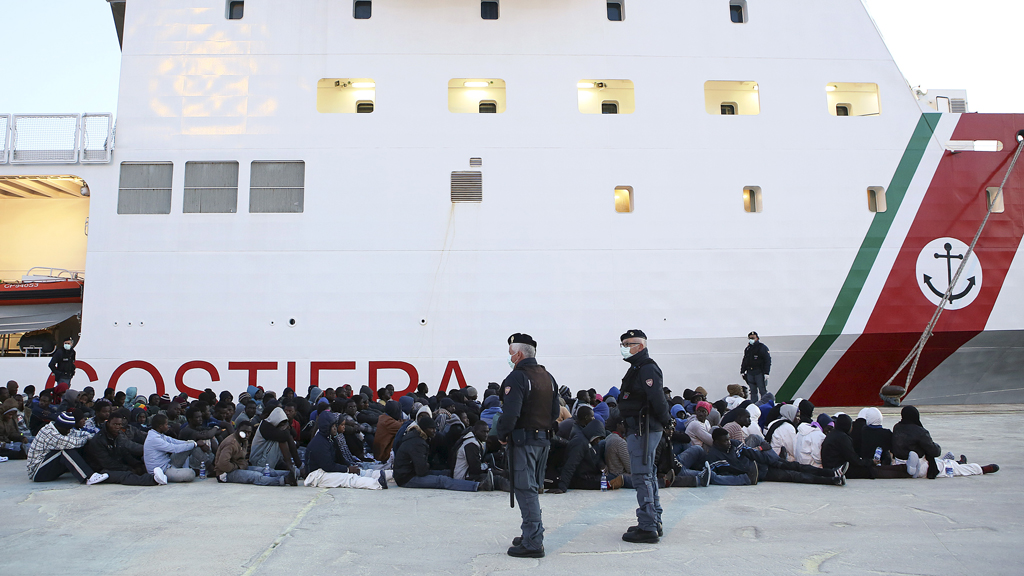
Renewed discussion of an Italian proposal to establish migrant detention centres in Africa has fuelled concern in Tunisia and Libya over whether temporary arrangements could leave migrants stranded permanently.
Prime Minister Giorgia Meloni’s government is seeking to revive the proposal, according to Erem News. However, the report did not identify any final agreement with potential host countries or a confirmed timetable for a European Union decision.
Majdi Karbai, a Tunisian political activist based in Italy, said the proposal was being discussed in European political circles. He cautioned against describing it as a permanent resettlement plan.
The idea, he said, was to establish centres outside the EU to process migrants’ cases before returning them to their countries of origin or transferring them to third countries European governments consider safe. Italy’s arrangement with Albania could serve as a model.
Karbai said European sources had circulated an indicative list of potential partner countries, including Tunisia, Libya, Egypt, Mauritania, Senegal and Rwanda. He stressed that the list did not represent an agreement and that contacts remained exploratory.
Neither Tunisia nor Libya had shown clear political acceptance of such a role, he said.
Tunisia has publicly rejected becoming a reception centre for sub-Saharan African migrants returned from Italy or other European countries. But Karbai argued that future negotiations could depend on the financial and political incentives offered by the EU.
He said migration cooperation was increasingly being linked to economic and trade arrangements, including customs concessions and preferential access to European markets.
Tunisia’s close economic ties with Europe give Brussels and Rome significant influence over those discussions, he added.
In Libya, the debate has coincided with protests over migration policy. Karbai cited the closure of the UN refugee agency’s office in Tripoli and attacks on the International Organization for Migration’s premises and migrants inside.
Libyan political analyst Khaled Mohammed al-Hijazi told Erem News that efforts to secure host-country agreements faced substantial political and public resistance, despite European offers of funding and support.
He pointed to Tunisian President Kais Saied’s repeated rejection of any role as Europe’s border guard or a permanent destination for migrants returned from abroad.
Hijazi accused Libya’s Government of National Unity of being more receptive to European pressure and incentives. His claim that its policies were helping keep migrants in Libya was an assessment, rather than evidence of an agreed resettlement programme.
He argued that public opposition in Libya would complicate any attempt to establish long-term reception arrangements, with opponents viewing such plans as a threat to sovereignty.
Moving migration facilities to North Africa would shift Europe’s pressures onto neighbouring countries without addressing the causes of migration, Hijazi said. He argued that Tunisia’s official resistance and opposition within Libya would remain major obstacles to the proposal.