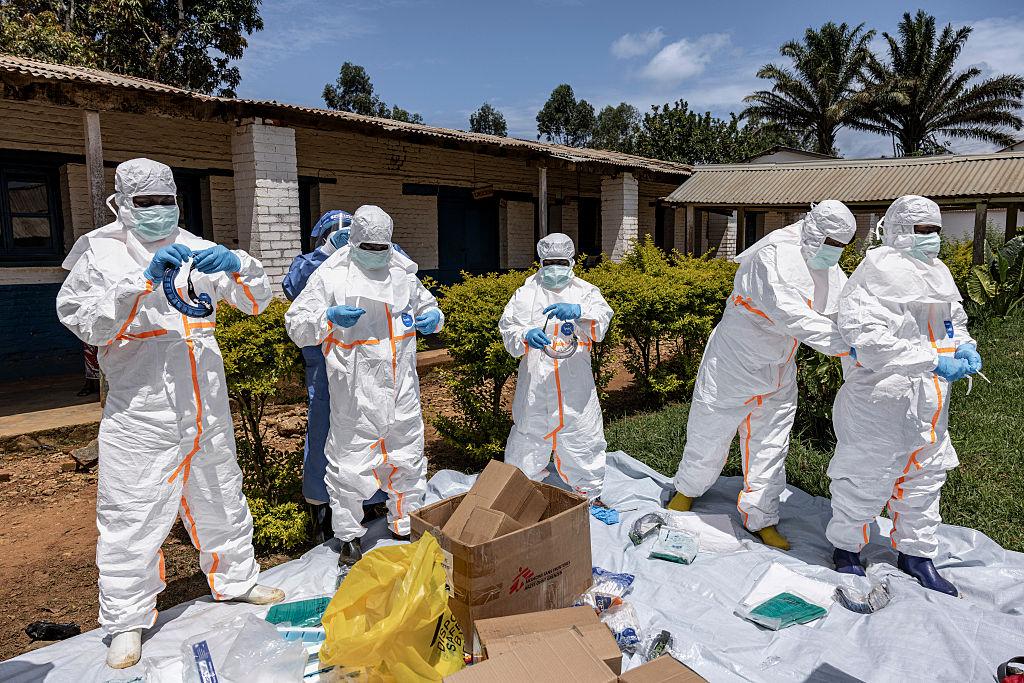
Efforts to contain Ebola in eastern Democratic Republic of Congo are showing signs of progress, but rising infections in North Kivu and uneven improvements elsewhere mean it is too early to say the outbreak has peaked, UN officials said on Tuesday.
Government figures published on Tuesday showed 7,258 confirmed cases and 3,510 deaths across seven provinces. The outbreak is the second deadliest on record, after the 2014–2016 epidemic in West Africa.
Julien Harneis, the UN’s special Ebola coordinator, told a briefing in Geneva that the epidemic remained deadly and vast, with gains in some areas offset by continued transmission growth in others.
Olivier le Polain of the World Health Organization cautioned against declaring a turning point.
“It’s too early to confidently say we have passed a peak,” he said, adding that bringing the outbreak fully under control would require substantial support over many months.
The assessment followed a more optimistic update from Congo’s health minister, Samuel Roger Kamba, who said on Saturday that transmission had gradually slowed since what he described as a mid-August peak.
Kamba said daily new cases had fallen from around 120 to approximately 80, while 10 of the 62 affected health zones had gone more than 22 days without recording a new infection.
He said the figures suggested the response was beginning to reduce transmission, but urged continued vigilance.
UN officials reported improvements in parts of Ituri, the worst-affected province, saying the outbreak was under control in some locations. However, infections were still increasing rapidly in North Kivu, particularly in Butembo.
Harneis said the outbreak’s geographical scale meant conditions differed considerably between affected areas. Le Polain warned that previous epidemics had shown early improvements before accelerating again.
Aid workers also raised concerns about North Kivu, where insecurity, dense populations and frequent movement complicate efforts to contain the disease.
Thomas Paerisch, a public health specialist recently deployed to Congo with Medecins Sans Frontieres, described the situation in the province as alarming.
North Kivu, the second worst-affected province, had recorded 1,269 confirmed cases as of September 12, including 555 in the preceding 21 days.