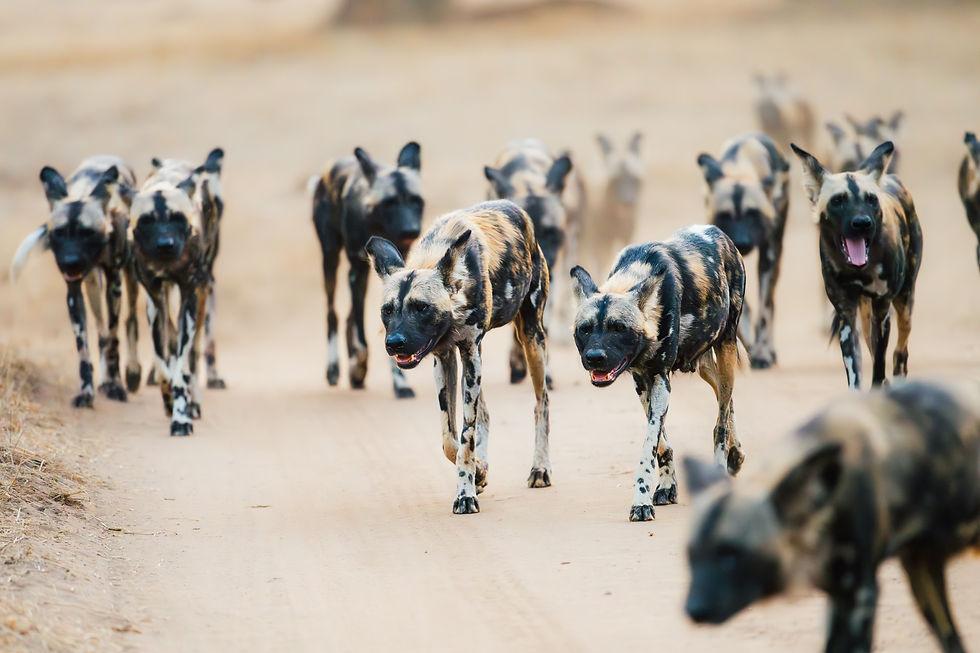
African wild dogs can roam more than 4,000 kilometres in search of mates, according to new research suggesting that surviving populations of the endangered species remain connected across large parts of eastern and southern Africa.
The study, published in the journal Ecology, recorded three brothers travelling 4,126 kilometres over eight months — the longest dispersal journey documented for any African mammal.
Researchers tracked four groups that covered a combined 9,863 kilometres through Zambia and into, or close to, five neighbouring countries, navigating landscapes increasingly shaped by human activity.
The findings surprised lead author Scott Creel, a professor at Montana State University who has studied wild dogs since 1991. He said the research indicated that most critical populations in eastern and southern Africa probably remain connected.
African wild dogs live in packs with strict hierarchies, where breeding is usually restricted to the dominant pair. Younger, subordinate animals, particularly those aged two or three, often leave to find mates and establish territories.
Those journeys expose them to considerable danger. Many of the dispersing dogs died in wire snares laid by bushmeat hunters.
One female travelled 2,300 kilometres from Zambia into Mozambique before being killed in a snare in June 2022.
Using GPS collars, the Zambian Carnivore Programme followed the animals as they crossed rivers and major roads, climbed and descended the Great Rift Valley escarpment, and navigated around cities and lakes.
“The dogs are showing us that connectivity still works; now we need to do more to protect and strengthen it,” said the programme’s chief executive, Matt Becker.
The findings underline the importance of protecting routes that allow wild dogs to move between habitats and reach other populations.
Zambia’s human population has grown by approximately 50% since 2010, adding pressure on wildlife habitats. Although nearly 40% of the country has some form of conservation designation, funding remains severely limited.
Around 6,600 adult African wild dogs survive in 39 distinct populations. The species faces threats from habitat fragmentation, dwindling prey, snares, disease and conflict with people.
Researchers say safeguarding the corridors used during these long journeys could play a crucial role in conserving wild dogs across the continent.