More than a decade of military offensives, foreign interventions and counterterrorism campaigns has failed to decisively contain Africa’s expanding militant Islamist insurgencies, with armed groups increasingly demonstrating an ability not only to survive battlefield pressure but to adapt, expand and challenge governments across vast stretches of the continent.
The scale of the problem has become increasingly difficult to ignore.
A record 23,872 people were killed in violence linked to militant Islamist groups during the 12 months ending in mid-2026, according to the Africa Center for Strategic Studies, marking the fourth consecutive year in which the death toll exceeded 20,000.
The Sahel accounted for 42% of those fatalities, while Somalia and the Lake Chad Basin each accounted for about 28%. Deaths in the Lake Chad Basin and Mozambique increased by around 60% during the same period.
The figures point to a fundamental problem confronting African governments: military pressure has repeatedly weakened armed groups without eliminating the political, economic and security conditions that allow them to regroup.
A war spreading across borders
The epicentre of the crisis has increasingly shifted toward the Sahel.
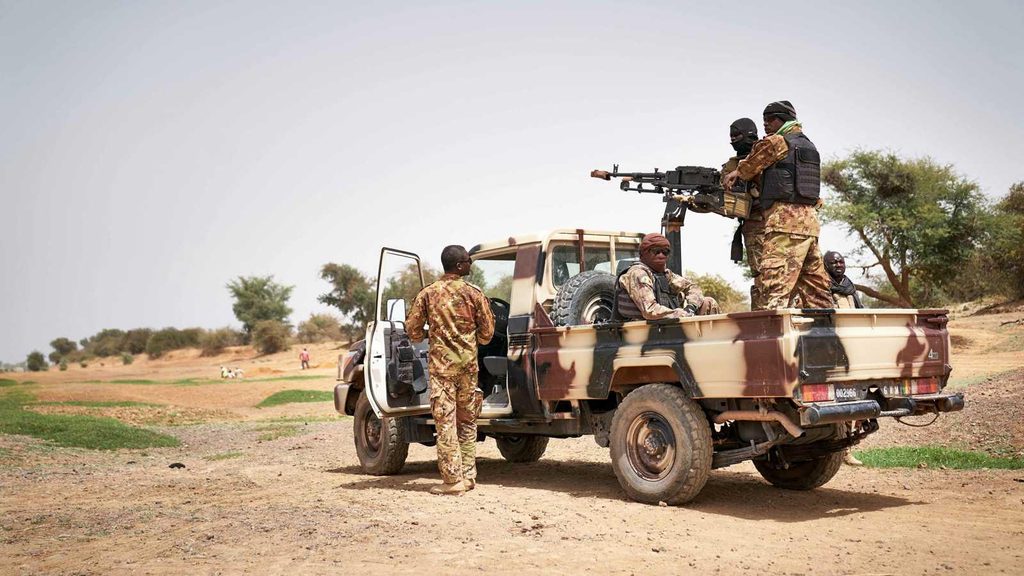
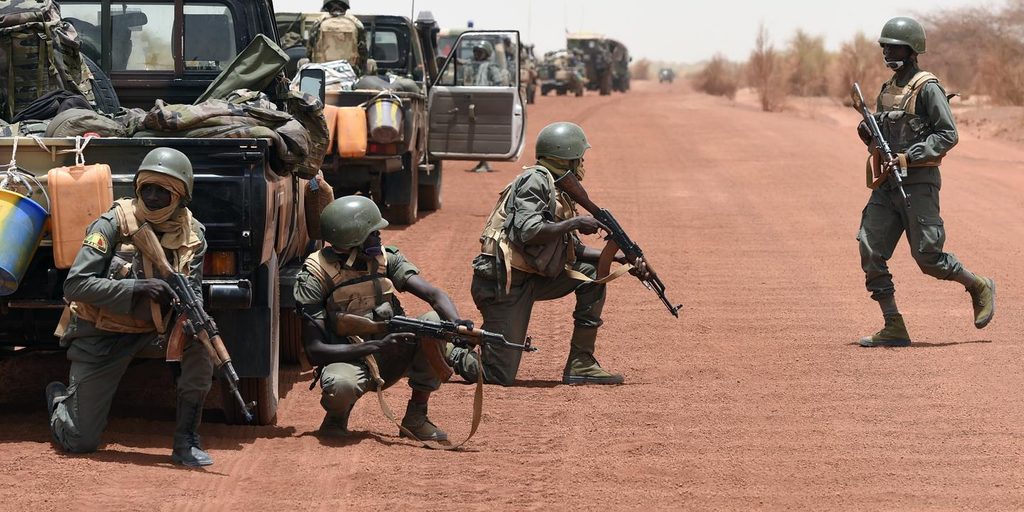
Mali, Burkina Faso and Niger have endured years of attacks by Jama’at Nusrat al-Islam wal-Muslimin, or JNIM, an Al-Qaeda affiliate, and Islamic State-linked fighters operating across lightly governed border regions.
The Africa Center recorded 9,928 fatalities linked to militant Islamist groups in the Sahel during the latest 12-month period — more than in any other African theatre. Reporting restrictions imposed by military governments in the region mean the real toll may be higher.
The deterioration has continued despite sweeping political and military changes.
Military governments in Mali, Burkina Faso and Niger came to power after accusing previous civilian administrations of failing to defeat insurgencies. They subsequently reduced security cooperation with Western governments and strengthened military relationships with Russia.
Yet militant groups have continued expanding their operational reach, attacking military bases, supply routes, economic infrastructure and increasingly areas close to major population centres.
Nigeria and the wider Lake Chad Basin are facing another escalation.
Boko Haram and Islamic State West Africa Province remain active across northeastern Nigeria and neighbouring areas of Cameroon, Chad and Niger.
Fatalities linked to militant Islamist violence in the Lake Chad Basin surged by 60% over the latest reporting period, from 4,153 to 6,643, according to the Africa Center.
The threat was underlined again this week when suspected Islamist militants killed at least 15 people during a pre-dawn raid on Madegoua village near Makary in Cameroon’s Far North region. No group immediately claimed responsibility, although a security analyst cited by Reuters said ISWAP was the likely perpetrator.
Al-Shabaab remains entrenched
Somalia presents another example of the limits of prolonged military pressure.
Al-Shabaab has fought the Somali government and its international partners for nearly two decades, yet remains one of Africa’s richest and most capable militant organisations.
The Africa Center estimates that Somalia has averaged roughly 7,350 annual fatalities linked to militant Islamist violence since 2023, with Al-Shabaab accounting for about 95% of the deaths in the Somali theatre.
The organisation continues to maintain influence across significant parts of southern and central Somalia while generating an estimated $200 million in annual revenue.
Government operations and increasingly frequent airstrikes have killed large numbers of militants, but the conflict has repeatedly demonstrated the difference between destroying fighters and permanently controlling territory.
In northern Somalia, a sustained Puntland offensive supported by US and UAE airstrikes has inflicted heavy losses on Islamic State’s local affiliate. The Africa Center estimated that fighting associated with the campaign accounted for 1,675 fatalities linked to the group and reduced a network that had once grown to more than 1,000 fighters.
Yet elsewhere, militants continue exploiting territory where government institutions remain weak or absent.
Mozambique threat resurfaces
Northern Mozambique offers a similar warning.
Years of operations by Mozambican and foreign forces pushed back Islamic State-linked insurgents in Cabo Delgado, but the organisation has demonstrated that it retains the ability to manoeuvre through rural areas and strike outside its traditional strongholds.
On September 3, Islamic State Mozambique attacked a tourist hunting camp in Niassa province, its first reported incursion into the province since May 2025.
ACLED said the attack demonstrated that the group retains substantial freedom of movement despite years of counterinsurgency operations.
The insurgency, which began in 2017, has killed thousands and displaced more than one million people.
Why military victories do not last
One of the central weaknesses in Africa’s counterterrorism campaigns is the gap between capturing territory and governing it.
National armies can concentrate forces to retake a town, military base or transport corridor. Holding those areas requires something considerably more difficult: permanent security forces, functioning local administrations, intelligence networks, roads, public services and the confidence of the population.
Across much of the Sahel, governments face enormous distances, sparse populations and weak infrastructure.
Militant organisations exploit those weaknesses by avoiding conventional battles when necessary, dispersing into rural communities, moving across porous international borders and returning after government forces withdraw.
Their tactics have also become more sophisticated.
ACLED says JNIM and Islamic State Sahel Province have increasingly targeted infrastructure, airports, supply lines and military facilities while experimenting with drones for surveillance, propaganda and attacks.
JNIM’s recorded use of armed drones rose from fewer than 10 strikes in 2024 to around 80 in 2025, according to ACLED.
The objective is increasingly broader than simply carrying out spectacular terrorist attacks.
Militant organisations are competing for control over territory, trade corridors, mining areas, taxation networks and populations — functions that allow them to finance themselves and weaken the authority of national governments.
Recruitment thrives where the state is weakest
Military shortcomings are only part of the explanation.
Poverty, disputes over land, tensions between farmers and pastoralists, corruption, limited government services and distrust of security forces have all provided militants with opportunities to recruit or coerce local communities.
In some areas, abusive counterinsurgency operations have compounded the problem.
The Africa Center reported earlier this year that deaths linked to attacks on civilians by security forces and allied militias in Mali and Burkina Faso collectively exceeded those attributed to militant Islamist groups since 2023, warning that heavy-handed tactics were contributing to militant recruitment.
Militant groups have repeatedly exploited local grievances, presenting themselves as protectors of communities or alternatives to governments that have little meaningful presence outside major cities.
Funding is another major obstacle.
Kidnapping for ransom, smuggling, extortion, informal taxation, livestock theft and control of mining and trading routes have provided militant organisations with revenue streams that are difficult for conventional military campaigns to eliminate.
Sudan adds another potential flashpoint
Sudan’s war has created additional fears that instability could provide militant networks with another arena for recruitment, weapons trafficking and cross-border movement.
The country has been engulfed by conflict since April 2023, weakening institutions, flooding parts of the country with weapons and creating extensive uncontrolled territory.
Washington significantly escalated its response to Sudanese Islamist groups in 2026.
On March 9, the United States designated the Sudanese Muslim Brotherhood under counterterrorism authorities and upgraded the Al-Baraa Ibn Malik Brigade — which fights alongside the Sudanese Armed Forces — to Foreign Terrorist Organization and Specially Designated Global Terrorist status, identifying the brigade as linked to the Sudanese Muslim Brotherhood.
The development added a new dimension to concerns that Sudan’s war could deepen extremist networks rather than remain solely a conflict between established armed factions.
The US State Department has also warned that the breakdown of state authority and uncontrolled borders creates risks from terrorism, kidnapping and armed groups operating across Sudan.
Militants are also fighting each other
Africa’s militant landscape is becoming more dangerous for another reason: the armed organisations are increasingly battling one another for territory and influence.
The rivalry between Al-Qaeda-linked JNIM and Islamic State Sahel Province has intensified across the Sahel.
Islamic State recently claimed it killed more than 200 JNIM fighters during clashes around Kacham in northern Burkina Faso. The casualty figure has not been independently confirmed, but ACLED said that if accurate it would represent the deadliest battle it has recorded between the two organisations.
ACLED estimates that JNIM and Islamic State Sahel Province have fought roughly 320 battles against one another since clashes began in 2019, leaving more than 2,200 fighters dead.
The conflict, once concentrated largely in Mali and Burkina Faso, has expanded into Niger and northwestern Nigeria.
That competition does not necessarily weaken the wider insurgency.
Instead, rival groups can compete to seize territory, recruits, weapons and smuggling corridors while simultaneously attacking governments and civilians.
A conflict armies alone cannot end
Africa’s militant crisis therefore increasingly resembles a collection of interconnected insurgencies rather than a conventional counterterrorism problem.
Airstrikes can destroy camps. Armies can retake towns. Commanders can be killed and supply networks disrupted.
But without governments capable of maintaining security, administering remote regions and addressing the grievances that militants exploit, battlefield victories frequently prove temporary.
The record casualty figures of 2026 suggest the central challenge is no longer simply how many militants African armies can kill.
It is whether governments can prevent armed organisations from returning once the soldiers leave.