Survivors of a Nigerian detention centre where 37 artisanal miners died have described extreme heat, desperate pleas for water and detainees collapsing one after another, offering the clearest account yet of the hours leading up to one of the country’s deadliest recent deaths in custody.
The accounts provide new details about an incident in Minna, Niger State, that has already triggered protests, the suspension of security officials and a federal investigation.
Usman Muhammad, one of the survivors, told the BBC that more than 50 detainees had been crammed into a small cell with almost no ventilation after being arrested during operations targeting suspected illegal mining.
“I have never felt heat like that in my life,” Muhammad said.
He said the heat became so intense that touching another prisoner felt like touching fire.
The cell had only a small window high on the wall, while humidity was extremely high. As conditions worsened, Muhammad said detainees repeatedly called for water after one prisoner collapsed.
He alleged that a guard came to the cell, saw the unconscious man and closed the door.
“That’s how they started dying one after the other,” Muhammad said.
Detainees became so dehydrated that some drank their own urine and tried to collect sweat from their bodies in an effort to survive, according to his account.
Another survivor, Adamu Isah, separately told Reuters that detainees repeatedly shouted that people were dying and attempted to force open the cell door when officers failed to respond.
Survivors allege unidentified substance sprayed into cell
Reuters reported additional allegations from three survivors who said an unidentified substance was sprayed into the overcrowded cell before detainees began having difficulty breathing.
Isah said officers sprayed something under the door after prisoners complained that the cell was overcrowded.
Another survivor, Dauda Shehu, described the substance as smelling like perfume and said detainees later experienced itching in their throats and difficulty breathing.
A third survivor gave a similar account, describing the smell as resembling pepper.
Reuters said it could not independently determine what was sprayed, why it was used or whether it contributed to the deaths. Authorities have not established the cause of death.
A spokesperson for Minna General Hospital said the bodies showed no apparent signs of torture when they arrived, although medical staff observed blistering and other physical signs on some of the deceased.
Pathologists have since carried out detailed forensic examinations on three bodies, with samples due to undergo further analysis in Lagos.
Most of the victims had already been buried according to Islamic tradition.
Federal investigation under way
The Nigeria Security and Civil Defence Corps initially suggested that an unspecified disease outbreak could have caused the deaths before later saying the cause had not been determined.
President Bola Tinubu subsequently ordered an investigation, while senior NSCDC officials were suspended.
Interior Minister Olubunmi Tunji-Ojo has appointed a 10-member independent committee comprising legal, medical, security and civil society representatives to investigate the arrests, detention conditions and circumstances surrounding the deaths.
The committee has been given two weeks to complete its investigation and recommend action against anyone found responsible.
The Interior Ministry said investigators would examine possible negligence, misconduct and complicity and warned that attempts to destroy evidence, intimidate witnesses or obstruct the inquiry would be treated as serious offences.
“No officer, no matter how highly placed, or any individual … will be shielded if found culpable,” Tunji-Ojo said.
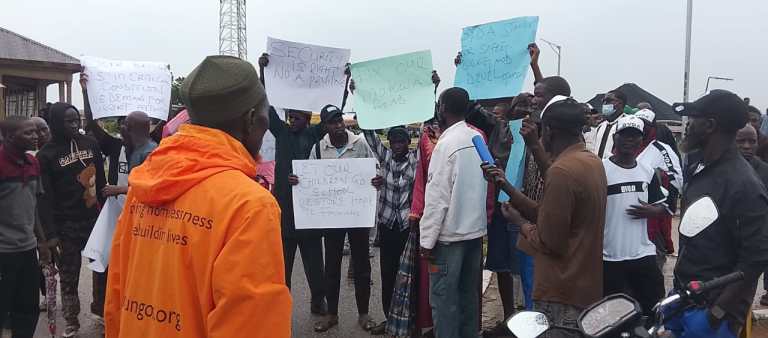
The deaths sparked major protests in Minna last week, during which security forces opened fire and at least one person was killed. Authorities later imposed a curfew as unrest spread.
For survivors such as Muhammad, however, attention has now shifted from the protests to what happened behind the locked cell door.
He said he decided to speak publicly in the hope that the investigation would establish how so many of the people detained alongside him died — and who was responsible.