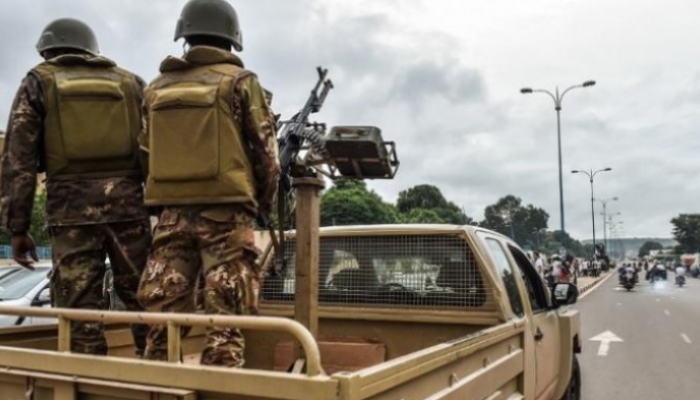
An attack on a military post at the Djenné junction in central Mali has highlighted the vulnerability of key transport routes to militants seeking to disrupt movement and stretch security forces across a vast road network.
Fighters from the al-Qaeda-linked Jama’at Nusrat al-Islam wal-Muslimin (JNIM) attacked the position on National Road 6 in the Mopti region on Thursday, according to local reports cited by Erem News.
The reports said attackers briefly overran the post and seized vehicles and ammunition. No official casualty toll had been released by Friday morning, and Mali’s military had not provided a detailed account of the position’s status after the fighting.
The junction serves military and civilian traffic along routes connecting southern and central Mali with Mopti, Ségou and corridors heading north. Disrupting a single point can delay convoys and increase security demands without giving militants lasting control over surrounding territory.
Sahel political analyst Komlan Afolit told Erem News that the location mattered more than the size of the attacking force.
An attack at a junction used by both soldiers and civilians forces the military to reassess convoy schedules, protective deployments and warning systems along the road, he said.
Such raids allow militants to exploit gaps in security before withdrawing ahead of substantial reinforcements, Afolit added. Their impact depends partly on how quickly troops can restore traffic and secure nearby routes.
The attack illustrates the distinction between temporarily cutting a road and holding territory. A brief assault on a fixed position requires fewer resources than maintaining a presence, which leaves fighters more exposed to surveillance and counterattacks.
Senegalese political researcher Amadou Anne told Erem News that extremist groups were exploiting long distances and the difficulty of protecting roads, with less emphasis on directly administering population centres.
Their immediate objective, he said, was to disrupt movement and increase the cost of security. Faster responses and more flexible deployments could limit those gains.
For the authorities, the challenge extends beyond defending individual military posts. Long stretches of road and numerous side routes make continuous protection difficult, placing greater importance on mobile patrols, reconnaissance and early warning.
The economic consequences also depend on how long traffic is interrupted. A brief disruption may have a limited effect on supplies, while prolonged closures can drive up transport costs and put pressure on access to fuel, goods and services.
The Djenné attack alone does not establish a decisive shift in the balance of power in central Mali. It does, however, highlight how short raids on strategic junctions can place a wider burden on military operations and civilian transport.