Former Israeli Defence Minister Yoav Gallant has revealed that Israel killed a Hezbollah operative suspected of uncovering its booby-trapped pager operation and destroyed equipment intended to inspect the devices before the September 2024 explosions in Lebanon.
The disclosures, previously blocked by Israeli military censors, shed new light on the intelligence operation that Israel had spent a decade preparing, according to the Israeli newspaper Yedioth Ahronoth.
Gallant said Israeli intelligence became concerned that Hezbollah was close to discovering explosives concealed inside thousands of pagers supplied to the Lebanese group.
Israeli forces subsequently identified and killed a Hezbollah member suspected of investigating the devices. They also destroyed testing equipment that had arrived in Lebanon, carrying out additional strikes to conceal the connection between the attacks and the pager operation.
According to Gallant, the operation faced an immediate threat of exposure when Israeli intelligence discovered that Hezbollah had already begun examining some of the pagers.
The development forced Israel to activate the devices earlier than intended, rather than risk losing an operation that had taken years to prepare.
Walkie-talkies were intended to be the main attack
Gallant said the pager explosions were originally intended to form part of a broader military campaign targeting Hezbollah’s communications network and fighting capabilities.
The larger component involved explosive-laden walkie-talkies, which he said were more numerous than the pagers and contained significantly greater quantities of explosives.
However, fears that Hezbollah was about to uncover the pager plot prompted Israeli officials to detonate those devices first.
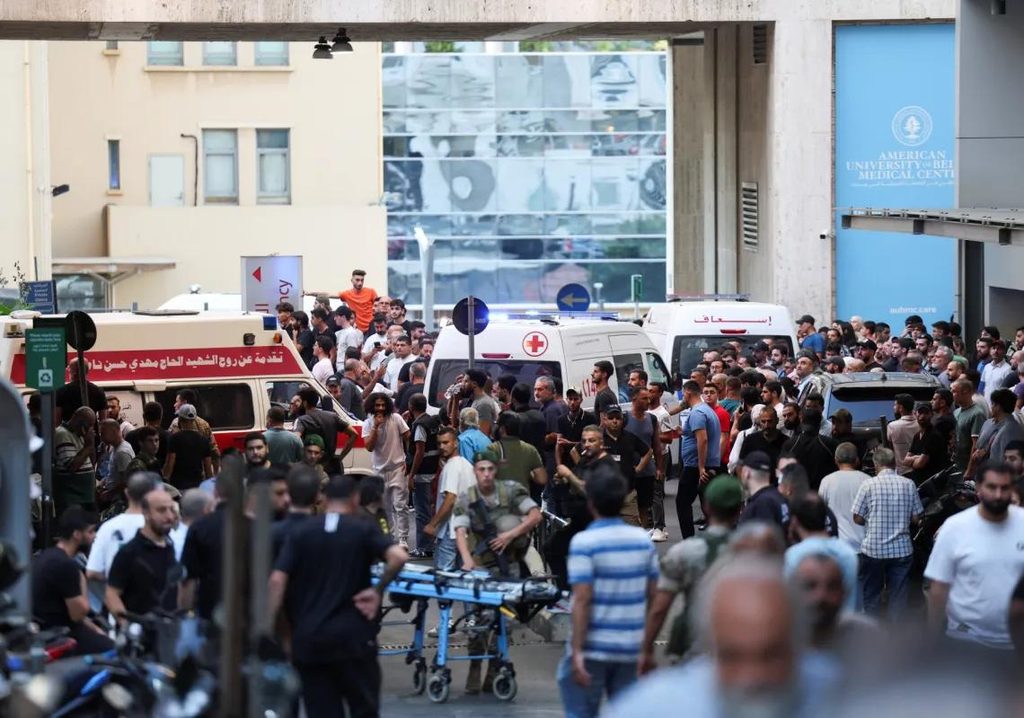
On September 17, 2024, thousands of pagers exploded across Lebanon, causing widespread casualties. A second wave of explosions involving walkie-talkies followed the next day.
Gallant claimed that more than 2,000 Hezbollah members were wounded in the pager explosions, many suffering serious injuries to their hands and eyes.
The subsequent walkie-talkie operation had a more limited impact than anticipated because most of the devices were stored in Hezbollah warehouses when they exploded, he said.
The two days of attacks killed 39 people and wounded more than 3,400, including civilians, according to figures reported by Reuters.
Netanyahu rejected earlier operation, Gallant says
Gallant also disclosed that Israel had considered activating the devices as part of a much larger offensive against Hezbollah on October 11, 2023, just days after the outbreak of the Gaza war.
He said the proposed operation would have combined the communications-device explosions with a wider military campaign intended to severely weaken Hezbollah’s fighting capabilities.
However, Prime Minister Benjamin Netanyahu ultimately rejected the proposal.
Netanyahu has previously defended that decision, arguing that opening another major front against Hezbollah so soon after the October 7 attacks would have been a serious strategic mistake.
Gallant has disputed Netanyahu’s account of the operation’s readiness, maintaining that thousands of booby-trapped devices were already in Hezbollah’s possession at the time.
New documentary reveals further details
The latest disclosures come ahead of the release of Paging Hezbollah, a documentary scheduled to reach US cinemas on October 30.
The film, directed by Justin Folk, features interviews with Netanyahu, former Mossad chief David Barnea and former Israeli northern commander Ori Gordin, among others.
Gallant does not appear in the documentary, although his previously censored remarks have now been cleared for publication.
The revelations provide further details about the preparations for the September 2024 attacks, which triggered international criticism over their impact on civilians.
UN human rights experts called for an independent investigation into the explosions, warning that the simultaneous detonation of thousands of devices could constitute indiscriminate attacks and violate international humanitarian law.