The United States is closely monitoring a suspected plague incident in eastern Russia as quarantine measures and movement restrictions continue to spread across medical facilities in the Irkutsk region, despite Moscow insisting there is no confirmed plague outbreak.
US Secretary of State Marco Rubio said Monday that Washington was watching developments “closely” following the death of 28-year-old Darya Shipilova, an employee of the Irkutsk Research Anti-Plague Institute of Siberia and the Far East.
“I don’t think it’s cause for alarm, but it is cause for focus,” Rubio said, warning that an infectious disease escaping containment “could quickly spread.”
President Donald Trump later said the United States was prepared to assist Russia if necessary, describing the situation as serious and saying Washington would help where it could.
The US intervention comes as independent Russian reporting paints a significantly more restrictive picture on the ground than official statements from Moscow.
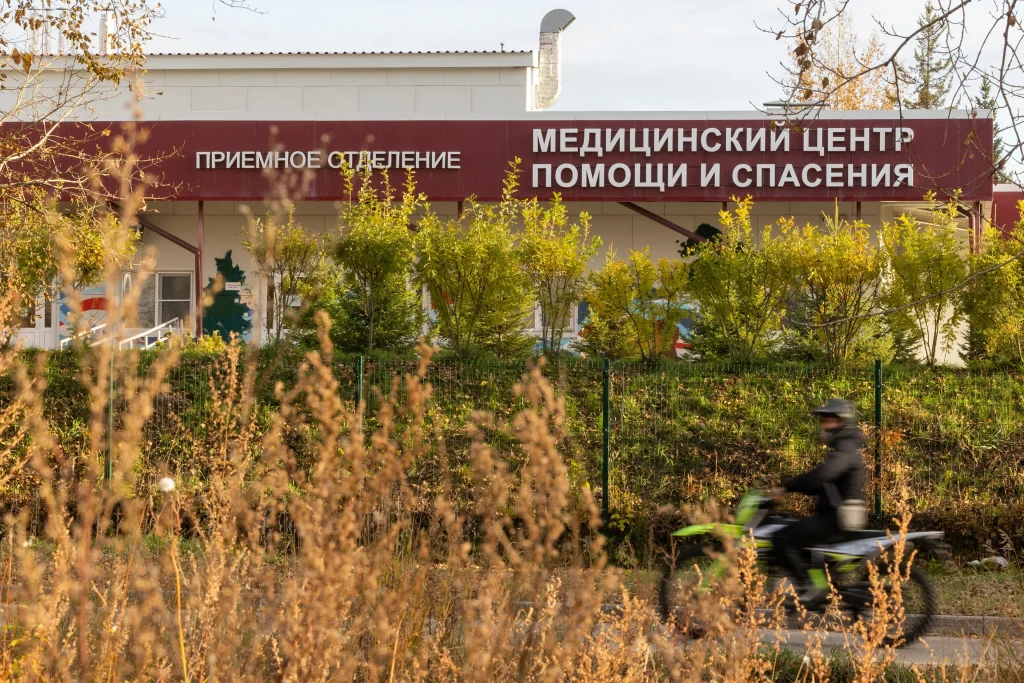
Local outlet People of Baikal has reported quarantine measures at Irkutsk city hospitals No. 1, No. 3 and No. 10, the Ivano-Matreninskaya Children’s Clinical Hospital and at least one maternity hospital.
Those facilities are in addition to the district hospital in nearby Shelekhov, where Shipilova died and where admissions and discharges from affected departments were suspended.
Several of the Irkutsk restrictions were reported to have been imposed for three weeks.
Patients at Irkutsk City Clinical Hospital No. 1 and relatives of patients at the children’s hospital told Siberia.Realities that relatives were being prevented from entering and people inside were not being allowed to leave.
At the Shelekhov hospital, a former colleague of Shipilova said 114 patients had been kept inside after the inpatient facility was placed under quarantine.
More than 60 employees of the anti-plague institute itself have also reportedly been isolated inside the building since Friday.
Relatives told Siberia.Realities that staff were sleeping on floors and chairs because the institute did not have beds for those being confined there. Food and other supplies were reportedly being passed through a checkpoint.
Restrictions widened again Monday when patients at the Irkutsk regional psycho-neurological dispensary reported limits on leaving the facility.
The institution said the restrictions were precautionary and were expected to last several days, with patients permitted outside only briefly for essential trips.
Moscow says situation is stable
Russia’s federal health watchdog, Rospotrebnadzor, continues to deny that Shipilova died from plague.
The agency says she suffered from “pneumonia of unknown etiology” and that expanded testing found no microorganisms connected to her professional work.
It has also said investigators found no accident involving pathogenic microorganisms at the anti-plague institute.
Rospotrebnadzor says the epidemiological situation in Irkutsk and Shelekhov remains “stable.”
Russian officials say nearly 200 people identified as contacts have been examined. Two were reported to have COVID-19 and two rhinovirus, while authorities said tests had not identified other dangerous infections.
There remains no independently confirmed case of secondary plague transmission.
However, Russian authorities have not publicly reconciled their assurances that no plague infection or laboratory accident has been detected with the scale of the isolation and quarantine measures being imposed across the region.
Kremlin spokesman Dmitry Peskov on Monday urged Russians to rely on Rospotrebnadzor and disregard what he described as rumors and speculation.
“There are highly qualified professionals working there,” Peskov said.
Plague references deleted or changed
The handling of public information has added to uncertainty.
Buryatia leader Alexei Tsydenov initially wrote that the woman in Irkutsk region had “died of plague,” before editing the statement to say she had “possibly” died from the disease.
Authorities in Baikalsk also briefly advised residents not to travel to Shelekhov because of unofficial information about a plague case, before deleting the warning.
Russian television channel REN TV removed five posts concerning reports of plague, while independent outlet The Insider reported that Kommersant removed an article about the Trump administration monitoring the situation shortly after publishing it.
The Irkutsk aluminium plant in Shelekhov has meanwhile ordered workers to wear masks as a precaution.
Neighboring states increase screening
Concern has also spread beyond Russia.
Kazakhstan’s Health Ministry said Monday it was monitoring developments in Irkutsk and had activated sanitary-quarantine controls at border crossings as a precaution.
Officials said no travelers showing symptoms of a particularly dangerous infection had been detected and assessed the risk of importation as low.
Kyrgyzstan has also strengthened sanitary monitoring at border checkpoints, while reports from independent Russian media said Uzbekistan has taken similar precautions.
Shipilova died on October 2 after developing severe pneumonia. Independent Russian media have reported allegations that she may have been exposed to Yersinia pestis, the bacterium responsible for plague, while working at the institute.
That alleged laboratory accident remains unconfirmed and is denied by Rospotrebnadzor.
Pneumonic plague is the most dangerous respiratory form of the disease and can spread between people through close respiratory contact. It can be treated with antibiotics when identified quickly.
For now, there is still no confirmed plague outbreak and no verified person-to-person transmission in Irkutsk.
But the widening restrictions, confinement of patients and laboratory employees, precautionary measures in neighboring countries and growing international scrutiny are keeping attention firmly on an incident Russian authorities insist remains under control.