Germany is moving to tighten scrutiny of foreign-linked associations as lawmakers consider legal changes that would give authorities broader powers to collect data and examine cross-border organisational and financial networks.
The proposed changes come amid heightened security attention on organisations that operate legally in Germany but are suspected of maintaining links to political Islamist networks, including the Muslim Brotherhood.
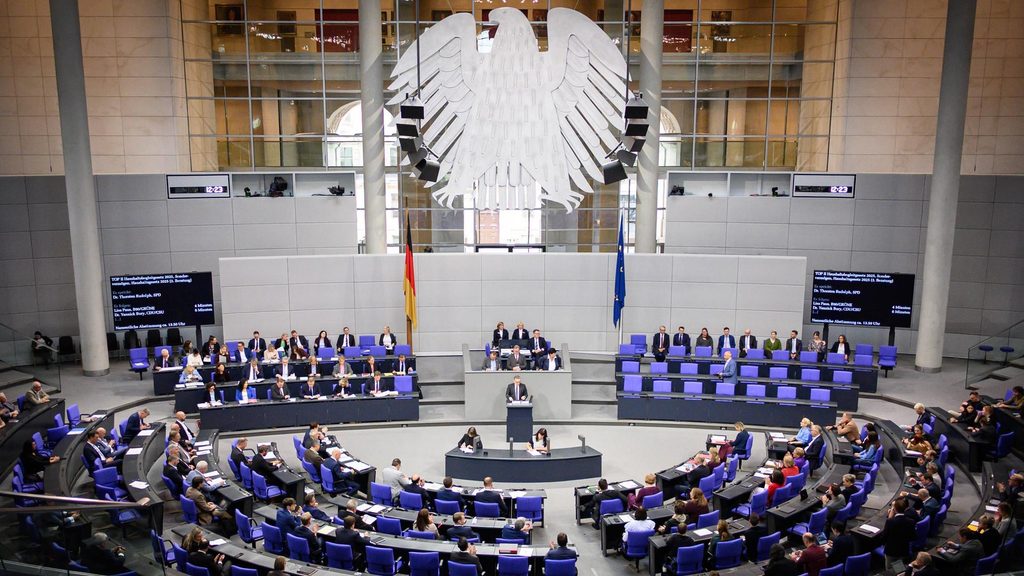
The Bundestag’s Interior Committee on Monday discussed a third amendment to Germany’s Associations Act, including changes to the register of foreign associations administered by the Federal Office of Administration.
The proposal would create a more unified framework for gathering information on foreign associations and their branches operating in Germany. Experts on extremist financing, constitutional law and civil liberties took part in the hearing.
According to Erem News, German security officials have pushed during government consultations for wider access to information on the identities of major foreign donors, repeated transfers from institutions linked to non-German actors, and administrative connections between associations operating under different legal names.
The measures under discussion would also make it easier to compare information from the foreign associations register with data held by tax and anti-money laundering authorities.
Such coordination could help investigators trace funds moving through charitable, educational or other organisations before reaching religious or cultural associations, with particular attention to transfers originating outside the European Union.
Germany’s domestic intelligence agency, the Federal Office for the Protection of the Constitution, has for years monitored organisations it considers part of the Muslim Brotherhood’s wider ideological environment.
Among them is the German Muslim Community, formerly known as the Islamic Community in Germany, which the agency has linked to the Brotherhood spectrum.
A recent domestic intelligence report estimated that around 1,450 people nationwide belong to or operate within this broader milieu.
German authorities have also warned that some Islamist organisations seek to establish themselves as central representatives of Muslims in dealings with state institutions.
That concern has led security agencies to focus increasingly on what German officials describe as “legalistic Islamism” — organisations that remain within formal legal structures while allegedly pursuing long-term ideological or political influence.
Focus shifts from organisations to networks
The latest proposals place greater emphasis on links between individuals rather than simply the formal names of associations.
Security officials argue that organisations can change boards, register under new names or establish legally separate entities while preserving the same personal, financial and institutional networks.
Under the expanded system being discussed, authorities could record information on foreign financiers, founding partners and addresses shared by multiple organisations, allowing those details to be compared with other security and financial databases.
Any legal or administrative action would still have to be based on evidence relating to the individual case.
The debate also follows renewed parliamentary attention on Islamic Relief Germany.
In August, lawmakers questioned the government about previous public funding for the organisation, oversight reports and allegations concerning links to the Muslim Brotherhood.
The German government said projects funded by the Foreign Ministry until 2020 had been directed toward addressing the humanitarian crisis in Syria, but the response did not end the political debate over the organisation’s governance and alleged network connections.
Wider disclosure rules under discussion
Erem News also cited a parliamentary source from the Christian Democratic Union/Christian Social Union bloc as saying lawmakers were considering additional disclosure requirements.
Those proposals could include mandatory reporting of large foreign donations, disclosure of entities funding religious or political activities through registered associations, and greater transparency where multiple organisations jointly manage facilities, centres or bank accounts.
Lawmakers are also considering financial thresholds that would trigger reporting requirements, along with enhanced disclosure obligations for associations receiving a large share of their funding from abroad.
The Federal Office of Administration could also receive broader powers to demand updated information on governing boards and sources of funding.
The plans coincide with wider parliamentary initiatives aimed at increasing transparency around organisations that seek to influence political decision-making or maintain contacts with lawmakers and government officials.
Those proposals include stricter disclosure of donations, foreign funding and institutional affiliations.
The final wording of the law will determine how far German authorities can go in collecting and cross-checking such information.
For security agencies, however, the central objective is increasingly clear: identifying the financial and organisational structures behind groups that operate legally in Germany while maintaining foreign or ideological connections that place them under domestic intelligence scrutiny.