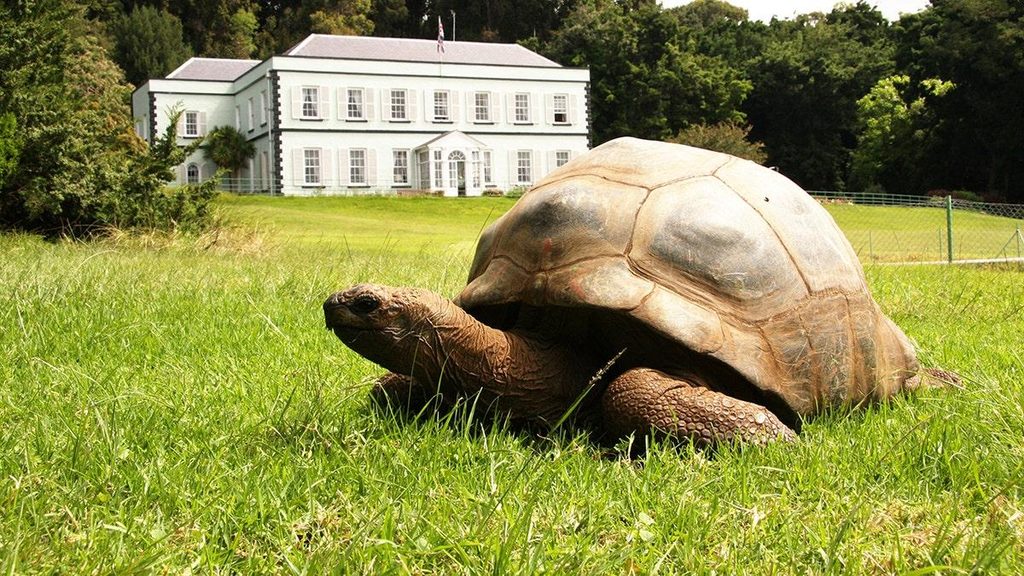
A 194-year-old giant tortoise believed to be the world’s oldest living land animal could help scientists understand why some creatures live exceptionally long lives, according to new research published on Wednesday.
Jonathan, an Aldabra giant tortoise living on the remote South Atlantic island of St Helena, has survived nearly two centuries, far exceeding the typical lifespan of his species.
Researchers who examined his DNA discovered genetic characteristics associated with longevity, including mechanisms involved in repairing damaged cells, maintaining mitochondrial function and protecting against cancer.
The findings, published in the journal Science Advances, suggest that Jonathan has retained unusually youthful biological characteristics in certain parts of his genetic regulatory system.
“We found changes in Jonathan’s genome in pathways associated with longevity, like DNA repair, mitochondrial function, insulin regulation and telomere function,” said Benjamin Vaisvil, a co-lead author of the study.
Scientists analysed Jonathan’s genome and epigenome, which regulates how genes are activated or suppressed, comparing the results with four other Aldabra tortoises of different ages.
They identified 287 genetic variants unique to Jonathan, including several associated with tumour suppression and DNA repair.
Researchers also found additional copies of a gene responsible for producing a protein involved in identifying ageing and cancerous cells.
Remarkably, some regions of Jonathan’s epigenome showed levels of biological deterioration closer to those of a five-year-old tortoise than to other adult animals examined.
However, researchers cautioned that the findings do not establish exactly why Jonathan has lived so long.
“We cannot say for certain that what we found is the reason for his longevity,” Vaisvil said.
Nearly two centuries of history
Jonathan arrived on St Helena in 1882 as a fully grown tortoise, suggesting he was already several decades old.
He now lives at Plantation House, the official residence of the island’s governor, where he receives veterinary care and a carefully managed diet.
Despite being largely blind because of cataracts, Jonathan remains active and maintains a strong appetite.
His longtime veterinarian, Joe Hollins, described him as a “gentle giant” who still responds enthusiastically when called for food.
Hollins said Jonathan recognises his voice and approaches him expecting a meal.
The tortoise has become a celebrated figure on St Helena, surviving two world wars, generations of political upheaval and enormous technological change.
Scientists believe studying exceptionally long-lived animals could eventually provide insights into human ageing, particularly the biological processes responsible for maintaining healthy cells.
The researchers noted similarities between Jonathan’s genetic characteristics and findings from studies involving people who have lived beyond 110 years.
However, they emphasised that further research involving more giant tortoises is necessary before determining whether Jonathan’s unusual genetic traits explain his remarkable lifespan.
For now, the nearly two-century-old tortoise remains both a scientific curiosity and a symbol of extraordinary endurance.