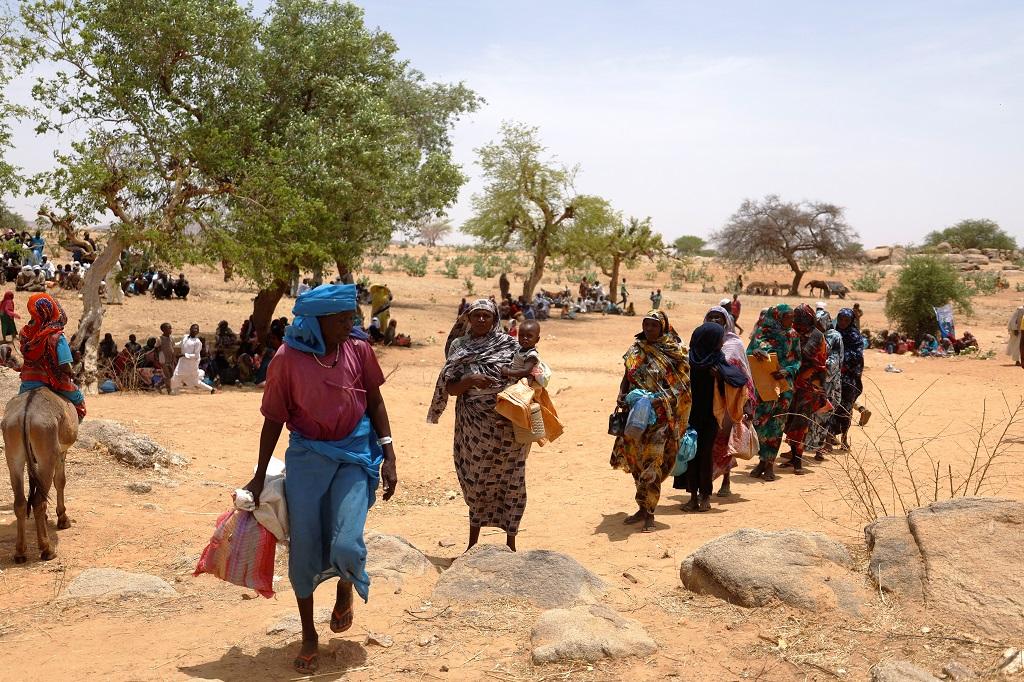
Families fleeing intensified fighting and the Sudanese army’s advance across North Kordofan are arriving in neighbouring Darfur, with displaced civilians reporting fears of retaliation, alleged killings and widespread insecurity.
Local Sudanese media reported on Thursday that dozens of trucks and vehicles carrying families from Mazrub, Hamrat al-Sheikh, En Nahud and El Khuwei were travelling towards Ed Daein and Nyala.
More than 20 families from Mazrub reportedly arrived in Ed Daein on Tuesday after fighting escalated between the Sudanese army, the Rapid Support Forces (RSF) and their respective allies.
Many of the displaced, predominantly women and children, have taken shelter at Ed Daein’s transport terminal, where families are sleeping outdoors amid shortages of food, tents and sanitation facilities.
One displaced resident, Abdul Rahman Ahmed, said families were struggling with hunger and described a woman suffering from bleeding and a child experiencing health complications allegedly linked to malnutrition and the difficult journey.
Another resident, Salem Ali, said his family fled Mazrub before army forces entered the area, following reports that civilians accused of supporting the RSF had been killed.
He alleged that fears of retaliatory violence had driven families to abandon their homes, businesses and belongings.
A displaced woman, Hasaniya Suleiman, separately described looting by armed groups following the withdrawal of RSF fighters from her town.
Witnesses said some newly displaced families had settled in schools, government buildings and markets in Ed Daein, while others continued towards western Darfur.
The displacement follows recent territorial advances by the Sudanese army and allied armed groups in North and West Kordofan.
The latest movements also mark a reversal of earlier displacement patterns, when large numbers of civilians fled fighting in Darfur towards Kordofan and northern Sudan.
Displaced families have appealed to humanitarian organisations and local authorities for urgent assistance, warning that shortages of food, shelter and medical care are worsening their conditions.