The Trump administration imposed sweeping sanctions on the International Criminal Court (ICC) on Friday, escalating its campaign against the Hague-based tribunal over its attempts to exercise jurisdiction over American citizens and Israeli officials.
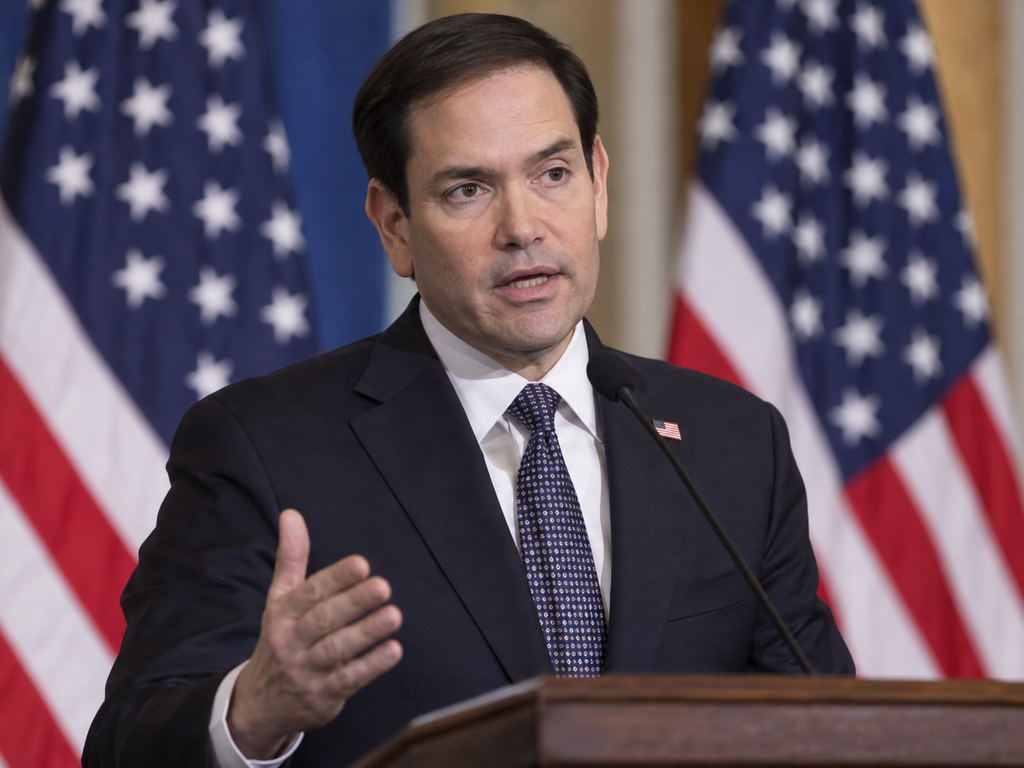
US Secretary of State Marco Rubio announced measures designed to restrict the court’s access to financial services, technology and other resources, warning that Washington would not tolerate what it considers an infringement of American sovereignty.
The latest action goes significantly further than previous sanctions targeting individual ICC judges and prosecutors, potentially affecting companies, banks and institutions that provide services to the court.
“President Trump will never allow the International Criminal Court to prosecute Americans,” Rubio declared.
He described the ICC as a “rogue court” and said Washington intended to cut off transactions that sustain its operations.
The administration’s decision marks one of its strongest challenges yet to an international judicial institution that Washington has repeatedly accused of exceeding its authority.
Washington challenges ICC jurisdiction
At the centre of the dispute is the ICC’s assertion of jurisdiction over nationals of countries that have not joined the Rome Statute, the treaty establishing the tribunal.
The United States is not an ICC member and has never accepted the court’s authority over American personnel.
Nevertheless, the tribunal previously investigated alleged crimes involving US military personnel in Afghanistan, prompting objections from Washington over the prospect of American troops being subjected to international prosecution.
Tensions intensified following the ICC’s issuance of arrest warrants for Israeli Prime Minister Benjamin Netanyahu and other Israeli officials over alleged war crimes connected to the Gaza conflict.
Washington has rejected the court’s actions against Israel, arguing that the tribunal has improperly targeted a close American ally.
ICC supporters maintain that the Rome Statute permits prosecutions involving nationals of non-member countries when alleged crimes fall within the court’s territorial jurisdiction.
The Trump administration disputes the legitimacy of applying that authority to Americans without US consent.
Rubio puts American allies on notice
Rubio also directed a warning at European governments and other ICC member states, making clear that Washington expects its security partners to address American objections.
“Either the ICC will end its threats, or we will end the ICC,” Rubio said.
He argued that countries relying on American military protection should take responsibility for restraining a tribunal that Washington considers a threat to US interests.
The secretary of state said the administration had initially delayed imposing broader penalties to allow the court and its member countries to negotiate a solution.
According to Rubio, those diplomatic efforts failed to produce meaningful concessions.
However, the new sanctions have been structured to leave room for negotiations, giving ICC member governments an opportunity to address Washington’s concerns before additional measures are introduced.
A senior State Department official said the US Treasury would issue licences allowing certain transactions to continue where necessary to protect American interests.
Financial pressure threatens court operations
The sanctions could have far-reaching consequences for the ICC’s daily operations.
American restrictions on sanctioned institutions can prevent US businesses from providing banking, insurance, software and other commercial services.
The measures could therefore complicate the court’s ability to maintain financial accounts, process payments and access technology supplied by American companies.
Anticipating stronger US action, ICC officials have reportedly spent months developing alternatives to American technology and financial services.
Preparations have included replacing Microsoft software with open-source systems and arranging alternative banking and insurance services.
The European Union could also face pressure to activate legal protections intended to shield European businesses from the extraterritorial effects of American sanctions.
ICC rejects US pressure
ICC Deputy Prosecutor Nazhat Shameem Khan condemned Washington’s decision, accusing the Trump administration of attempting to weaken international justice.
Khan said the sanctions were intended to undermine international legal institutions but insisted that the tribunal would continue investigating and prosecuting cases within its jurisdiction.
The ICC, established in 2002, has 125 member countries, including all European Union states.
Neither the United States nor Turkey is a member.
The court’s supporters argue that an independent international criminal tribunal is necessary to prosecute genocide, crimes against humanity and war crimes when national authorities are unwilling or unable to act.
Washington’s position, however, is that international accountability mechanisms must not override the sovereignty of countries that have declined to recognise the court’s jurisdiction.
Nobel announcement coincides with sanctions
The sanctions were announced hours after former ICC judge Navi Pillay received the 2026 Nobel Peace Prize for her contributions to international law and justice.
Pillay, a South African jurist and former UN human rights chief, served on the ICC’s Appeals Chamber between 2003 and 2008.
The Norwegian Nobel Committee presented the award as recognition of her work advancing international accountability.
The timing highlighted the growing divide between supporters of international judicial institutions and governments challenging the reach of those bodies.
For the Trump administration, however, the immediate dispute centres on jurisdiction, national sovereignty and the protection of American military personnel and allied officials from prosecutions Washington rejects.
With the latest sanctions, the White House has shifted from penalising individual ICC officials to targeting the institution’s broader operational capacity, raising the stakes for European allies and other governments seeking to preserve the court.
The administration has left open the possibility of further restrictions if negotiations fail to resolve the dispute.
Friday’s decision signals that Washington is prepared to use its considerable financial and commercial leverage to force a confrontation over the limits of the ICC’s authority.