EU lawmakers approve a resolution calling for tighter financial oversight and scrutiny of alleged Islamist influence, exposing divisions between conservatives and the left.
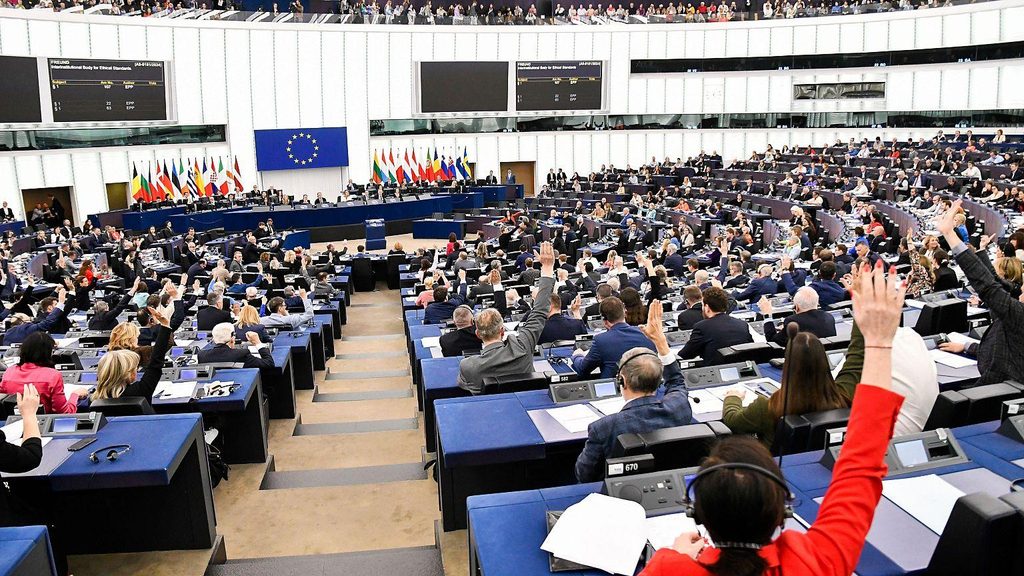
The European Parliament has approved a resolution calling for greater scrutiny of financial networks and organisations allegedly linked to the Muslim Brotherhood, intensifying a political dispute over the influence of political Islam across Europe.
The resolution, adopted on Thursday by 381 votes to 167, with 15 abstentions, calls for stronger monitoring of European Union funding, greater transparency among civil society organisations and closer examination of alleged Islamist influence within European institutions.
The vote represents a significant political step in efforts to address the Muslim Brotherhood’s activities across the continent, although it does not designate the movement as a terrorist organisation or automatically impose financial restrictions.
The debate has exposed divisions among European lawmakers, particularly in France, where conservatives argue that coordinated action is necessary to prevent extremist networks from exploiting democratic institutions, while left-wing politicians warn against measures that could unfairly target Muslim communities.
EU funding networks face closer scrutiny
The resolution urges the European Commission to strengthen oversight of public funds distributed to organisations suspected of connections with Islamist political networks.
Lawmakers want EU authorities to trace funding through intermediaries, subcontractors and organisations that may allegedly serve as fronts for extremist political activities.
French centre-right lawmaker Céline Imart, a member of the European People’s Party, defended the initiative, arguing that European institutions must distinguish between Islam as a religion and political movements seeking to advance ideological objectives.
Supporters say the resolution addresses concerns that organisations associated with the Muslim Brotherhood have allegedly changed their names, structures and operational methods to avoid scrutiny.
According to French magazine Le Point, several organisations previously accused of links to the Brotherhood have undergone restructuring or rebranding.
The Union of Islamic Organisations of France became Muslims of France in 2017, while the Federation of Islamic Organisations in Europe adopted the name Council of European Muslims in 2020.
A German organisation also changed its name from IGD to DMG in 2018.
The organisations have denied alleged affiliations with the Muslim Brotherhood.
European lawmakers acknowledge that historical associations, ideological similarities or organisational name changes do not independently establish terrorist connections.
French lawmakers clash over Islamist influence
French Renew Europe lawmaker Nathalie Loiseau warned against treating religious conservatism or alleged attempts to influence institutions as equivalent to terrorism.
She argued that Islamist influence operations, sometimes described as entryism, must be distinguished from terrorist activity, which is already addressed through European security and judicial cooperation mechanisms.
Loiseau maintained that religiously conservative demands, including requests for gender-segregated swimming sessions, should not automatically be regarded as evidence of terrorism.
Imart rejected suggestions that the resolution targets Muslims more broadly, insisting that its focus is political Islam and organisations suspected of exploiting religious institutions to advance political agendas.
Socialist and left-wing lawmakers strongly criticised the initiative.
French Socialist MEP Chloé Ridel accused conservative parties of aligning with the far right to promote what she described as an Islamophobic political agenda.
She questioned why similar scrutiny was not being directed at fundamentalist Catholic organisations or political movements influenced by US President Donald Trump.
Nicola Procaccini, president of the European Conservatives and Reformists group, defended the distinction, arguing that Islamist fundamentalism and Christian religious movements present different political and historical challenges in Europe.
The exchanges highlighted a broader disagreement over the relationship between religious freedom, European identity and national security.
French intelligence report fuels European debate
The resolution follows a French government report released in May 2025 examining the Muslim Brotherhood and political Islam in France.
The report raised concerns about alleged efforts to expand influence through religious associations, educational institutions and local political structures.
It identified 139 places of worship considered linked to the movement and another 68 described as close to it, alongside 280 associations and 21 educational establishments serving approximately 4,200 pupils.
The findings also highlighted Brussels as a potentially significant centre for networks allegedly associated with the movement because of its proximity to major EU institutions.
However, the report distinguished between direct organisational membership and broader ideological or political associations.
That distinction remains central to the European debate, as authorities must establish credible evidence before taking legal action against individuals or organisations.
No immediate terrorist designation
Despite its adoption, the parliamentary resolution does not place the Muslim Brotherhood on the EU’s terrorism list.
Any such designation would require a separate legal process involving the Council of the European Union and an assessment against established criteria.
The resolution nevertheless increases political pressure on European institutions to examine alleged Brotherhood-linked networks, improve financial transparency and prevent public funds from reaching organisations involved in extremist activities.
For supporters, the vote marks an important advance in protecting European institutions from ideological infiltration and the potential misuse of taxpayer money.
Opponents warn that broadly defined measures against political Islam could encourage discrimination and subject legitimate Muslim organisations to unwarranted suspicion.
The dispute is expected to continue as European authorities consider how to implement tighter oversight while maintaining protections for freedom of religion and association.