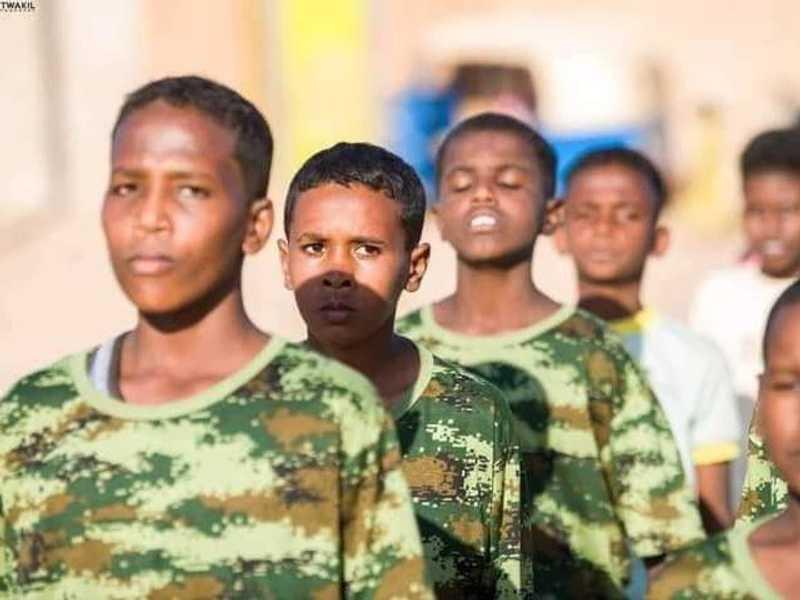
The United States has kept Sudan in the lowest category of its global human trafficking rankings, citing the continued recruitment of child soldiers, allegations of sexual exploitation and a failure by army-aligned authorities in Port Sudan to investigate trafficking crimes or protect victims.
The US State Department’s 2026 Trafficking in Persons Report maintains Sudan’s Tier 3 classification, reserved for countries whose governments do not meet minimum international standards for combating trafficking and are not making significant efforts to do so.
The assessment sharply criticises the Sudanese Armed Forces (SAF)-affiliated administration, highlighting the absence of prosecutions, the collapse of victim protection mechanisms and persistent allegations of child recruitment by parties to the country’s civil war.
The report describes the administration as the “SAF-affiliated government”, rather than referring exclusively to the “Government of Sudan”, a distinction that reflects Washington’s terminology for the military-linked authorities operating from Port Sudan.
The designation does not, by itself, establish a change in US diplomatic recognition.
Child recruitment and sexual exploitation
The report identifies the recruitment and use of children in armed conflict as among Sudan’s most serious trafficking-related violations.
Since fighting erupted in April 2023, the SAF, Rapid Support Forces (RSF) and other armed groups have faced allegations of recruiting children, including through coercion, and deploying them in combat and support roles.
According to the assessment, some children have been used directly in hostilities, while others have allegedly been forced into reconnaissance operations, labour or other activities supporting military operations.
Observers have reported thousands of alleged cases of child recruitment since the conflict began, although independently establishing the full scale of the violations remains difficult because of insecurity and restricted access.
The report also raises concerns about sexual slavery, forced domestic labour and the exploitation of women and girls, particularly in communities affected by displacement and armed violence.
No trafficking prosecutions or convictions
The State Department said the SAF-affiliated authorities reported no human trafficking investigations during the latest assessment period, compared with four investigations in the preceding period.
No suspected traffickers were prosecuted or convicted, marking the third consecutive year without reported convictions.
Authorities also failed to report investigations or prosecutions of officials allegedly involved in the forced recruitment or use of children.
The report identifies corruption and possible official complicity as continuing obstacles to accountability.
Sudan has legislation criminalising trafficking and the recruitment of children into the armed forces, but the assessment points to a substantial gap between those legal protections and their enforcement.
Article 14 of the Sudan Armed Forces Act of 2007 prohibits recruiting children younger than 18 into state armed forces. The continued allegations of child recruitment therefore raise questions about military accountability and enforcement of existing laws.
Victim protection collapses
The report identifies another significant deterioration in the authorities’ response to trafficking: the absence of reported victim identification and assistance.
The SAF-affiliated administration did not report identifying any trafficking victims during the latest assessment period, compared with 83 potential victims identified previously.
It also reported no assistance provided to victims.
The two government-operated trafficking shelters remained closed, while facilities in Khartoum and Port Sudan operated by an international organisation continued without government partnership.
Authorities had not implemented standard procedures for identifying trafficking victims and referring them to medical, legal or protective services.
The State Department additionally found no reported public awareness campaigns, functioning government anti-trafficking hotline or specialised diplomatic training during the assessment period.
Efforts to prevent the recruitment of children into armed groups were also found to be inadequate.
The findings mark a reversal from the limited progress documented in the 2025 report, when authorities reported identifying 83 potential trafficking victims despite serious deficiencies in protection and accountability.
War fuels forced labour and exploitation
Beyond direct military recruitment, the report warns that Sudan’s prolonged conflict has created conditions in which traffickers can exploit vulnerable populations.
Children working in agriculture, brick factories, gold mining and informal markets face risks of forced labour, coercion and abuse.
Homeless children in Khartoum are also vulnerable to exploitation through forced begging, street vending and commercial sexual exploitation.
The report identifies displaced civilians and migrant workers among those exposed to trafficking risks as insecurity, economic hardship and institutional breakdown undermine protective services.
The State Department’s assessment comes amid wider international concern over conflict-related sexual violence in Sudan.
A June 2026 UN human rights assessment documented widespread sexual violence and identified perpetrators across multiple armed groups, underscoring the broader environment of abuse and impunity accompanying the war.
Washington maintains pressure on Port Sudan
Sudan’s continued Tier 3 designation places additional scrutiny on the military-aligned authorities and their failure to establish effective mechanisms for investigating trafficking offences.
The US report calls for an end to the recruitment and use of children by all parties, investigations into suspected traffickers and complicit officials, and the restoration of services to identify, protect and rehabilitate victims.
Sudan has remained in Tier 3 since its downgrade in 2024, when the State Department concluded that child recruitment and the collapse of anti-trafficking efforts following the outbreak of war warranted the lowest classification.
The latest assessment indicates that, despite years of international criticism and existing legal prohibitions, the authorities have yet to demonstrate meaningful accountability for trafficking abuses or establish adequate safeguards for those at risk.