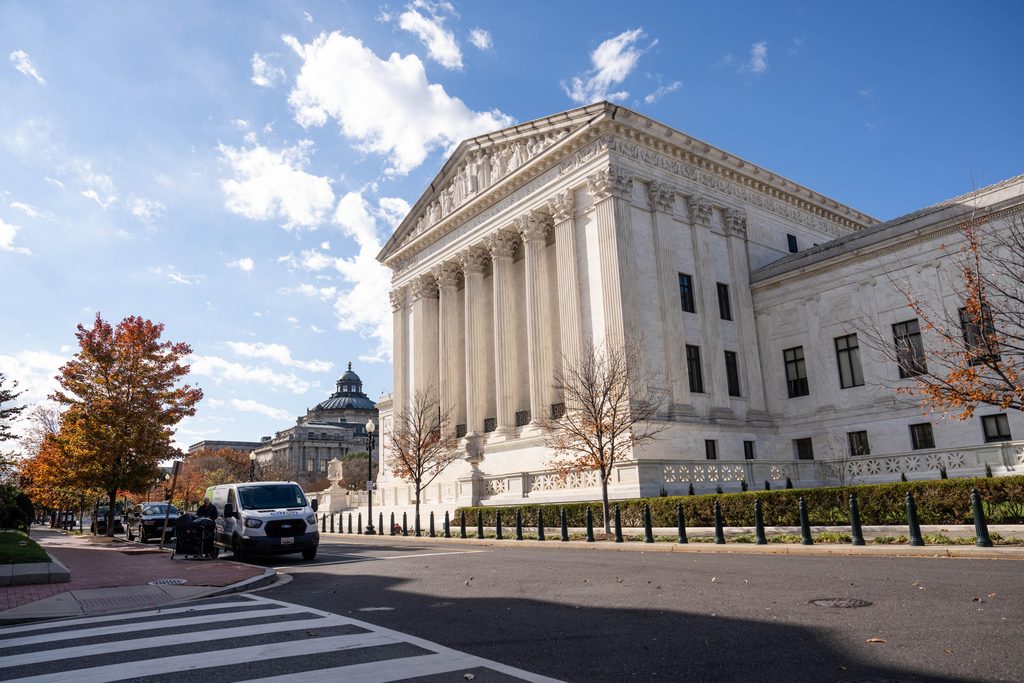
The US Supreme Court agreed on Tuesday to hear a case involving a Nigerian asylum seeker who was denied protection after being forced to prepare meals for an armed group allegedly linked to separatist violence in Nigeria.
The case could have significant implications for how US immigration authorities interpret laws barring asylum seekers accused of providing material support to terrorist organisations.
The justices will consider an appeal by President Donald Trump’s administration challenging a lower court ruling in favour of Izuchukwu Ozurumba, a Nigerian citizen whose asylum application was rejected because he cooked for a group known as the Unknown Gunmen.
US immigration authorities classified the group as a terrorist organisation and argued that preparing meals for its members constituted material support for terrorism, even though Ozurumba maintained that he had been held captive and forced to work.
The Supreme Court is expected to hear arguments and issue a ruling by the end of June 2027.
Forced labour and escape
According to court documents, Ozurumba travelled to a remote camp outside Lagos in 2022 after receiving information about a potential job.
He later discovered that the camp was operated by the Unknown Gunmen, an armed group believed to have connections to separatist movements in Nigeria.
His lawyers said he became suspicious after noticing that members of the group frequently left the camp around the same time that murders and arson attacks were reported in surrounding areas.
When Ozurumba attempted to leave, he was allegedly prevented from doing so and forced to continue cooking without pay.
After approximately six months, he escaped during a trip to purchase supplies and returned to Lagos.
His lawyers said he subsequently faced beatings and death threats, prompting him to flee Nigeria for Venezuela. After allegedly encountering further threats there, he travelled to the United States, crossing the southern border without authorisation in July 2023.
He subsequently applied for asylum and protection from deportation.
Dispute over terrorism laws
During former President Joe Biden’s administration, an immigration judge rejected Ozurumba’s application, ruling that preparing meals for members of the armed group constituted material support for terrorism.
The judge determined that the cooking helped sustain the group’s activities by meeting its members’ basic human needs, regardless of whether Ozurumba had acted under coercion.
Ozurumba was deported to Nigeria in 2025 while his legal challenge remained pending.
However, the US Court of Appeals for the Fourth Circuit ruled in his favour in September 2025, finding that his forced labour did not meet the legal definition of material support for terrorism.
The appeals court concluded that his cooking had not provided resources the organisation could use directly or redirect towards planning or carrying out attacks.
The court nevertheless declined to order his return to the United States while the litigation continued.
The Trump administration challenged that decision, arguing that excluding food preparation from the definition of material support would make it more difficult for immigration authorities to prevent individuals with alleged terrorist connections from entering the country.
In its Supreme Court appeal, the Justice Department compared providing meals to armed group members with supplying fuel for their vehicles, arguing that both activities could materially assist a terrorist organisation.
Wider implications for asylum seekers
Lawyers representing Ozurumba warned that the administration’s interpretation could result in asylum being denied to people who were themselves victims of coercion or captivity.
“At stake in this case is whether the government can use an overly broad reading of the law to shut the door on people seeking asylum,” said Aimee Mayer-Salins, an attorney with the Amica Center for Immigrant Rights.
She argued that asylum protections should not be withheld from individuals whose actions provided no meaningful assistance to terrorist organisations.